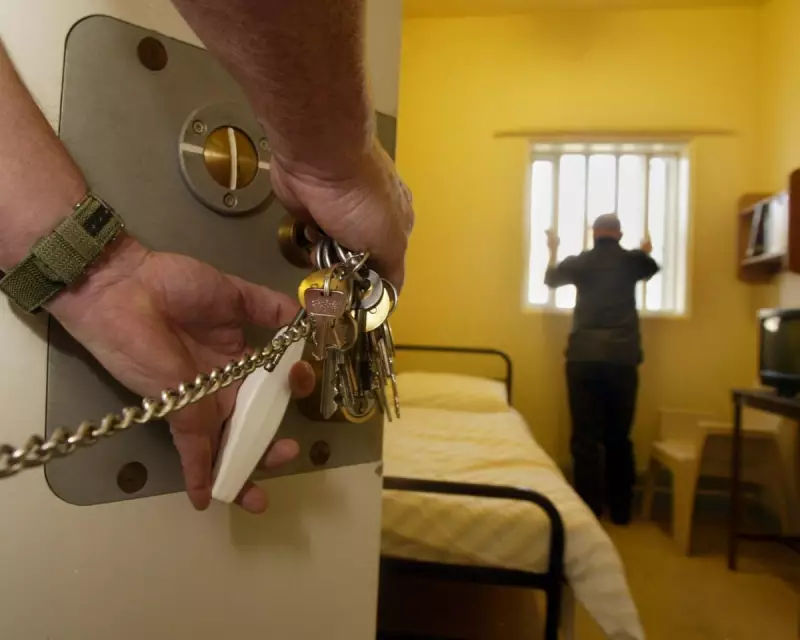
A long-awaited independent review, commissioned following an alleged violent attack by Manchester Arena bomber Hashem Abedi on prison staff, is calling for the introduction of a US-style punishment and rewards system for the UK's most dangerous inmates.
Alleged Ambush Triggers Major Review
The report was ordered after Hashem Abedi, who is serving a life sentence for his role in the 2017 atrocity that killed 22 people, allegedly targeted officers at HMP Frankland in Durham on 12 April. Prosecutors claim he attacked four officers with makeshift knives and boiling oil in a planned ambush, sending three to hospital.
Jonathan Hall KC, the independent reviewer of terrorism legislation, was tasked with the review in May by the then lord chancellor, Shabana Mahmood. His completed report was sent to the Ministry of Justice in August and is now at the centre of demands for immediate publication.

Learning from US Supermax Prisons
The review's central recommendation is understood to be the adoption of a system modelled on practices in US Supermax facilities, such as the ADX Florence prison in Colorado. In this system, privileges for the most high-risk prisoners are not static but are earned or removed based on continuously monitored behaviour.
Under this model, good conduct can lead to modest but significant rewards, such as enhanced access to exercise, radio, or television. Conversely, poor behaviour results in the loss of these privileges and increased restrictions on contact with others.
Andy Slaughter, the Labour chair of the Commons justice select committee, has urged the government to release the findings. "After waiting four months, prison officers, the public and parliament should be able to see the recommendations," he stated, emphasising the need to prevent future attacks.
Questions Over Separation Centres and Security
The attack raised serious questions about security within the prison's separation centre, where Abedi was held. These units, introduced in 2017, are designed to isolate terrorist offenders from the main prison population. Hall's review has examined:
- Why Abedi had access to kitchen utensils, which were allegedly used to fashion weapons from cake tins.
- Whether the current process for placing extremist offenders into separation centres needs reform.
- If the correct balance is being struck between immediate security and long-term offender management.
The incident provoked outrage from victims of the Manchester Arena bombing. Martin Hibbert, who was paralysed in the attack, described it as a "catastrophic failure" in an open letter to ministers.
Abedi, who was jailed for life with a minimum term of 55 years in 2020, has pleaded not guilty to charges of attempted murder, assault, and possessing weapons in prison. He is due to appear at the Old Bailey in February.
A Ministry of Justice spokesperson said: "Protecting our hardworking staff is a priority. We have been thoroughly reviewing Jonathan Hall’s independent report into separation centres and will publish Mr Hall’s report and our response in due course."