Rob Jetten Poised to Make History as Netherlands' Youngest Prime Minister
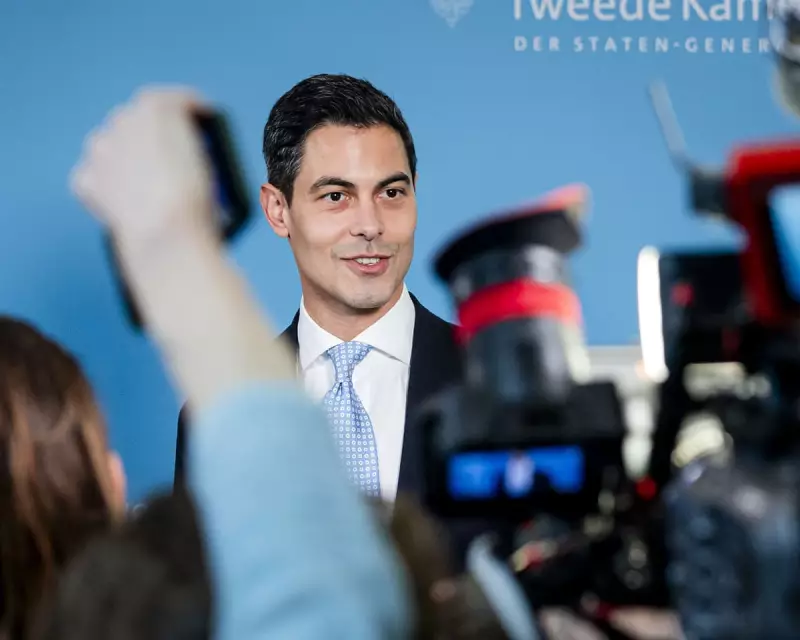
Rob Jetten, the leader of the centrist D66 party, is on track to become the youngest prime minister in Dutch history following the formation of a groundbreaking minority coalition government. At just 38 years old, Jetten will assume the premiership after his party secured an unexpected election victory three months ago, which dramatically reshaped the political landscape.
Historic Coalition Agreement Reached After Months of Negotiations
After extensive negotiations spanning nearly three months, the leaders of three Dutch political parties have finalised a coalition agreement that will establish a rare minority government in the Netherlands. The liberal-progressive, pro-European D66 party, led by the incoming prime minister Rob Jetten, will join forces with the conservative Christian Democrats and the right-wing VVD to form an administration holding only 66 seats in the 150-seat lower house of parliament.
"We're incredibly eager to get started," declared Jetten as he announced the historic accord on Tuesday evening. "We're going to do it as a three-party coalition, but we'd also like to work with other parties." The D66 leader emphasised the government's ambitious agenda, stating: "We now want to get started on all the major issues facing us – international security, domestic security, providing affordable homes, getting migration under control and investing in the new economy."

Ambitious Policy Agenda with Focus on Fiscal Responsibility
The new government's comprehensive plans, scheduled for detailed announcement on Friday, include what Jetten described as "enormous investment" in both defence capabilities and domestic infrastructure. The incoming prime minister stressed the administration's commitment to prudent financial management, asserting: "We want to set out the finances carefully so that we do not pass debts on to future generations."
This coalition formation follows D66's remarkable electoral performance in October, where the party achieved an upset victory over the far-right Freedom Party (PVV) by the narrowest of margins. Both parties initially secured 26 seats, though the PVV has since experienced significant fragmentation, losing seven seats after internal dissent over leadership and campaign strategy.
Navigating a Fragmented Parliament Without Majority Control
The incoming cabinet, expected to be formally sworn in by mid-February, faces the considerable challenge of governing without a parliamentary majority. The coalition will need to collaborate extensively with opposition parties to pass legislation through the fragmented Dutch parliament, while also confronting the reality of lacking control in the senate, which retains the power to block laws approved by the lower house.
The decision to form a minority government emerged after VVD leader Dilan Yeşilgöz categorically rejected including the left-leaning GroenLinks/PvdA alliance, which secured 20 seats, describing their platform as excessively radical. Simultaneously, D66 firmly opposed VVD efforts to incorporate the radical-right populist JA21 party into the coalition, with Jetten stating earlier this month: "We do not consider that to be wise at this time, given everything that has to be done."
Opposition Parties Signal Conditional Cooperation
GroenLinks-PvdA leader Jesse Klaver has indicated his party's willingness to negotiate agreements with the new coalition on individual policy matters, describing their approach as providing "responsible opposition." Klaver emphasised that global instability and national progress requirements mean the government cannot afford failure, pledging support on significant issues including environmental reforms and accelerated housebuilding initiatives.

However, Klaver established clear boundaries for cooperation, stating his party would oppose any measures that unfairly increase taxation burdens on ordinary workers, reduce healthcare funding, or weaken employment protections to facilitate easier dismissal of employees. Following the fragmentation of Wilders' PVV, which lost nearly a third of its seats, GroenLinks-PvdA now represents the largest opposition bloc in parliament and could potentially provide the government with majority support in both legislative chambers.
Political Realignment Continues Amid Far-Right Fragmentation
The political landscape continues to evolve following the dramatic split within Geert Wilders' PVV party, which the leader described as a "black day" while expressing confidence in his party's survival. The breakaway faction, led by long-serving PVV MP Gidi Markuszower, criticised Wilders' election strategy, arguing that "insulting Islam" might be acceptable but "does not solve voters' problems," while highlighting organisational deficiencies within the party structure.
Meanwhile, other far-right political forces have capitalised on this fragmentation, with both Forum voor Democratie (FvD) and JA21 gaining parliamentary seats in the recent election and continuing to advance in opinion polls. This political realignment creates a complex legislative environment for the incoming minority government as it prepares to address the nation's pressing challenges while navigating an increasingly divided political arena.