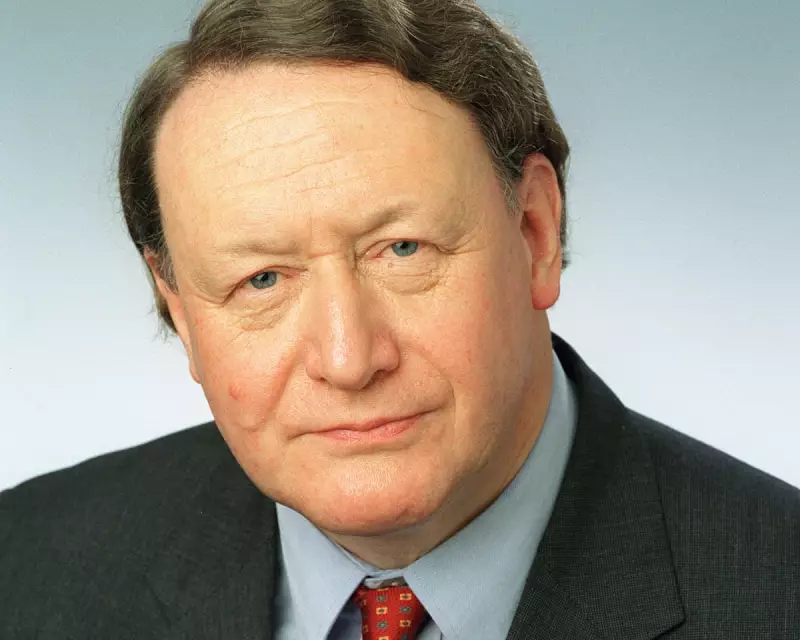
The political world is mourning the loss of Sir John Stanley, the former Armed Forces Minister and dedicated Member of Parliament for Tonbridge and Malling, who has died at the age of 85. A figure of principle and diligence, his career spanned the tumultuous final decades of the Cold War and left a significant mark on British defence policy.
A Parliamentary Career Defined by Defence and Constituency Service
John Paul Stanley was born on January 19, 1942, and entered the House of Commons in 1974, representing the Kent constituency of Tonbridge and Malling (initially Tonbridge) for an impressive 27 years. His deep interest in security matters saw him ascend to the role of Minister for the Armed Forces under Margaret Thatcher from 1983 to 1987. During this critical period, he was intimately involved in managing the UK's nuclear deterrent and conventional forces at the height of East-West tensions.
Stanley was known for his meticulous, detail-oriented approach. Colleagues and officials noted his formidable grasp of complex briefs, particularly on defence procurement and logistics. His tenure coincided with major events like the Falklands War aftermath and the escalation of the Cold War, where his steady hand contributed to policy formulation. He later served as Minister for Housing and Construction and as Minister for Overseas Development.

Beyond the ministerial offices, he was a devoted constituency MP. He took immense pride in representing his local community, tackling individual cases with the same rigour he applied to state security. This dual focus on high-stakes international policy and local grassroots work defined his parliamentary identity.
The Maastricht Rebel and a Legacy of Principle
Sir John's commitment to his convictions was powerfully demonstrated in the early 1990s. A staunch Eurosceptic, he became a prominent "Maastricht rebel," defying the whip of John Major's government to vote against the Treaty of Maastricht. This act of rebellion ultimately led to his departure from the government frontbench, but it cemented his reputation as a politician of deep-seated principle, willing to prioritise belief over career advancement.
After leaving Parliament in 2001, he remained active in public life. He served as a member of the Intelligence and Security Committee, scrutinising the work of MI5, MI6, and GCHQ, and later chaired the committee overseeing the Chemical Weapons Convention. His expertise continued to be sought on matters of national and international security well into his retirement.
Sir John Stanley died on December 17, 2025, at the age of 85. He is survived by his wife, Lady Carolyn Stanley, his three children, and grandchildren. His passing marks the loss of a significant figure from a pivotal era in British politics—a dedicated parliamentarian, a knowledgeable defence expert, and a man who served his country and constituency with unwavering integrity.