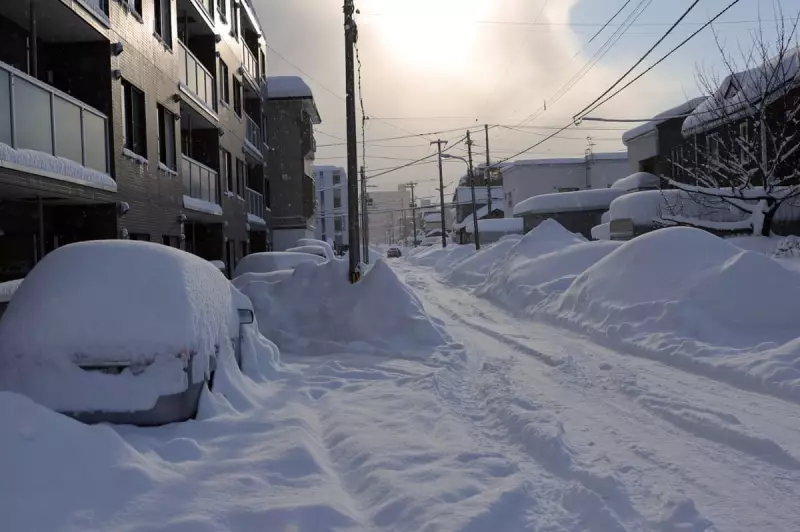
Japan's Snap Election Confronts Winter Challenges Amid Heavy Snowfall
Japan's upcoming snap general election, scheduled for 8 February, is being overshadowed by severe winter weather, with record snowfall in regions like Sapporo raising concerns about a potentially low voter turnout. Prime Minister Sanae Takaichi, who called the election less than four months into her term, has acknowledged that the timing may prove difficult for voters in snowbound areas, as the country grapples with freezing temperatures and logistical hurdles.
Logistical Headaches and Safety Concerns
The decision to hold the election in mid-winter has introduced significant logistical challenges. Authorities report that billboards displaying candidate information have been buried under heavy snow, with some municipalities, such as a town in Aomori prefecture, drastically reducing the number of posters from 621 to just 97 compared to last summer's upper house elections. The 16-day gap between the dissolution of parliament and election day is the shortest in living memory, forcing local officials to work overtime to arrange polling stations and accommodate voters.
Safety measures have also been complicated by the cold weather. Police have warned that kairo pocket warmers, essential in winter, could trigger metal detectors at campaign events due to their iron powder content, a security enhancement introduced after the 2022 assassination of Shinzo Abe. In response, the national police agency has advised prefectural forces to assign female officers for body checks at stump speeches.

Impact on Voter Apathy and Political Dynamics
Observers fear that the combination of harsh weather, Takaichi's high approval ratings, and a weak opposition could lead to increased voter apathy. Non-fiction writer Satoru Ishido noted that all conditions for a low turnout are in place, which historically benefited the ruling Liberal Democratic Party (LDP). However, the LDP can no longer rely on its former coalition partner Komeito for organisational support, making it more dependent on attracting non-aligned voters who may be less inclined to participate in the cold.
Despite these challenges, younger voters appear more willing to brave the elements, with over 58% of people in their 20s and 30s comfortable with the election timing compared to 47.5% of older age groups. This trend could benefit smaller parties like Sanseito, which has appealed to younger voters with strict immigration policies.
Government Response and Regional Discontent
In response to the weather threats, the internal affairs ministry has launched a task force to encourage mobile polling stations for early voting and provide transport on election day. Internal Affairs Minister Yoshimasa Hayashi has warned local authorities to prepare for heavy snowfall, which could delay the distribution of polling booth admission tickets. Regional discontent is evident, with 61% of voters in north-east Japan, an area prone to heavy snow, opposing the election timing.
Prime Minister Takaichi expressed gratitude to voters in snowy regions, acknowledging the effort required to reach polling stations under challenging conditions. As Japan braces for this historic winter election, the outcome may be shaped not only by political campaigns but also by the relentless forces of nature.