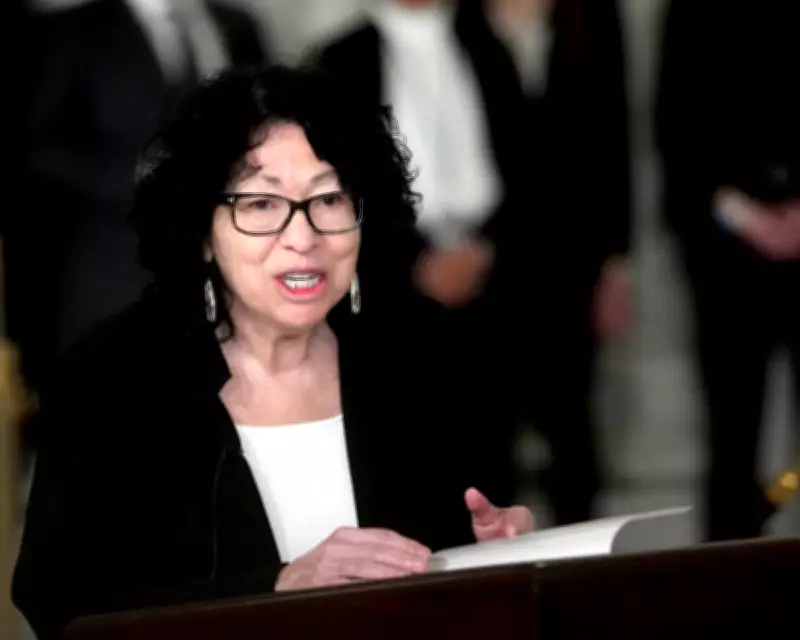
Sonia Sotomayor Issues Public Apology to Brett Kavanaugh
In a rare public display of internal discord, US Supreme Court Justice Sonia Sotomayor has formally apologized to fellow Justice Brett Kavanaugh for critical remarks she made about his judicial opinion. This unusual mea culpa underscores the persistent and deepening divisions within the nation's highest court regarding its direction and handling of high-profile cases.
The Controversial Comments and Immediate Fallout
During a recent appearance at the University of Kansas School of Law, Sotomayor referenced a disagreement with a colleague without naming Kavanaugh directly. She criticized an opinion he wrote in September that concurred with the court's decision to allow roving immigration raids in California. According to a Bloomberg Law report, Sotomayor suggested Kavanaugh did not understand the real-world impact of such rulings, stating: "This is from a man whose parents were professionals. And probably doesn't really know any person who works by the hour."
In a statement released by the Supreme Court, Sotomayor expressed regret: "At a recent appearance at the University of Kansas School of Law, I referred to a disagreement with one of my colleagues in a prior case, but I made remarks that were inappropriate. I regret my hurtful comments. I have apologized to my colleague."

The Underlying Case: Immigration Raids and Judicial Opinions
The controversy stems from a case where the Supreme Court granted an emergency request by the Trump administration to permit immigration agents to conduct raids targeting individuals for deportation based on race or language. A lower court judge had previously barred agents from stopping or detaining people without "reasonable suspicion" of illegal presence in the United States.
In his concurring opinion, Kavanaugh wrote that "apparent ethnicity alone cannot furnish reasonable suspicion" but could be considered a "'relevant factor' when considered along with other salient factors." He added: "If the officers learn that the individual they stopped is a US citizen or otherwise lawfully in the United States, they promptly let the individual go." Notably, no other justice joined his concurring opinion.
Sotomayor's sharply worded dissent in the September case, joined by the court's other liberal justices, argued that the administration "has all but declared that all Latinos, U.S. citizens or not, who work low-wage jobs are fair game to be seized at any time, taken away from work, and held until they provide proof of their legal status to the agents' satisfaction."
Broader Context: Supreme Court Divisions and Public Scrutiny
This incident is not an isolated one but part of a pattern where internal divisions within the Supreme Court have spilled into public view. The court's rightward shift, ethical standards, and its handling of emergency requests—particularly those favoring Trump since his return to the presidency in January 2025—have been subjects of intense debate.
Other liberal justices have also voiced concerns publicly. Justice Ketanji Brown Jackson recently criticized conservative justices' pro-Trump orders in a speech at Yale Law School, warning of their corrosive effect on the judicial system. Similarly, Justice Elena Kagan has expressed worries about the court's legitimacy if Americans perceive its members as imposing personal preferences, especially following rulings on abortion access and gun rights.
Despite these tensions, Sotomayor has previously emphasized civility and camaraderie among justices. In January 2022, she and conservative Justice Neil Gorsuch jointly denied media reports of a rift over mask-wearing during a COVID-19 surge, highlighting efforts to maintain unity.
The public apology from Sotomayor to Kavanaugh serves as a stark reminder of the ideological battles raging within the Supreme Court, with significant implications for its credibility and the future of American jurisprudence.