

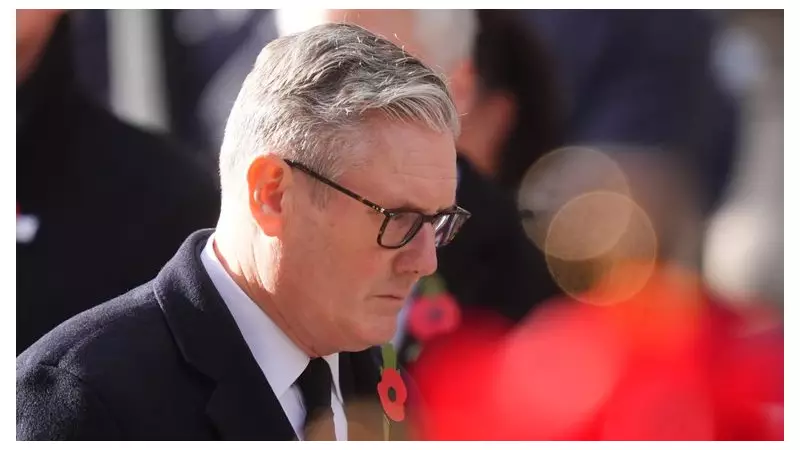
Prime Minister's Return to Domestic Turmoil
Sir Keir Starmer has returned to the United Kingdom from the COP30 climate summit in Brazil, only to confront an escalating prisons crisis that has severely tested his government's credibility during his absence. The Prime Minister's 40th foreign trip in 16 months provided temporary respite from domestic political pressures, but he now faces multiple challenges threatening his administration's stability.
Prisons and Migration Crisis Escalates
The situation reached a critical point when Justice Secretary David Lammy delivered what many considered a disastrous performance during Prime Minister's Questions while standing in for Starmer. Five days after the incident, ministerial colleagues continue struggling to explain why Lammy repeatedly failed to answer questions about whether another migrant criminal had been wrongly released from prison.
Conservative MP James Cartlidge initially posed an incorrect question, as the individual in question, Brahim Kaddour-Cherif, was an illegal migrant rather than an asylum seeker. However, Cartlidge argued that Lammy's failure to disclose available information represented a lack of transparency, warranting investigation by the Prime Minister's ethics advisor for potential breach of ministerial code.

Culture Secretary Lisa Nandy defended her colleague, telling Sunday Morning with Trevor Phillips that she doesn't accept Lammy was being evasive. She insisted he had been carefully weighing his words to ensure full facts were presented properly. Remarkably, at the time of questioning, the justice secretary reportedly didn't possess complete details of the case, despite Metropolitan Police having been informed the previous day - six days after Kaddour-Cherif's accidental release.
Broader Government Challenges Mount
The combination of wrongly-released prisoners and illegal migrants represents a perfect storm of two of Britain's most politically sensitive issues. The government appears to be struggling with both the overflowing prison system and dysfunctional asylum processing, problems that also plagued the previous Conservative administration.
Meanwhile, Culture Secretary Lisa Nandy faces her own controversy regarding the appointment of new football regulator David Kogan. An independent investigation found she unknowingly breached the code on public appointments by failing to declare that Kogan had previously donated £2,900 to her Labour leadership campaign. The report also criticized her department for not highlighting his status as a Labour donor who had given £33,410 to the party overall.
Looking ahead, the government faces perhaps its biggest challenge with the upcoming budget on November 26. Chancellor Rachel Reeves has signaled she will likely raise taxes, breaking a core Labour Party manifesto promise. This would mark the first such income tax increase in 50 years, though it might be offset for some by corresponding national insurance cuts.
Deputy party leader Lucy Powell has warned about the risks of breaching public trust by breaking manifesto promises. When questioned about this tension, Nandy argued that while promises are taken seriously, Labour was also elected to change the country, particularly regarding NHS improvements.
The fundamental challenge remains: the economic climate makes it nearly impossible to both protect taxes and increase government spending significantly, highlighting the difficulty of the promises made during the election campaign.






