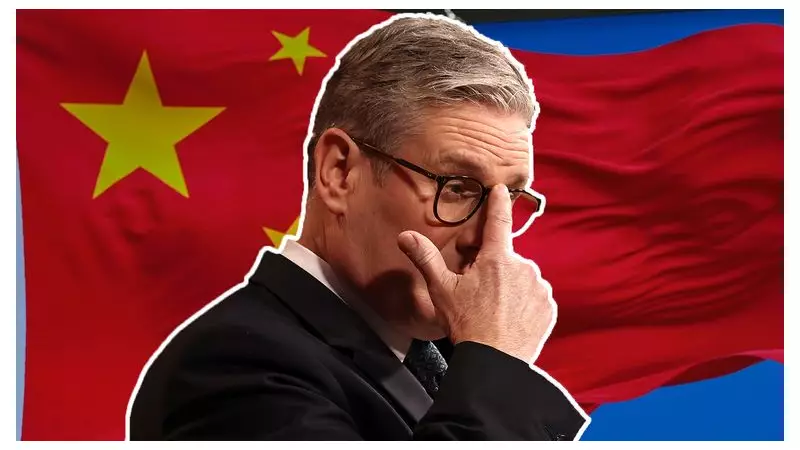
Starmer's Diplomatic Balancing Act in Beijing
Prime Minister Sir Keir Starmer embarked on a delicate diplomatic mission to Beijing, facing the complex task of engaging with Chinese President Xi Jinping while simultaneously managing brewing unrest within his own Labour Party back in Britain. The high-stakes meeting marked the first bilateral encounter between a UK prime minister and Chinese president in eight years, placing Starmer at the centre of significant international and domestic pressures.
Careful Language on Sensitive Issues
Throughout his journey to China, Starmer demonstrated extreme caution in his public statements, particularly when questioned about potentially contentious matters. When journalists pressed him on whether he would raise human rights concerns with President Xi, specifically regarding the Uyghur situation and the imprisonment of British media tycoon Jimmy Lai, the prime minister maintained a measured approach.
"I'm not going to get ahead of myself," Starmer stated repeatedly, emphasising his intention to address necessary issues while avoiding premature declarations. He confirmed that the government had expressed concerns through various channels but promised a proper readout only after the meetings had concluded.

The same circumspect approach extended to questions about Ukraine, with Starmer declining to specify whether he would ask Xi to pressure Vladimir Putin to end the conflict. "You know my practice, which is to raise issues that need to be raised," he told reporters, while maintaining that he wouldn't discuss specific sensitive matters during the outward journey.
Domestic Labour Party Tensions
Even as he prepared for challenging international diplomacy, Starmer faced questions about domestic Labour Party dynamics, particularly concerning Greater Manchester Mayor Andy Burnham. Reports had emerged suggesting Burnham had been warned against applying for the Gorton and Denton candidacy but proceeded regardless.
Starmer firmly denied that Burnham had received advance notice of his rejection, stating: "I know who was talking to Andy on Saturday, and that wasn't said. That's Andy's position as well." The prime minister praised Burnham's work extensively, highlighting their collaboration on parliamentary legislation, response to the Manchester synagogue attack, and the Northern Powerhouse Rail project.
However, when asked whether he would welcome Burnham back to Parliament, Starmer offered a more guarded response: "As to what he wants to do when he's not mayor of Manchester any more, that's a matter for Andy, but he's doing a first class job." This carefully worded statement fell short of a full endorsement for Burnham's parliamentary return, suggesting ongoing tensions within Labour ranks.
Navigating Complex International Relationships
Starmer's approach to China reflects his self-described pragmatic philosophy. When questioned about Canadian Prime Minister Mark Carney's suggestion that middle powers should unite to push back against larger nations, Starmer positioned himself as "a pragmatist, a British pragmatist applying common sense."
This pragmatic stance involves navigating multiple complex relationships simultaneously:
- Maintaining ties with both the United States and China despite their tensions
- Balancing relationships with Washington and Brussels when allies disagree
- Managing internal Labour Party challenges while conducting foreign policy
The prime minister's task appears particularly daunting given the broader political context. With former US President Donald Trump's unpredictable behaviour creating international uncertainty and unresolved conflicts within his own party, Starmer's engagement with Xi Jinping represents just one element of a multifaceted diplomatic challenge.
Economic and Political Stakes
Starmer's five-day tour of China and Japan carries significant economic implications for Britain. The prime minister aims to strengthen trade relationships and deepen economic ties with China while simultaneously addressing sensitive political issues. This dual approach requires careful navigation between commercial interests and human rights concerns.

As Starmer landed in Beijing, approximately 5,000 miles from Westminster, he transitioned from one diplomatic minefield to another. The visit represents a critical test of his ability to balance competing priorities: promoting British economic interests while upholding democratic values and addressing security concerns.
The prime minister's cautious, non-committal statements during his journey suggest recognition of the complex landscape he faces. Between managing Labour Party unrest at home and engaging with China's leadership abroad, Starmer's diplomatic tightrope walk demonstrates the challenges of contemporary international statesmanship in an increasingly polarised global environment.