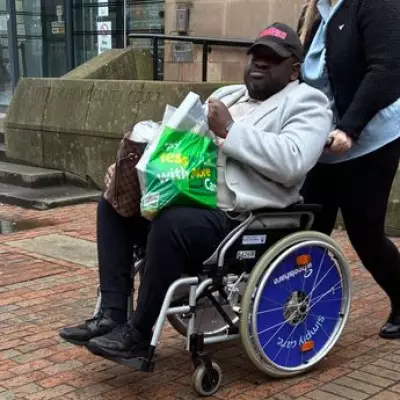
David Norris, one of the men convicted of the racist murder of teenager Stephen Lawrence, has been refused release from prison following a landmark public parole hearing. The Parole Board rejected his application for freedom, a decision welcomed by Stephen's mother, Baroness Doreen Lawrence, who labelled Norris a 'coward'.
Parole hearing reveals limited remorse
The 49-year-old, who was jailed for life in January 2012 with a minimum term of 14 years and three months, spoke about his role in the 1993 killing for the first time during the October hearing. His minimum term expired in December 2024. Norris was allowed to read a pre-prepared statement in which he expressed 'genuine remorse' and said he would 'go to my grave with that guilt in my heart'.
However, his claims of contrition were heavily scrutinised. The hearing, streamed to the Royal Courts of Justice, heard that Norris had been involved in prison clashes and had verbally abused a female nurse while incarcerated. Crucially, none of the prison workers who gave evidence supported his release.

A refusal to name other attackers
A central point of contention was Norris's continued refusal to name the other men involved in the attack. Stephen was killed by a group of five or six men in a racially motivated assault in Eltham, southeast London. Despite questioning, Norris would not identify his accomplices, citing fears for his family's safety.
He told the panel: "In an ideal world, I could tell (Stephen's family) the whole truth of my part and others. I can't give them everything they wish as it would pose a risk to me and my family." He would not even confirm the involvement of his co-defendant, Gary Dobson, who was also convicted in 2012.
Family's fury and the path ahead
Reacting to the decision, Baroness Doreen Lawrence stated: "This man owes me the truth and the Met owe me justice." She branded Norris a 'dangerous racist' and a 'coward', calling on the Metropolitan Police to intensify efforts to identify the remaining attackers.
The Parole Board panel was told that Norris had been moved back to a Category B prison in 2022 after being caught with two mobile phones and a screwdriver in his cell. While one independent psychologist instructed on his behalf believed he was ready for release, the board ultimately sided with the prison service's recommendation that he should be moved to a lower-security jail, not freed.
The case highlights the ongoing struggle for justice by the Lawrence family, more than three decades after the murder that exposed institutional racism within the Metropolitan Police and changed the landscape of British criminal justice.