

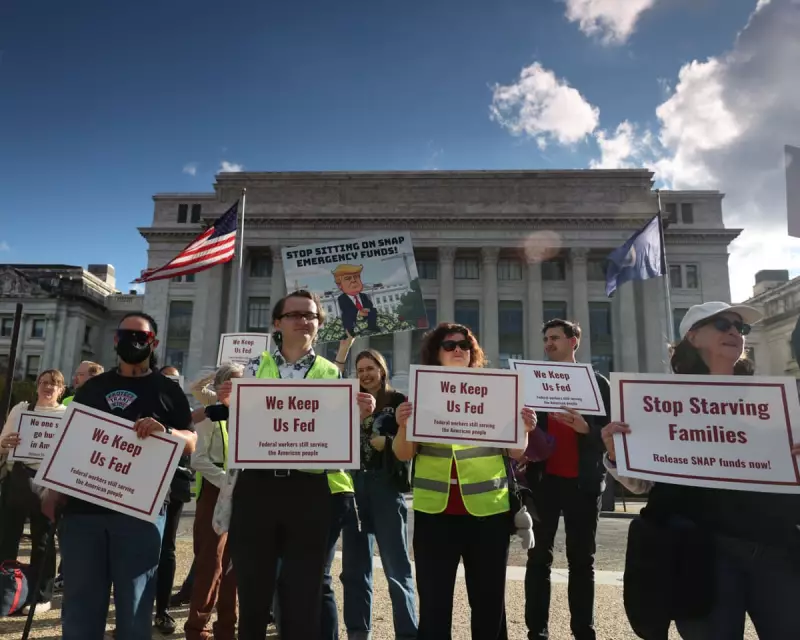
In a dramatic escalation of the ongoing US government shutdown, now in its 40th day, the Supreme Court has thrown vital food assistance programmes into chaos, affecting millions of low-income Americans.
Supreme Court Order Halts Vital Food Assistance
The crisis deepened when the Supreme Court issued an order on Friday, temporarily halting a lower court's ruling that had mandated the full funding of the Supplemental Nutrition Assistance Program (SNAP) for November. This decision came in response to an emergency request from the Trump administration.
The lower court had previously ordered the Trump administration to fully fund the SNAP programme by Friday, 30 October, rather than issuing only partial benefits. This led to some of the roughly 42 million Americans enrolled in SNAP – commonly known as food stamps – beginning to receive their full benefits from states on Friday.

USDA Directive Orders States to 'Undo' Benefits
In the wake of the Supreme Court's decision, the US Department of Agriculture (USDA), which delivers the money to states, issued a forceful directive on Saturday. The memo, from Deputy Undersecretary of Agriculture Patrick Penn, instructed states to "immediately undo" any steps taken to issue full SNAP benefits for November.
The USDA declared that any payments made under the prior court orders were "unauthorized". The memo contained a stark warning, stating that failure to comply could result in the cancellation of federal administrative funding and hold states liable for any overpayments.
State Leaders Defy Federal Order
The USDA's directive was met with immediate and fierce resistance from several state leaders. Wisconsin's Democratic Governor, Tony Evers, explicitly refused to abide by the order, stating that his state had legally loaded benefits for nearly 700,000 residents, including 270,000 children.
Governor Evers revealed that the Trump administration had previously assured states they were working to implement full benefits, but had "failed to do so to date." He confirmed Wisconsin is actively fighting the administration in court.
Massachusetts' Democratic Governor, Maura Healey, also condemned the move, stating, "If President Trump wants to penalize states for preventing Americans from going hungry, we will see him in court." She advised residents who had already received funds to continue spending them on food.
The situation remains unclear for states considering using their own funds to sustain the programme. Republican Senator Lisa Murkowski of Alaska expressed shock at the possibility that the order would apply to such states, arguing they should not be penalised for helping their citizens.
As the legal and political battle intensifies, the fate of food assistance for millions of vulnerable Americans hangs in the balance, highlighting the severe human cost of the protracted government shutdown.






