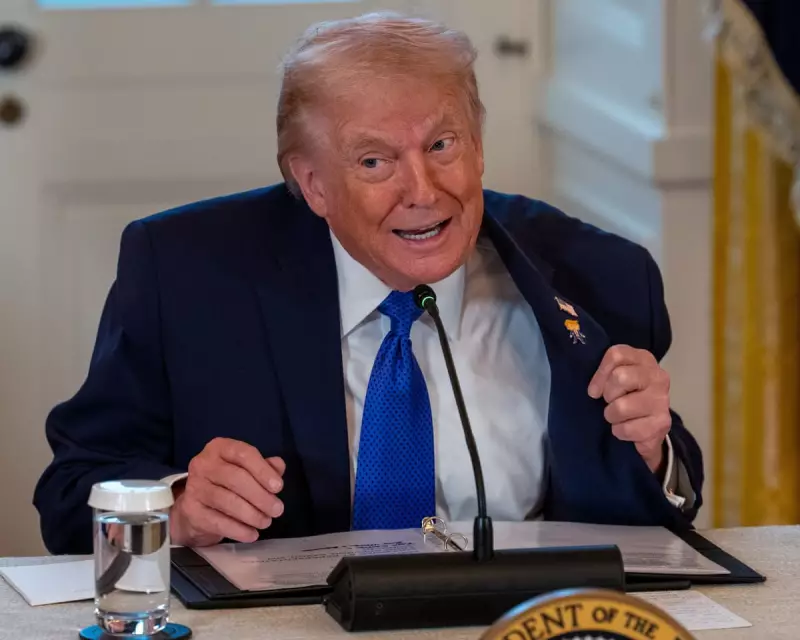
As the new year unfolds, the Trump administration has laid out a series of ambitious policy goals for 2026, signalling a renewed focus on immigration enforcement and significant economic shifts. The plans, detailed in recent briefings, aim to reshape key aspects of American domestic and foreign policy.
A Renewed Push on Immigration and Border Security
The cornerstone of the administration's 2026 agenda is a hardline approach to immigration. Officials have confirmed the revival of several contentious policies from the previous Trump term. A central pillar is the expansion of the so-called "Remain in Mexico" programme, formally known as the Migrant Protection Protocols.
This policy would require asylum seekers arriving at the US southern border to wait in Mexico while their claims are processed by American courts. The administration argues this is a vital deterrent to irregular migration, while critics and human rights groups condemn it for exposing vulnerable individuals to danger.

Furthermore, the agenda includes plans for mass deportations and the continued construction of a border wall. The administration is seeking to streamline deportation processes and increase cooperation with local law enforcement agencies, a move likely to reignite debates over federalism and civil liberties.
Economic Revisions and Trade Policy
On the economic front, the administration is proposing a sweeping review and potential overhaul of key financial regulations. This includes a re-examination of the Dodd-Frank Act, the landmark legislation passed after the 2008 financial crisis. The goal, stated by economic advisors, is to reduce the regulatory burden on banks and financial institutions to stimulate lending and economic growth.
Trade policy also features prominently. The administration has signalled its intent to renegotiate or withdraw from several international trade agreements it deems unfavourable to American workers. A particular focus is placed on addressing trade imbalances with China and the European Union, with the potential for new tariffs if negotiations fail to meet the administration's objectives.
Political Reactions and Future Implications
The announcement of this 2026 agenda has drawn immediate and sharp political divisions. Supporters hail the plans as a necessary return to "America First" principles and a robust defence of national sovereignty. They argue that strong border controls and deregulation are essential for security and prosperity.
Opponents, however, have launched fierce criticism. Democratic leaders and advocacy groups have labelled the immigration plans "inhumane" and "legally dubious". They warn of a humanitarian crisis at the border and express deep concern over the potential erosion of financial safeguards, which could risk economic stability.
Legal challenges are anticipated at every turn, particularly regarding immigration measures. The implementation of these policies will heavily depend on the administration's ability to navigate congressional appropriations and an increasingly active judiciary.
As the year progresses, these proposed policies are set to dominate the political landscape, influencing not only domestic affairs but also the United States' standing and relationships on the global stage. The battle over their enactment will be a defining feature of the 2026 political calendar.