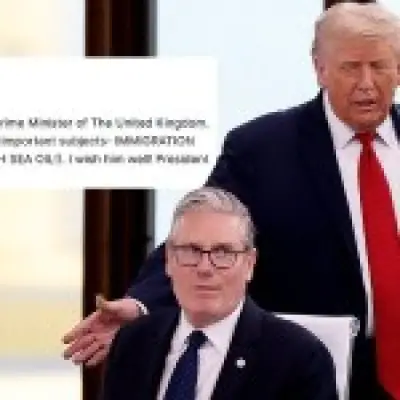
At the outset of Donald Trump's recent visit to Davos, the US president's intentions regarding Greenland remained ambiguous, sparking considerable concern among European leaders. By the day's conclusion, however, military intervention had been ruled out and tariff threats were significantly scaled back. This episode serves as a prime illustration of the erratic and often bewildering nature of Trump's second year in office, a period that has left many observers and citizens alike grappling with what some are calling 'Trump exhaustion syndrome'.
The Unpredictable Trajectory of Trump 2.0
Over the past twelve months, following the Trump administration has become an exercise in navigating sudden policy shifts and diplomatic surprises. The Greenland scenario is merely one instance in a broader pattern of volatility that characterises this phase of his presidency. From trade negotiations to international summits, the lack of consistent strategy has fostered a climate of uncertainty, both domestically and on the global stage.
A New Politically Induced Condition
This week, Jonathan Freedland engaged in a revealing conversation with Ashley Parker of the Atlantic, delving into the phenomenon she identifies as a novel, politically induced condition affecting the American populace. Parker argues that the relentless pace of controversies, combined with the president's unconventional approach to governance, has led to widespread fatigue and disillusionment among voters. This exhaustion is not merely emotional but has tangible effects on political engagement and public discourse.

The Potential Remedy: November's Midterm Elections
Parker suggests that the upcoming midterm elections in November could serve as a crucial antidote to this pervasive sense of weariness. By providing a democratic outlet for expressing discontent and potentially reshaping the political landscape, the midterms offer a pathway for citizens to reassert control and influence over the direction of national policy. The electoral process, she contends, might reinvigorate a weary electorate and address the symptoms of this syndrome through active participation.
The discussion draws upon a rich archive of media coverage, including reports from MSNBC, KCRA 3, NBC News, CNN, CBS News, Inside Edition, Forbes, the Associated Press, and WKYC. These sources collectively underscore the breadth of attention and analysis devoted to understanding Trump's impact on both American and international affairs.
Listeners are encouraged to explore related content, such as the Today in Focus episode examining Trump's new board of peace, and to contribute their queries and feedback to the dedicated email address. Support for independent journalism remains vital, with opportunities to engage further through the Guardian's platforms.
Photograph credit: Aaron Schwartz/EPA.