Eyewitness accounts from the American heartland paint a genuinely frightening picture of a nation torn in two, with citizens on opposing sides so far apart they can barely comprehend each other's perspectives. As former President Donald Trump arrived in Iowa for a campaign-style rally to kick off the midterm election season, the raw intensity of America's political divide was laid shockingly bare.
A Journey from Blue to Red States
Driving 250 miles south along Interstate 35 from Minneapolis to Des Moines reveals more than just changing landscapes. Minnesota's blue Democrat territory transforms into Iowa's red Republican stronghold, symbolising the geographical and ideological chasm splitting the nation. In Minneapolis, the community is still absorbing the killing of Alex Pretti, with street voices echoing frustration: "Leave us alone. We don't need y'all here. We don't want y'all here" and "How many more people have to die?"
Trump Country Braces the Cold
Outside the Horizon Event Center in Des Moines suburbs, where temperatures plunged to -15°C, a lone merchandise seller braved the elements hours before Trump's rally. "USA, USA," he shouted while selling $30 red caps and beanies that were flying off his cart. Despite nationwide cost of living concerns, Trump's most loyal supporters turned out on a Tuesday afternoon, their dedication undiminished by freezing conditions.

When asked about the Minneapolis shooting where American immigration agents killed a citizen on an American street, responses revealed complex attitudes. One woman called it a "huge bummer" while suggesting poor choices were made. A man bluntly stated "Don't bring a gun to a rally. That's just dumb," though when questioned about Second Amendment rights, he responded cryptically: "Pick and choose your battles, right?" Another woman expressed sadness while emphasising the need to "regain control on many aspects."
The Gulf Between Perspectives
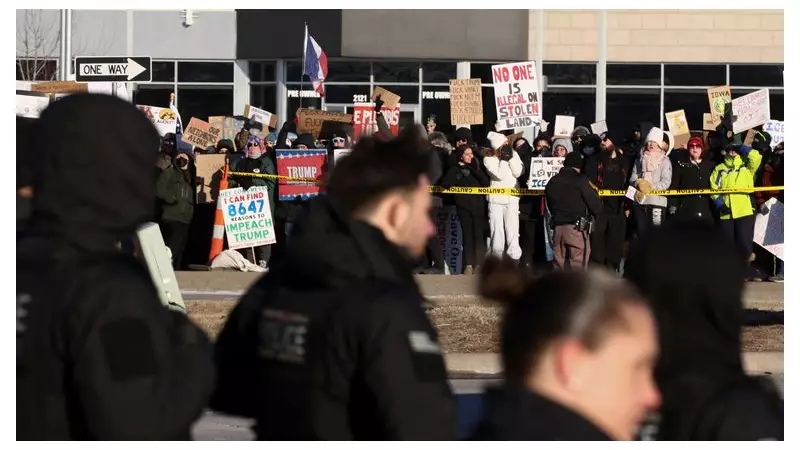
The division became starkly apparent when two young women passed by discussing "weird protesters" with a tone suggesting they couldn't comprehend alternative viewpoints. Just a hundred metres away, those anti-Trump protesters gathered in surprising numbers, their anger palpable. One man declared the shooting video showed "clearly murder," while a woman warned it had "awoken a darkness that has been hiding in the shadows."
Most poignant was a 74-year-old woman's emotional testimony: "I've never seen anything like this in the history of my country. I'm appalled, I'm disgusted. I'm scared. They're being murdered in the streets for simply saying this is wrong. This is not America."
The Rally Proceeds Amidst Tension
Trump's motorcade entered through the back, avoiding protesters entirely. During his hour-long speech, he mentioned Minneapolis only briefly, claiming "We have brought down crime very substantially. In Minnesota, we've taken out thousands of hard criminals, hardened, vicious, horrible criminals." This assertion conflicts with government statistics showing most arrested in ICE raids had no criminal records.
Focusing primarily on economic messaging his team considers crucial, Trump declared: "We inherited the highest prices in the history of our country, and we've rapidly brought them down." When protesters managed to sneak inside causing minor interruptions, he dismissed them as "paid agitators," though those outside insisted they were unpaid but genuinely agitated, with their numbers growing.
The scene in Iowa reveals more than just campaign politics—it exposes a fundamental breakdown in American discourse, where citizens inhabit parallel realities with diminishing common ground. As the midterm season begins, this raw division suggests challenging times ahead for national unity.