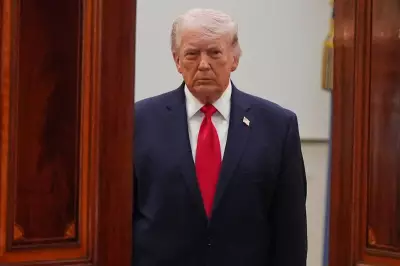
Donald Trump has consistently mistaken volume for power throughout his career, operating under the assumption that the loudest voice automatically signifies the strongest position. Yet this week provided a stark contrast that revealed what genuine strength actually looks like in American politics, embodied by Congresswoman Ilhan Omar.
The Moment That Defined Resilience
When the Minnesota representative was attacked during a town hall event, sprayed with an unknown substance and thrust into the violent frontline of America's political climate, her response was neither panic nor theatrical retreat. Instead, Omar demonstrated remarkable composure and immediate self-defence, followed by defiant determination to continue her public engagement.
'Please don't let them have the show,' she told the assembled crowd, refusing to end the event or allow disruption to claim the democratic space. This reaction emerged not from political calculation but from a lifetime shaped by necessity – Omar's background as a former refugee and survivor of war has instilled resilience long before Trump's brand of politics entered the national consciousness.

Contrasting Life Experiences
The congresswoman has experienced genuine fear born from instability, violence, displacement and loss – not the performative grievance that often passes for it in Trump's America. Those who grow up under such conditions understand survival as a concrete reality rather than an abstract concept. This explains why Omar's response proved so striking: not merely her refusal to be silenced afterward, but her instinctive physical self-protection during the attack itself, executed without drama or hesitation.
Donald Trump, by contrast, was born insulated from consequence, raised in privilege, and consistently rewarded for aggression throughout his career. His political approach reflects this upbringing – he escalates situations because crossing boundaries has rarely cost him anything, and he provokes conflict because he has never needed to calculate personal risk. This fundamental difference in lived experience leads to persistent underestimation of individuals like Omar.
The Dangerous Consequences of Rhetoric
Trump is no bystander in this narrative but rather the central catalyst. Omar has explicitly connected his rhetoric to the threats she regularly faces, noting that she receives the highest level of death threats of any congressional member. These threats nearly disappeared during Joe Biden's presidency but have exploded again following Trump's political return – a pattern that suggests causation rather than coincidence.
The former president does not merely criticise Omar's political positions but personalises her as a threat, casting her as illegitimate, un-American and dangerous based on her race and faith. He has even suggested she orchestrated the attack herself. When a former US president engages in such vilification, the signal travels widely – as demonstrated during the January 6th riots, some supporters interpret such language as permission while others hear direct incitement.
A Wider Pattern of Political Violence
This dynamic extends beyond a single incident. Just days earlier, Congressman Maxwell Frost was allegedly assaulted, shoved and verbally abused by an individual shouting political slurs and declaring that Trump would deport him. Frost, the youngest member of Congress, attributed the attack to national tensions over immigration and identified Trump as bringing out the worst in people.
These incidents collectively highlight how public service now carries ever-present physical risks, particularly for lawmakers who diverge from traditional American power structures. The common thread transcends political or policy disagreement – it represents a battle about identity itself, targeting Omar as a Muslim woman and refugee, and Frost as a young Black man.
The Fundamental Misunderstanding of Strength
Trump consistently misunderstands that intimidation only functions until it encounters genuine resistance. His political approach relies on the assumption that pressure inevitably causes retreat, but Omar's response demonstrates the limits of this logic. She neither folded nor ceded the space, transforming her refusal to stop speaking from personal courage into a political act that rejects violence as an effective tactic.

The former president's obsession with making everything bigger, louder and more aggressive – whether concerning land, money or domination – reveals his fundamental need to be perceived as strong. Yet this unrestrained arrogance constitutes his greatest weakness. While Trump accuses Omar of fraudulent behaviour, her conduct under threat demonstrated nothing but integrity, resilience and clarity.
Words That Incite Real Violence
Trump's dismissal of the attack on Omar, coupled with his default to name-calling, reflects an inability to acknowledge that his words carry weight and that responsibility rests with him when people act upon them. His incessant reversion to schoolyard bullying tactics, operating as though consequences don't exist, ultimately demonstrates frailty rather than strength.
Ilhan Omar understands that words matter profoundly because she has inhabited a world where they incite actual violence rather than merely generating online engagement. She recognises that public spaces must be defended rather than surrendered because she has witnessed what happens when intimidation goes unchallenged.
Donald Trump may wish he possessed Ilhan Omar's authentic strength – the kind forged through facing genuine adversity, surviving it, and emerging with clarity rather than cruelty. But he hasn't experienced this transformation, which explains why he consistently misjudges her. He operates through bluster while she stands upon experience, and in contemporary American politics, this distinction is becoming impossible to ignore.