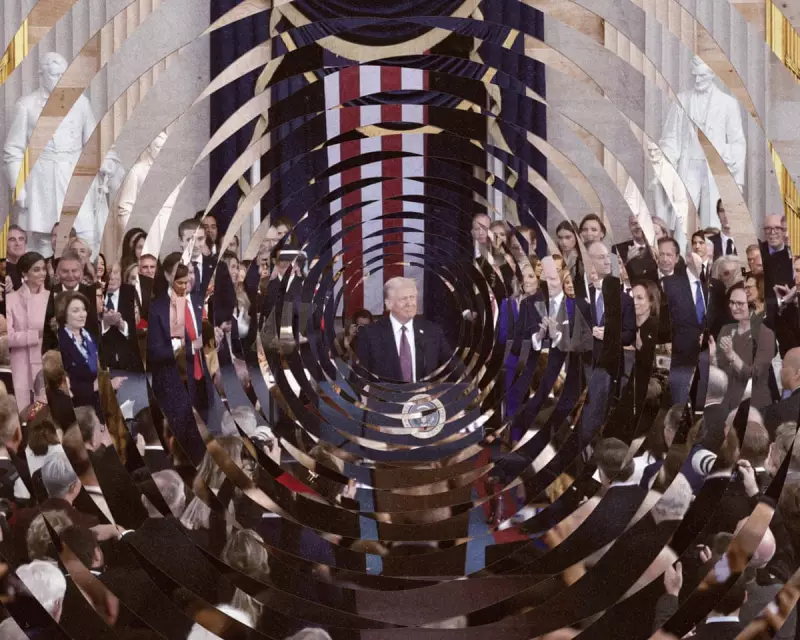
On a bitterly cold 20th of January 2025, Donald Trump was inaugurated as the 47th President of the United States inside the Capitol rotunda. With former presidents and tech titans in attendance, he delivered a stark address, vowing to reclaim sovereignty, restore safety, and rebalance justice. He promised a torrent of executive action on a range of issues from the border to the economy. One year on, we examine the fate of ten central pledges from that day.
Domestic Agenda: Justice, Economy, and Social Policy
In his inaugural speech, Trump pledged to end the "weaponisation" of the Justice Department. His Attorney General, Pam Bondi, has pursued his agenda vigorously. The administration points to a significant drop in crime; the Real Time Crime Index reported roughly 20% fewer murders in 2025 compared to 2024. However, critics argue the President has himself wielded state power against perceived opponents, ordering investigations into figures like former FBI director James Comey and Federal Reserve chair Jerome Powell.
On the economy, Trump vowed to defeat record inflation. While the Consumer Price Index showed some improvement, falling to 2.7% by December 2025 from 3% at his inauguration, affordability remains a pressing public concern. A January 2026 Reuters/Ipsos poll found only 36% approved of his economic handling. His "Working Families Tax Cut Act" has been criticised by Democrats as a boon for the wealthy that could strip healthcare from millions.

Trump moved swiftly on social policy, eliminating all federal Diversity, Equity, and Inclusion (DEI) programmes and declaring official US policy recognises only two genders. He removed the non-binary 'X' option from passports and sought to end gender-affirming care for under-19s.
Immigration and "America First" in Action
No issue has defined Trump's return more than immigration. A day-one national emergency led to over 622,000 deportations and 1.9 million self-deportations by December. He reinstated the 'Remain in Mexico' policy, ended 'catch and release', and deployed troops. Cartels were designated foreign terrorist organisations.
The enforcement push extended into US cities, with federal forces like ICE operating, sometimes controversially, against the wishes of local authorities. A January operation in Minneapolis resulted in the death of mother and poet Renee Good, shot by an ICE officer—an incident federal officials called self-defence but the mayor deemed reckless.
On trade, Trump imposed sweeping tariffs on 2nd April 2025, including a 10% baseline tax on imports. While avoiding predicted economic catastrophe, they have caused market volatility and higher consumer prices. The Supreme Court is now hearing a challenge that could overturn them.
Foreign Policy and Unorthodox Experiments
Despite campaigning as a peacemaker, Trump's first year saw significant military action. The US conducted strikes in Iraq, Nigeria, Somalia, Syria, Yemen, and Iran. The most dramatic move came in early 2026 with the bombing of Venezuela and capture of its leader, Nicolás Maduro. He repeatedly sided with Russia over Ukraine and mused about operations in Colombia.
One of the more unorthodox endeavours was the creation of the Department of Government Efficiency (Doge), led by billionaire donor Elon Musk. Promising trillions in savings, it caused widespread administrative chaos before disbanding eight months early, with Musk later calling it a "side quest".
In energy, Trump declared a national emergency to "drill, baby, drill," resulting in a 55% surge in drilling permits and making the US a net exporter. He also initiated withdrawal from the Paris Climate Agreement and, in January 2026, pulled out of the underlying Framework Convention on Climate Change.
Assessments of Trump's first year back remain deeply polarised. Supporters credit him with reducing crime and taking decisive action on immigration. Critics see a year of democratic norm-breaking, divisive social policies, and a foreign policy that has unsettled allies. As the administration enters its second year, the trajectory set by these initial promises continues to define a deeply divided political landscape.