Trump's Surreal Iran Speech Sheds No Light on War Goals
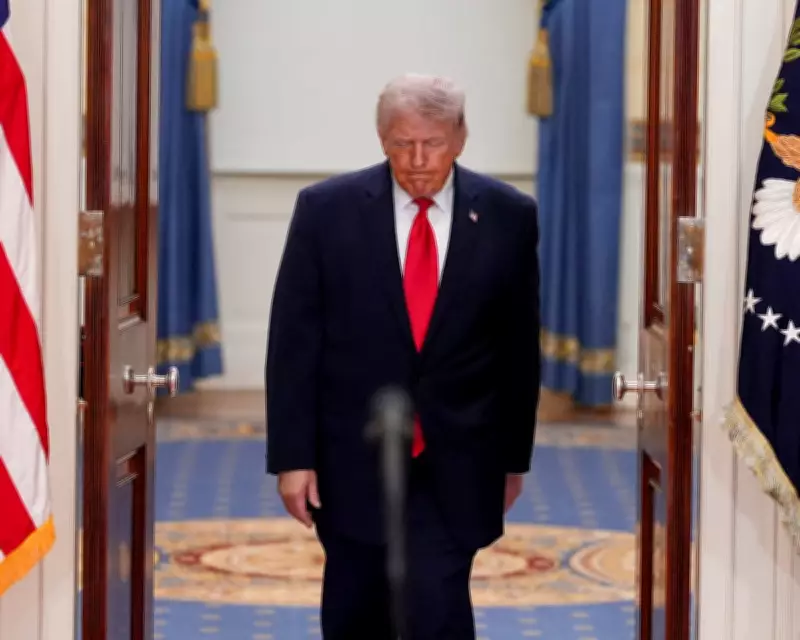
Donald Trump's self-congratulatory address on Iran, delivered on Wednesday night, was as puzzling as it was divorced from reality. Many had hoped he would declare victory and end the conflict, while others feared he might justify a ground invasion. Instead, Trump urged patience, claiming he is nearly finished, yet he remained utterly unclear about what objectives remain to be accomplished.
The Nuclear Goal and Obama's Deal
If there was ever a purpose to the war, it was to curtail Iran's capacity to develop a nuclear weapon. Trump repeatedly emphasized this goal in his speech, vowing he "would never allow Iran to have a nuclear weapon." However, he failed to mention that Iran has long agreed to eschew nuclear weapons. If that is the sole aim, this entire war appears pointless.
Trump disparaged Barack Obama's nuclear deal with Iran as "a disaster," proudly noting he had "terminated" it. Obama's agreement was designed to prevent Iran from securing a nuclear weapon by imposing strict limits on uranium enrichment and requiring intrusive international inspections. With the deal shredded, Iran proceeded to enrich uranium to levels just short of what is needed for roughly a dozen bombs, though turning enriched uranium into weapons is more complex.

Enrichment and War Rationale
Trump said nothing about uranium enrichment, a principal focus of the negotiations he aborted by going to war. He noted that canisters of highly enriched uranium are buried and warned that if Iran approached its "obliterated nuclear sites," US satellites would notice and missiles would follow. But this was true before Trump launched this war of choice, raising the question: what was the point? Iran had offered in recent talks to dilute enriched uranium, but it now possesses all of it in unadulterated form.
Financial and Military Claims
Trump mocked Obama for giving Iran $1.7 billion in cash as part of the nuclear deal, funds that Iran had paid for undelivered military equipment pre-1979. Yet Trump ignored the far larger $14 billion he effectively handed Iran by lifting sanctions to allow oil sales, prioritizing lower gas prices over depriving Iran's military.
He stressed how Iran's military capacity had been "decimated"—its navy "gone," air force "in ruins," factories and rocket launchers "blown to pieces," and drone and missile abilities "dramatically curtailed." Trump claimed to be "on the cusp of ending Iran's sinister threat," but offered no clarity on what more is necessary.
Strategic and Economic Implications
Trump boasted of returning Iran "back to the stone ages," but after such obliteration, why is more needed? Is it worth the damage to the global economy and Iranian people? He didn't say. Regarding the Strait of Hormuz, Iran attacks tankers as an asymmetrical response to US-Israeli bombardment. Why not stop bombing in return for oil flow resumption, a proposal reportedly on the table? Trump avoided this, instead saying the strait would reopen "naturally" once the war ended.
He reiterated that countries whose oil flows through the strait should protect it, ignoring that blocked straits raise prices globally, including for Americans. European governments, never consulted before Trump's war, want no part in it. At least he didn't repeat his threat to abandon NATO over this offensive war.
Regime Change and Leadership
Trump disowned regime change as a war aim, despite it being a central theme in his initial address urging Iranians to "take over your government." He claimed regime change occurred anyway due to leadership deaths, saying new leaders are "less radical and much more reasonable." Yet most analysts say hardliners are now in charge. If they are more reasonable, why can't Trump strike a deal? He threatened to attack power plants—a potential war crime—but didn't specify what deal he wants.

Deal Negotiations and Market Concerns
The biggest obstacle to a deal may be Trump himself, needing to portray this senseless war as a triumph. A ceasefire for reopening the strait is feasible, but nuclear negotiations are tougher. To what degree can Iran enrich uranium? What happens to existing highly enriched uranium? These were topics in abandoned US-Iran talks. Trump could agree to a temporary ceasefire while resolving these issues, but he mentioned no such strategy.
His speech may have been an attempt to calm markets, especially surging oil prices threatening Republican midterm prospects. Trump pleaded to "keep this conflict in perspective," comparing it to shorter wars, though those had articulable purposes. He assured objectives would be achieved "shortly," with bombers hitting Iran "extremely hard" over the next few weeks.
Conclusion: A Dangerous and Befuddled Leader
But why? Israel favors more bombing to sow destruction, and some Gulf states seem to agree. Bombing without a legitimate military goal, merely to pulverize society, constitutes an unjust war. Trump's earlier talk of an imminent threat from Iran is gone; now it seems destruction for destruction's sake.
Far more important than what Trump said is what he couldn't say. He couldn't give a single coherent reason for why this aggressive war of choice must still be prosecuted. It was the speech of a dangerous man, infatuated with military power but befuddled in explaining its use. This is a shameful moment for America under such leadership.