Starmer Defiant as Trump Launches Repeated Criticism Over Iran War Stance
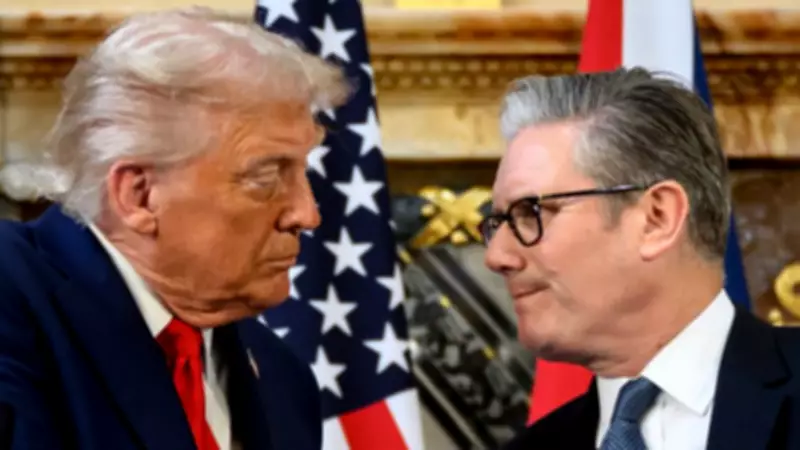
Prime Minister Keir Starmer has declared he will not "buckle under pressure" from the White House regarding the Iran conflict, despite facing at least nine separate attacks from former US President Donald Trump. In an exclusive interview with Sky News, Starmer emphasized his commitment to maintaining principles while seeking a good relationship with the American leader.
"I'm Not Going to Waver"
Speaking to Sky News political editor Beth Rigby, the prime minister acknowledged Trump's attempts to "put pressure on me in different ways" but remained resolute. "That pressure isn't going to make me waver," Starmer stated. "It's not going to make me abandon my principles or values. I'm not going to back down... I'm not going to get dragged into the war... I'm not going to buckle under pressure."
The prime minister expressed his desire for a positive relationship with the US president while maintaining his position on UK involvement in the Middle Eastern conflict.

Trump's Nine Attacks: A Timeline of Criticism
By Sky News' count, Donald Trump has publicly criticized Prime Minister Starmer on at least nine different occasions since January, primarily focusing on two key issues: the UK's stance on the Iran war and the sovereignty transfer of the Chagos archipelago to Mauritius.
20 January - 'Act of Great Stupidity'
Before the Iran conflict began on 28 February, Trump launched his first attack regarding the Chagos Islands agreement. On Truth Social, he called the sovereignty transfer "an act of total weakness" and "an act of GREAT STUPIDITY," expressing concern about potential US military access to Diego Garcia.
18 February - 'A Big Mistake'
The following month, Trump escalated his criticism, labeling the Chagos agreement "a big mistake" and questioning the legitimacy of sovereignty claims. He explicitly connected this criticism to potential military needs, stating that Diego Garcia and RAF Fairford might be necessary "to eradicate a potential attack" from Iran.
02 March - 'Very Disappointed'
Three days into the Iran war, Trump told The Telegraph he was "very disappointed in Keir" for taking "far too long" to reverse his initial decision denying US use of UK bases for strikes against Iran.
03 March - 'Not Winston Churchill'
The next day brought intensified criticism, with Trump telling The Sun that Starmer "has not been helpful" before delivering his now-famous line during an Oval Office news conference: "This is not Winston Churchill we're dealing with."
07 March - 'We Don't Need Them'
Over a week into the conflict, Trump introduced a new insult, suggesting Starmer had offered to send both Royal Navy aircraft carriers to the Middle East—a claim the UK government denies. He wrote that the US "doesn't need people that join Wars after we've already won!"
16 March - 'The Rolls-Royce of Allies'
Trump repeated attacks about UK military support, claiming he asked Starmer to send ships and received reluctance in response. He expressed disappointment with a nation once considered "the Rolls-Royce of allies" and criticized decision-making processes within the UK government.
17 March - 'Not Winston Churchill' Repeated
Hosting the Irish Taoiseach on St Patrick's Day, Trump again stated that "unfortunately Keir is no Winston Churchill" and repeated claims about delayed aircraft carrier offers, saying "we want things sent before the war, not after the war is won."
20 March - 'A Very Late Response'
Speaking to reporters on the White House lawn, Trump criticized the UK government for "a very late response" to the conflict and expressed surprise at British actions regarding the Chagos Islands, stating "they should have acted a lot faster."
26 March - Royal Navy Carriers 'Are Toys'
In his latest round of criticism, Trump combined previous talking points, calling himself "very disappointed" with Starmer, labeling the UK response "shocking," and dismissing Royal Navy aircraft carriers as "toys compared to what we have." He also criticized the Chagos agreement and Starmer's initial ban on US use of Diego Garcia.

Diplomatic Tensions and Strategic Differences
The ongoing criticism highlights significant diplomatic tensions between the UK and US administrations regarding Middle Eastern policy and military cooperation. Starmer's initial refusal to allow US strikes from UK bases, followed by his reversal, has become a focal point of Trump's attacks.
The Chagos Islands sovereignty transfer remains another persistent issue, with Trump viewing it through the lens of military strategy rather than historical justice or international law. His characterization of Starmer as "a liberal" in reference to the agreement underscores ideological differences between the two leaders.
Despite the repeated public criticism, Prime Minister Starmer maintains his position of seeking constructive relations while refusing to compromise on principles. The situation represents one of the most public diplomatic disagreements between the two allies in recent years, with implications for NATO cooperation and transatlantic relations.