

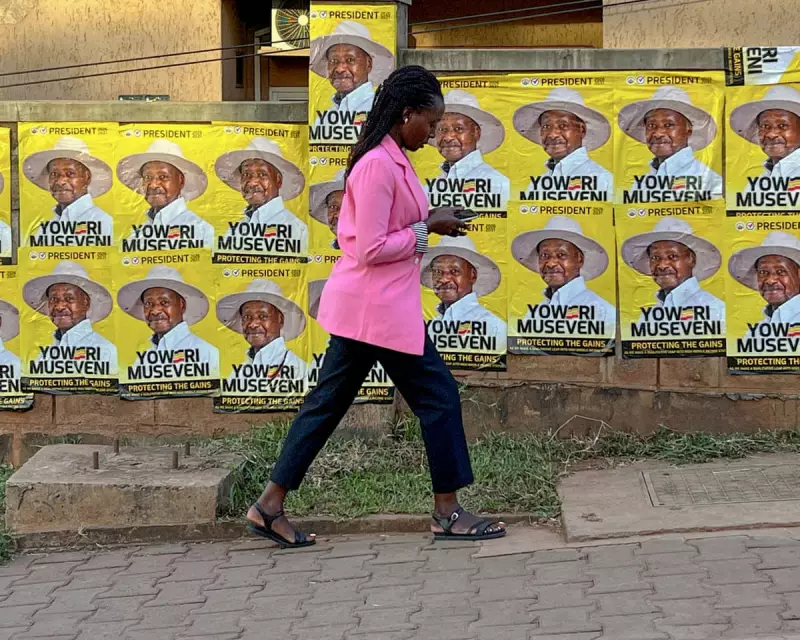
Uganda's Younger Generation Confronts Political Reality After Museveni's Seventh Term Victory
As campaign posters for President Yoweri Museveni and his National Resistance Movement party adorned the streets of Kampala ahead of the January general election, Uganda's substantial youth population watched with mixed emotions. This month's declaration of Museveni's seventh term victory has confirmed many young citizens' worst fears about their nation's political trajectory.
A Generation's Hopes Dashed by Familiar Results
When Uganda's electoral commission announced President Yoweri Museveni as the winner of the 2026 general election, the news brought little surprise to the country's younger voters. Those aged under thirty-five constitute more than three-quarters of Uganda's population, making it the second youngest nation globally. For many, Museveni's victory represented not just another term for the eighty-one-year-old leader but the crushing of fragile hopes inspired by opposition leader Robert Kyagulanyi, popularly known as Bobi Wine.
Sarah Namubiru, a twenty-one-year-old university student aspiring to become a teacher, explains her perspective: "The results were not a reflection of what we want and I am disappointed because it seems my vote was not respected. I am wondering where I will get a job with thousands of teachers superior than me being idle. I do not know anyone in the government and we all know you need to know someone to get a job. For me, that's why I need change."

Systemic Challenges and Political Realities
Museveni secured his seventh term with approximately seventy percent of the vote, though the election occurred amid allegations of fraud and a nationwide internet shutdown during the two days preceding the poll. In his victory address, the president accused opposition figures of terrorism, while Bobi Wine, who garnered twenty-five percent of votes, retreated into hiding following a police raid on his residence.
The election outcome has compelled numerous Ugandans to reconsider whether meaningful political transformation remains achievable within the current framework. Norman Turyatemba, a thirty-two-year-old leader within the opposition Forum for Democratic Change party, articulates this sentiment: "Well, the results were obvious; in my heart I knew they wouldn't announce anyone else because Museveni has set up a system in his own favour."
Turyatemba voices concerns shared by many regarding political succession, noting that Museveni appears to be grooming his son, General Muhoozi Kainerugaba, as his potential successor. "The current leadership seems designed to suppress voices of young people," he observes. "Imagine a system where leaders hold positions for over forty years, is there any room for the next generation? With crippling taxes and soaring unemployment, the future looks uncertain for Uganda's youth."
Employment Crisis and Economic Pressures
A 2021 report from Uganda's national planning authority revealed that eighty-seven percent of graduates struggle to secure employment, with many resorting to informal work such as operating motorcycle taxis, locally known as boda bodas. This employment crisis forms a central component of youth dissatisfaction with the political status quo.
Dr Shamim Nambassa, a twenty-six-year-old leader within Bobi Wine's National Unity Platform, expresses the disillusionment felt by many: "[Museveni's] declaration is a stolen victory; that's why there was no celebration but rather silence over the nation. I voted for a new Uganda to see medicine in hospitals, jobs for the many educated youth, the end of corruption and poverty among our people."
She adds pessimistically: "Nothing is going to come out of the next five years apart from misery. We do not expect anything good because even the peace he once gave us has been taken away."

Divergent Perspectives Within the Youth Population
Not all young Ugandans share this critical perspective. Grace Talindeka, a twenty-six-year-old businessperson, explains her support for Museveni: "I am a business person so I need predictability and Museveni gives that, much as it's imperfect. Some of us don't want chaos like we have seen in other countries like Kenya. If the opposition wants power, they need to show that they have solutions to Uganda's problem rather than mobilising anger."
Guma Twinamasiko, a youth leader within Museveni's National Resistance Movement, defends the party's record: "I know life is hard everywhere, not only in Uganda. I have seen roads all over improve, programmes for both the formal and informal sector. Young people should not gamble with leadership – if you have the best, why drop him?"
Political Disengagement and Personal Struggles
John Katumba, who was the youngest presidential candidate in the 2021 election, warns of growing political disengagement among Uganda's youth: "Young people are likely to disengage from politics. You vote but your leader is never declared. It's not the first time nor the second. That frustration has and will push many into silence."
Katumba recalls the use of teargas and arrests during crackdowns on dissent in previous election cycles, noting that such experiences have left psychological scars among politically active young citizens. "We have learned how to survive disappointment," he reflects. "That idea that the ballot alone will save us has been beaten out of people but that doesn't mean people have accepted the system."
For many young Ugandans, immediate economic concerns overshadow formal political participation. Ahmed Ssentongo, a twenty-five-year-old engineering graduate who operates a boda boda to sustain himself, encapsulates this reality: "We need change, not just as young people but as a country. Museveni did a lot of good things but he is now wiping them out. I want to get a good job because I graduated, I want to see a future for my child brighter than what I am going through now because everything is expensive. We need a total transformation but it can only come with a new government."
The contrasting narratives emerging from Uganda's youth population reveal a nation at a political crossroads, where generational aspirations confront entrenched power structures, and where economic survival often takes precedence over political idealism.





