Public Sexual Harassment Now a Specific Criminal Offense in the UK
Sexually harassing individuals in public spaces has become a distinct criminal offense in the United Kingdom as of today, with a significant legal change officially taking effect. This landmark legislation means that behaviors such as catcalling, following, and intimidating women or girls could now result in perpetrators facing up to two years in prison.
Long-Awaited Legal Protection
The change follows an extended period of anticipation for campaigners since the Protection from Sex-based Harassment in Public Act was first passed under the Conservative government in September 2023. The enforcement date of April 1 was finally established by Keir Starmer's administration as part of last year's comprehensive Violence Against Women and Girls strategy. This decision emerged from extensive consultations between police authorities, activists, and political representatives regarding the practical implementation of the legislation.
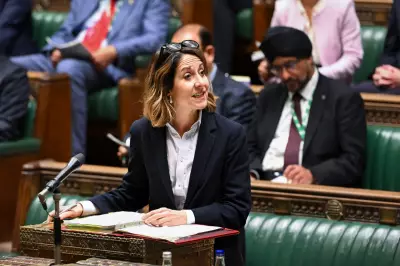
Minister for Violence Against Women and Girls Jess Phillips emphasized to media outlets that this legal shift will empower victims to contact law enforcement when they experience discomfort in public settings, with the assurance that concrete action can be taken. Phillips stated: "If you believe that shouting at a teenage girl in school uniform from your vehicle about her appearance doesn't cause her to alter her route home, doesn't make her anxious every time she encounters a similar vehicle—it absolutely changes her behavior. I want this shame to transfer sides. I want perpetrators to modify their conduct."

Phillips clarified her role in the process: "I'm not serving as judge and jury in these situations. My responsibility is crafting legislation, and cases would need to meet evidentiary standards. However, if anyone believes such behavior is acceptable, there's something fundamentally wrong with their perspective."
Police Response and Implementation
Commander Clair Kelland, the Public Protection Lead at the Metropolitan Police, explained that such incidents were previously addressed through "more generic legislation" like the Public Order Act. She expressed enthusiasm about the new framework: "We're genuinely pleased and excited about this legislation because it provides us with the opportunity to criminalize behavior that women and girls have endured and tolerated for far too long. This focuses attention on perpetrators rather than victims or those subjected to such conduct—including actions like following, catcalling, and misogynistic remarks that make women and girls feel uncomfortable and unsafe."
Commander Kelland stressed that reports would be handled on a "case-by-case basis," noting that the legislation would enable police to "develop intelligence regarding individual perpetrators and geographical hotspots" to support future investigations.
Legal Framework and European Context
The United Kingdom already possesses several laws applicable to sexual harassment in public spaces, including specific offenses for exposure, upskirting, and cyberflashing. Section 4A of the Public Order Act 1986 addresses intentional harassment, alarm, or distress caused through words or behavior. Earlier this year, a vehicle passenger received a £100 fine for shouting "Go on ladies, get running" at a group of female joggers, with police issuing a fixed penalty notice for breaching a Public Space Protection Order and warning that the behavior constituted sexual harassment.
The new legislation establishes section 4B of the Public Order Act, introducing an aggravated offense when harassment, alarm, or distress is motivated by someone's sex or presumed sex. This provision allows for increased sentences of up to two years imprisonment for offenders.

This legal development follows similar measures implemented in several European nations. Belgium pioneered this approach with its Sexism Law in 2014, followed by France's legislation—commonly called the Loi Schiappa (Schiappa Law)—in 2018. The French law, named for then-Minister of Gender Equality Marlène Schiappa, has resulted in thousands of offenses being documented by police in subsequent years. In contrast, Belgium's less prominent legislation has demonstrated more limited impact, with law enforcement reportedly hesitant to file official reports, according to the country's Institute for Equality of Women and Men. The Netherlands also introduced new legislation targeting public sexual harassment in 2024.
Campaign Efforts and Cultural Challenges
Campaign organization Our Streets Now spearheaded the initiative to establish this specific offense in the UK. Director of Advocacy Georgia Theodoulou expressed pride in achieving legal change but acknowledged broader cultural challenges: "We're extremely proud to have affected legal change. However, we recognize that while this sends a clear message that public sexual harassment will no longer be normalized for countless women and girls, legislation alone cannot transform the problematic culture we continue to inhabit. We will build upon this success through our preventive education work with professionals and young people across the UK."
Speaking at Victoria railway station in London, Jess Phillips encouraged women to recognize available "routes to report" incidents they experience—particularly on public transportation systems. She emphasized: "Local systems are established to ensure you can report. Reporting mechanisms exist. Furthermore, what has happened to you potentially constitutes a crime, and someone could be held accountable. I want people to understand this reality."