

The Breaking Point: Britain's Political System Under Siege
Westminster recently witnessed another spectacle that managed to be both underwhelming and absurd. Chancellor Rachel Reeves delivered what Treasury sources described as a "pitch-rolling" speech, desperately attempting to communicate her message to the public while carefully avoiding explicit details. The event's fundamental absurdity lay in her approach: she signaled something hugely significant was coming while refusing to state it clearly, thereby confirming many voters' most cynical views about politics.
The Tax Promise Set to Shatter Public Trust
Through nods, winks and anonymous briefings, Reeves made the obvious clear: she cannot honour Labour's manifesto pledge to avoid raising national insurance, VAT or income tax. The basic rate of income tax appears likely to increase - a gambit last attempted by a chancellor in 1975. This represents a massively dangerous moment for the government.
Regardless of any sweeteners offered or measures targeting higher earners, breaking one of the few memorable promises from the last election will have severe consequences. This move confirms what many Britons feel intensely: they're paying more and receiving less. Public trust in traditional politics, already at woeful levels, will likely reach new depths with potentially seismic repercussions extending far beyond Reeves and her party.

The Fragmentation of British Politics
Luke Tryl, UK director of thinktank More In Common, pinpointed the crisis days before Reeves's speech. He stated on X: "I still don't think enough people realise how much traditional mainstream politics is in the last chance saloon, in no small part because it can't be trusted to deliver what it promises." He highlighted the previously unthinkable reality that the combined Green and Reform vote now exceeds the Tory and Labour vote.
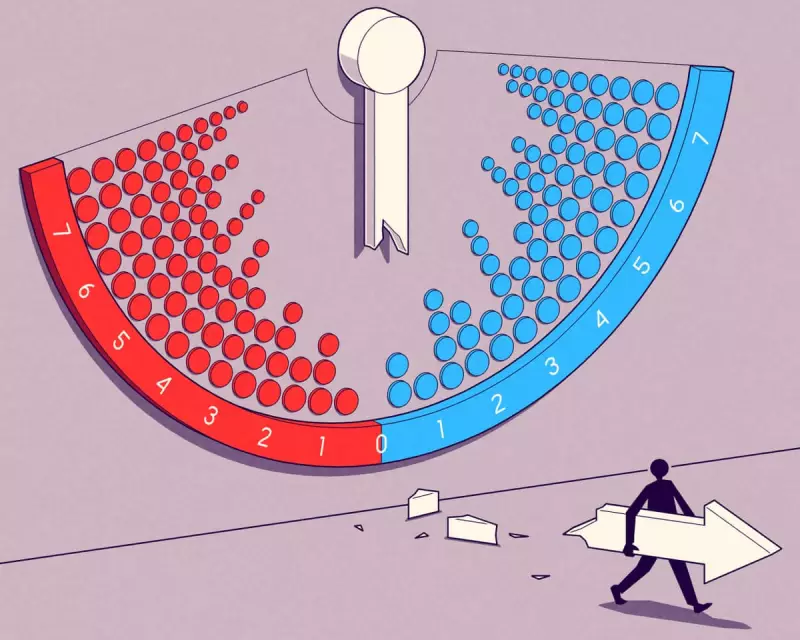
Britain finds itself in the midst of huge political fragmentation and realignment, which Reeves, Keir Starmer and their colleagues appear to be accelerating. Reform UK's poll lead approaches its first anniversary. The Green party has recently drawn level with Labour, even pulling slightly ahead in some surveys. The Liberal Democrats remain close behind, while the Conservatives - who achieved 43% of the vote in 2019 - now languish in the mid-teens. With Plaid Cymru's credible ratings in Wales and the SNP's revival in Scotland, the picture of political fragmentation becomes complete.
Historical Context and Modern Realities
This trend of turbulence and insurgency has gathered momentum for years. Taking a long view, one could return to 1974 when the old Liberal party secured nearly 20% of votes, Plaid Cymru made breakthroughs, and the SNP won nearly a third of Scottish votes in the second election. However, the clearest narrative spans roughly the past decade.
UKIP's nearly 4 million votes in the 2015 general election preceded the spectacular Brexit vote telling the same story. This led to wild swings that turned numerous Labour heartlands blue in 2019, culminating in last year's election defining facts: advances for Reform, the Greens and Lib Dems, with Labour securing victory through support from just 20% of the total electorate.
The reasons extend far beyond the charisma of Nigel Farage and Green leader Zack Polanski contrasting with Starmer, Reeves and Kemi Badenoch's comparatively leaden approaches. While the country's stagnation remains highly relevant, fundamental causes run deeper than an economy and society largely unchanged since the 2008 financial crash and subsequent governmental failures.
Modern politics changes rapidly because modern human beings do - without institutional guardrails preserving a two-party system as in the US, voters' choices reflect their complex lives and identities, intensified by social media. There will be no return to majoritarian politics where most voters loyally choose between two archaic teams.

Mainstream Parties Struggling to Adapt
Facing enormous change, the Tories and Labour share significant common ground. Both continue hoping 20th-century politics can somehow revive, behaving as if something's terribly wrong when old methods fail. Current evidence shows both parties responding to transformed realities with panic and a governing style mixing complacency with ineptitude.
Labour hasn't approached the Liz Truss catastrophe level - indeed, Reeves's core principle involves avoiding anything remotely similar. Yet after less than 18 months in power, it's indelibly become the party that created a terrible mess over winter fuel allowance before descending into the up-the-hill-then-down-again farce of proposed disability benefit cuts. Astonishingly, it lacks any coherent narrative when confronting completely predictable difficulties like breaking rash tax promises it probably couldn't keep.
We now learn Labour's last electoral hope might lie in mass tactical voting against Reform, with one insider suggesting "even if they hate us, they hate Farage more." This represents a pitiful position, indicating Labour may simply be unable to cope with 21st-century political realities.
The Future Political Landscape
Soon enough, an electoral system completely ill-suited to seven-party politics might nonetheless grant Reform a Commons majority or coalition leadership. While this would represent a waking nightmare, one ray of hope exists. A key element of the current political mood involves constant, bitter revolt against power, where incumbency represents the worst political look possible. If today's insurgents and troublemakers become tomorrow's ruling establishment, the turbulence and complexity they feed upon will inevitably come for them too.
This indicates the true nature of the modern political cycle: a twisted wheel spinning faster than any of us yet comprehend. The era of politicians in suits spouting cliches about "hardworking families," conducting daily media rounds, delivering "pitch-rolling" speeches and performing Westminster's other outmoded rituals has irrevocably passed.





