

Gaza's Fragile Ceasefire Brings Hope Amid Ruins
The first fragile ceasefire in Gaza following two years of devastating conflict has brought temporary respite to the exhausted population, according to Philippe Lazzarini, commissioner-general of the United Nations Relief and Works Agency for Palestine Refugees (UNRWA). The ceasefire forms part of US president Donald Trump's 20-point peace plan, though daily breaches continue testing the resolve of international guarantors.
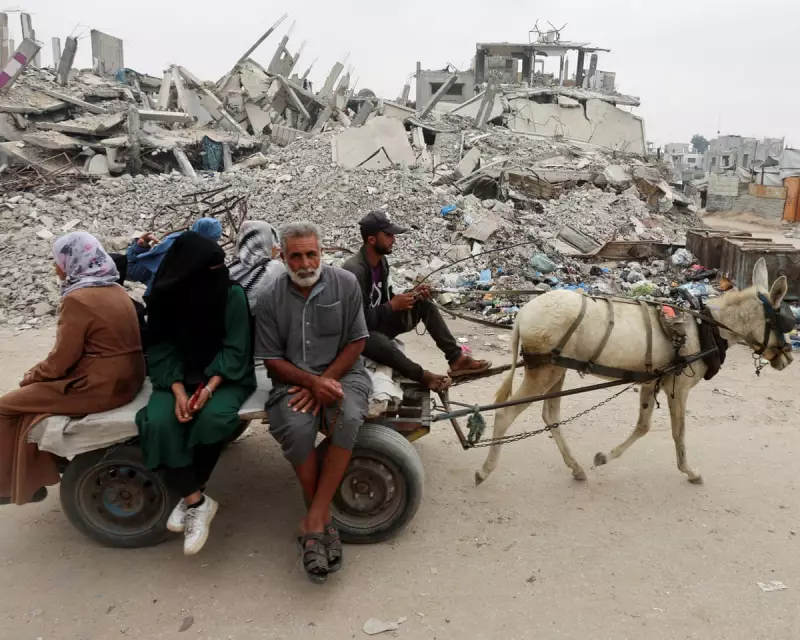
In Khan Younis, where Palestinians now navigate destroyed buildings using donkey carts as captured in Ramadan Abed's Reuters photograph from 3 November 2025, the physical devastation matches the scale of human suffering. While the immediate threat of bombs and guns has diminished, UNRWA staff face enormous challenges providing shelter, food and clean water as winter approaches rapidly.
UNRWA's Critical Role in Gaza's Recovery
Lazzarini emphasised that UNRWA possesses the expertise and resources to address critical humanitarian needs at scale, but requires freedom to operate without arbitrary restrictions on personnel and supply movements. The agency's thousands of Palestinian staff have maintained community trust through decades of service, providing healthcare, education and other essential public services.

The International Court of Justice recently reaffirmed UNRWA's professionalism and indispensable humanitarian role, describing the agency as an impartial and neutral actor. This endorsement comes as nearly 700,000 school-aged children live among rubble, deprived not only of homes and loved ones but also education. UNRWA's human rights education programme represents a crucial bulwark against radicalism emerging from the trauma of siege and atrocities.
The Path to Sustainable Peace
Lazzarini warned that a ceasefire merely prolonging the absence of war without establishing a viable peace path would repeat past disastrous mistakes. He called for an international stabilisation force to maintain calm, protect critical infrastructure and guarantee humanitarian access, creating space for Palestinian institutions to rebuild.
The UNRWA chief highlighted lessons from Iraq's 2003 governance vacuum, stressing that Gaza's professionals and community leaders must participate in solutions rather than becoming casualties of political resets. Beyond immediate humanitarian needs, businesses and donors require confidence that reconstruction efforts won't be wasted and peace will endure.
Lazzarini concluded that reconciliation must begin immediately, addressing the systematic dehumanisation enabling unconscionable atrocities. Both Palestinian and Israeli societies need justice and healing to achieve lasting peace, acknowledging decades of Palestinian oppression and the collective trauma from 7 October 2023 attacks.






