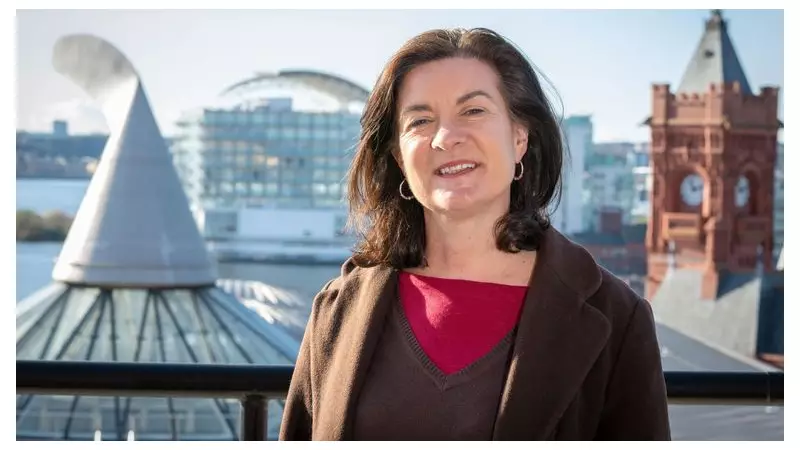
Welsh First Minister Issues Stark Warning on Devolution and Nationalism
First Minister of Wales Eluned Morgan has delivered a forceful address, accusing Westminster of treating Wales unfairly and warning that failure to devolve key powers could push the nation toward nationalism, threatening the unity of the United Kingdom. Speaking at an event in London ahead of the Senedd elections in May, the Welsh Labour leader emphasised the urgent need to correct historic imbalances in how Wales is governed compared to other nations.
Demands for Enhanced Powers and Constitutional Reform
Ms Morgan outlined a series of specific demands aimed at securing greater autonomy for Wales. She called for the devolution of policing, rail infrastructure, youth justice, and probation services, alongside the transfer of Crown Estate powers to mirror the model already in place in Scotland. Additionally, she urged Chancellor Rachel Reeves to make permanent the Welsh government's access to its financial reserves and advocated for a Constitutional Reform Act to legally safeguard devolution.
In her speech, she highlighted disparities in funding, stating, "In some areas, people and businesses in Wales have been denied the equivalent service or the same level of opportunity as the people in England. So for people who believe in the union, as I passionately do, you can't explain that, let alone justify it." She pointed to rail infrastructure as a key example, noting that Wales receives only 1% of funding despite having 11% of the rail tracks, whereas Scotland receives a fair share.

Political Landscape and Polling Predictions
The address comes at a critical juncture in Welsh politics, with recent polling from YouGov for ITV Wales indicating a dramatic shift. According to the data, Plaid Cymru leads at 37%, followed by Reform at 23%, the Green Party at 13%, and Labour, Conservatives, and Liberal Democrats each at 10%. This suggests that a Plaid Cymru-led government is the most likely outcome in May, potentially ending Labour's century-old dominance in Wales and marking the first time since the Senedd's creation that Labour would not lead the government.
Ms Morgan acknowledged the challenges posed by this political climate, warning that "separatism is now very much on the agenda" in Wales. She noted that the rise of nationalism, as reflected in opinion polls, could give pro-independence parties like Plaid and the Greens a majority, urging the UK government to take a leading role in resisting such movements.
Criticism and Response from Opponents
Plaid Cymru responded to Ms Morgan's speech with sharp criticism, describing it as disingenuous. Heledd Fychan MS told Sky News that Plaid Cymru has long advocated for fair funding and devolution, accusing Labour in both Westminster and Cardiff of blocking these efforts. She characterised the address as "a speech rooted in desperation by a party that's trying to stay relevant when the people of Wales are challenging them on their failure to deliver in government."
A UK government spokesperson countered by highlighting recent investments, including providing the Welsh government with its largest-ever budget settlement of over £22 billion annually and additional spending power of £425 million. They also pointed to direct investments such as new nuclear projects at Wylfa and £445 million for modernising Welsh rail, asserting that the UK government is committed to working with Wales to deliver priorities.
Historical Context and Ongoing Struggles
The fight for more devolution is not new for Ms Morgan, who has consistently demanded control over the Crown Estate to boost Welsh revenues. However, Westminster has repeatedly rejected these calls, with former Treasury minister James Murray arguing last year that such devolution would make "no commercial sense." Despite this, the first minister remains steadfast in her pursuit of greater autonomy, framing it as essential for Wales's future within the union.
As the Senedd elections approach, this debate over devolution and fairness is set to dominate the political discourse in Wales, with significant implications for the region's relationship with the rest of the UK.