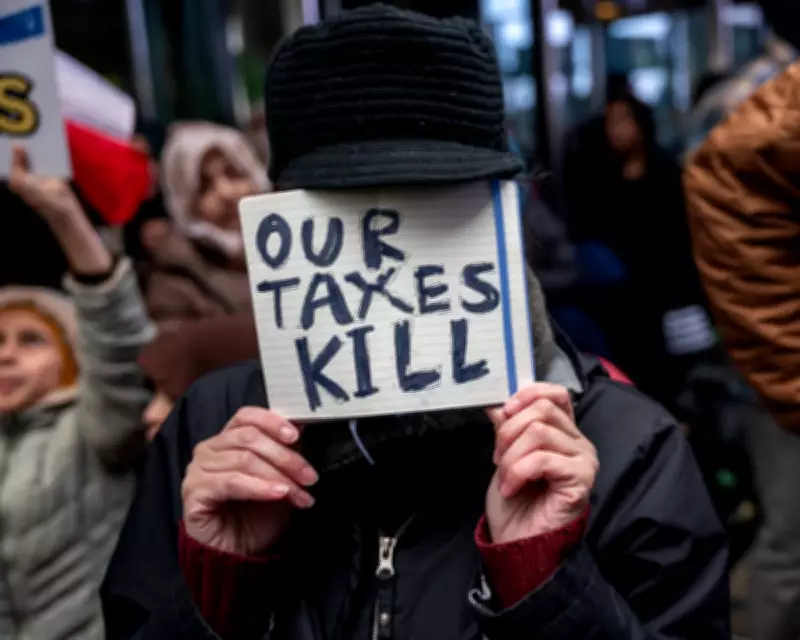
The Resurgence of War Tax Resistance in America
As tax day approaches, a quiet but determined movement is gaining traction across the United States. Thousands of citizens are contemplating withholding their federal income taxes in protest against what they view as unauthorized and unjust military interventions by the US government. This act of civil disobedience, known as war tax resistance, represents a powerful statement against military adventurism that operates outside democratic oversight.
A Historical Tradition of Protest
War tax resistance boasts a venerable tradition that predates the founding of the United States itself. Historical records show that in 1637, the Algonquin Nation refused to pay taxes to Dutch colonizers to protest military fort construction. Quakers became the first organized religious group to systematically oppose wartime taxation as a matter of principle. The modern movement gained significant momentum during the Vietnam War era, when an estimated 200,000 to 500,000 Americans refused to pay federal taxes in protest.
Despite this long history of resistance, legal consequences have been remarkably minimal. Since the conclusion of the Second World War, only two individuals have served prison time specifically for nonpayment of taxes in protest of US military interventions. This statistic excludes cases involving willful fraud against the Internal Revenue Service, as war tax resistance represents a principled, transparent stand rather than deceptive practices.

The Current Political Landscape
The movement has gained renewed urgency following recent US military actions in the Middle East. According to the article's author, American taxpayers have funded approximately $20 billion in military operations in Iran alone. These actions occurred without congressional consultation or approval, violating the separation-of-powers principle fundamental to American democracy.
Public opinion appears to support the resisters' concerns. Polling indicates that 70% of American voters opposed potential military action in Iran before the initial attacks commenced. A majority continue to oppose the ongoing conflict, with support likely to diminish further as economic consequences such as rising gas and food prices affect households nationwide.
Redirecting Tax Dollars for Positive Change
War tax resistance encompasses more than simply withholding payments. Many participants practice "tax redirection," channeling the funds they would have paid to the federal government toward humanitarian causes instead. This approach acknowledges the importance of taxation for public goods like healthcare and transportation while protesting military expenditures.
Resisters might redirect their tax dollars to organizations providing relief aid in conflict zones affected by US military actions. This creates an opportunity to transform funds from instruments of destruction to tools for rebuilding lives and communities. The National War Tax Resistance Coordinating Committee provides guidance on various approaches to this form of protest.
Organizational Support and Growing Momentum
Contemporary war tax resistance efforts receive organizational support from groups including the War Resisters League and the National War Tax Resistance Coordinating Committee. While many participants prefer private activism, others include formal letters of protest with their tax returns to ensure the government understands their principled objections.
The movement anticipates significant growth with upcoming No Kings rallies scheduled for March 28th, which organizers predict could become the largest nonviolent protest in American history. If participants combine these demonstrations with pledges to withhold federal income taxes—or at least the portion funding military operations—the collective impact could resonate globally.
Practical Considerations and Personal Conviction
Withholding taxes involves genuine risks, including potential impacts on credit scores and other financial penalties. However, the historical record suggests severe consequences remain rare for those engaged in this specific form of protest. Estimates indicate that approximately 50% of federal taxes support military spending, providing a guideline for those considering partial withholding.

For many resisters, the moral imperative outweighs practical concerns. As one advocate notes, while facing the IRS creates anxiety, the human costs of military interventions—including civilian casualties and environmental destruction—demand tangible responses. The article references specific tragedies, including the deaths of Palestinian civilians in Gaza and Iranian schoolchildren, as motivating factors for this renewed commitment to principled resistance.
The Broader Democratic Context
Civil disobedience through war tax resistance represents more than protest against specific policies. It embodies a foundational democratic principle: the right to withhold consent from government overreach. Historically, similar tactics have advanced civil rights for women and Black Americans while challenging environmental injustices.
This form of resistance revitalizes democratic participation by empowering citizens to directly influence how their financial contributions are utilized. As military expenditures continue without proper congressional oversight, war tax resistance offers a concrete mechanism for citizens to register dissent beyond traditional political channels. The movement demonstrates how individual actions, when coordinated collectively, can challenge entrenched power structures and demand accountability in government spending.