White House Press Secretary Strikes Unusually Conciliatory Tone Over Minneapolis Shooting
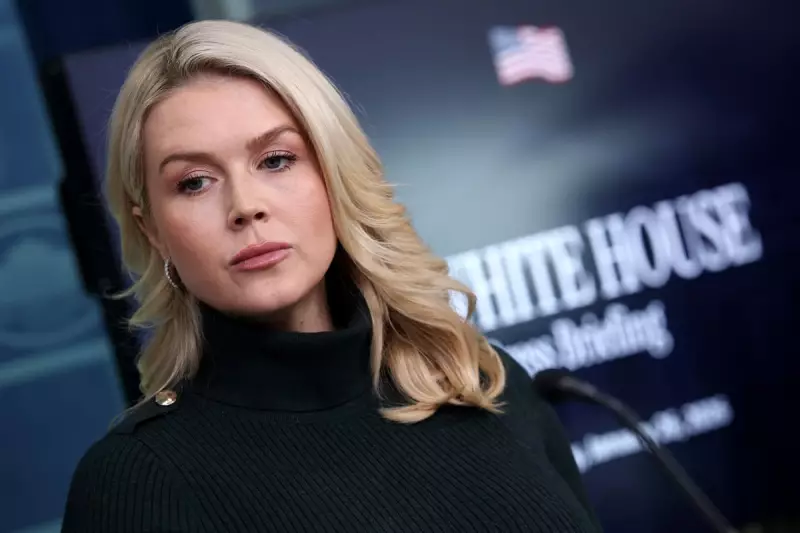
Karoline Leavitt, the White House press secretary, appeared unusually defensive during Monday's press briefing while addressing the fatal shooting of Alex Pretti by federal agents in Minneapolis. What Leavitt chose not to say proved more significant than her actual statements, as she carefully avoided the inflammatory victim-blaming rhetoric that has characterised Donald Trump's administration.
A Notable Departure from Standard Administration Rhetoric
When Leavitt approached the briefing room podium, she described Pretti's death as a "tragedy" and emphasised that President Trump wanted to allow the investigation to proceed without interference. Most strikingly, she pointedly refused to endorse adviser Stephen Miller's characterisation of Pretti as a "would-be assassin" in his social media commentary about the incident.
The press secretary revealed that Trump and Minnesota governor Tim Walz had engaged in what she termed a "constructive and productive conversation" about potentially withdrawing border patrol agents from the state. Governor Walz's office later confirmed that the president had "agreed to look into" reducing the number of federal agents deployed in Minnesota.

Third Instance of Presidential Backtracking Within a Week
This development represents what appears to be the third instance of presidential retreat within seven days, following two other notable reversals:
- First, Trump abandoned his insistence on US control of Greenland after NATO secretary general Mark Rutte persuaded him to accept a vague "framework" compromise
- Second, the president faced diplomatic backlash after claiming NATO troops "stayed a little back" from front lines in Afghanistan, prompting criticism from British political leaders including Keir Starmer and reportedly even King Charles
Now, with Minneapolis resembling what observers describe as an eerie dystopia under Immigration and Customs Enforcement presence, administration signals suggest movement toward de-escalation. Trump himself wrote on social media that he and Governor Walz were on a "similar wavelength", while typically vocal administration figures like JD Vance remained notably restrained in their commentary.
Press Secretary's Uncharacteristic Defensiveness
Leavitt, who normally articulates Trump administration positions with what observers describe as religious fervour, appeared visibly uncomfortable and defensive throughout the briefing. While she attempted to save face by repeatedly blaming Joe Biden, Minnesota Democratic leaders, and leftwing agitators for creating conditions that led to the tragedy, she notably stopped short of blaming Pretti himself.
When questioned about Stephen Miller's inflammatory tweet characterising Pretti as a "would-be assassin", Leavitt carefully dodged: "Well, look, this has obviously been a very fluid and fast-moving situation throughout the weekend. As for President Trump, whom I speak for, he has said that he wants to let the investigation continue and let the facts lead in this case."
Pressed further about Miller's comments, she deflected: "Look, as I've said, I have not heard the president characterise Mr Pretti in that way." The press secretary declined to answer follow-up questions about whether Miller would apologise to Pretti's family.
Political Calculations Behind Potential De-escalation
If Trump is indeed backing down from confrontation in Minneapolis – and observers caution this remains a significant uncertainty – the reversal would reflect several political realities:

- Television coverage has been overwhelmingly negative for the administration, with endless video loops showing Pretti's street execution contradicting official accounts
- Pretti represents a particularly sympathetic figure for Republican viewers as an ICU nurse who cared for military veterans
- Republican defenders of Second Amendment rights have expressed concern about Pretti's legal firearm possession being used to justify government overreach
- Internal party discontent has emerged, with figures like Congressman James Comer urging ICE withdrawal from Minnesota
Recent opinion polls indicate that a majority of Americans believe ICE has exceeded appropriate boundaries in its enforcement actions. The Wall Street Journal reported that Trump received dozens of calls from administration officials and senators over the weekend expressing concern about shifting public sentiment against immigration enforcement measures.
Trump's Position Within His Own Administration
Interestingly, Trump occupies what some observers describe as a moderate position within his own administration's ideological spectrum. Former adviser Steve Bannon has characterised the president as a relative moderate within the Make America Great Again movement, while figures like Stephen Miller and Homeland Security Secretary Kristi Noem often advocate more extreme positions than Trump himself.
The president demonstrated awareness of this dynamic last October when he told reporters at the White House: "But I want to thank Stephen Miller, who's right back in the audience, right there. And I'd love to have him come up and explain his true feelings, but – maybe not his truest feelings. That might be going a little bit too far."
This careful distancing from his own adviser's rhetoric suggests Trump maintains greater political flexibility than some of his more ideological subordinates, potentially explaining the current signals of de-escalation emerging from the White House regarding the Minneapolis situation.