The recent Boxing Day Ashes Test in Melbourne, which concluded inside two days, sent shockwaves through the cricket world. To understand just how remarkable such a result is, consider the numbers: of the 2,615 Tests played in history, only 27 have finished within two days. That's roughly one percent. Yet, the current series has now witnessed two such matches, adding to another in Australia just three years prior. This sudden frequency begs the question: what's behind these ultra-short contests?
A Century of Two-Day Ashes Clashes
Of those 27 two-day Tests, eight have been fought between the old rivals, England and Australia. While two belong to the present series, the other six are relics of a bygone era, all played more than a century ago. These matches were shaped by treacherous pitches, legendary bowlers, and pivotal moments that changed the game.
1882: The Birth of the Ashes
The most famous of all wasn't technically an Ashes Test—it was the match that created the legend. At The Oval in 1882, 20 wickets fell on the first day across a mammoth 151.3 overs. England, seemingly in control, collapsed in their second innings to be bowled out for 77, losing by just seven runs. The defeat was sparked by Australian fast bowler Frederick 'The Demon' Spofforth, who took seven wickets in each innings after being incensed by a controversial run-out involving WG Grace. The famous satirical obituary for English cricket was published, and the quest for the Ashes began.

1888 & 1890: The Era of the Great Bowlers
The late 19th century was dominated by some of the most statistically successful bowlers ever. In the wet summer of 1888, a trio of Tests at Lord's, The Oval, and Old Trafford all finished inside two days. Rain-ravaged pitches and the presence of greats like George Lohmann and Charlie Turner made batting a nightmare. Two years later at The Oval, another sodden pitch saw 22 wickets tumble on the first day. England eventually scraped a tense two-wicket win, narrowly avoiding another Spofforth-style collapse.
1921: A Tactical Revolution at Trent Bridge
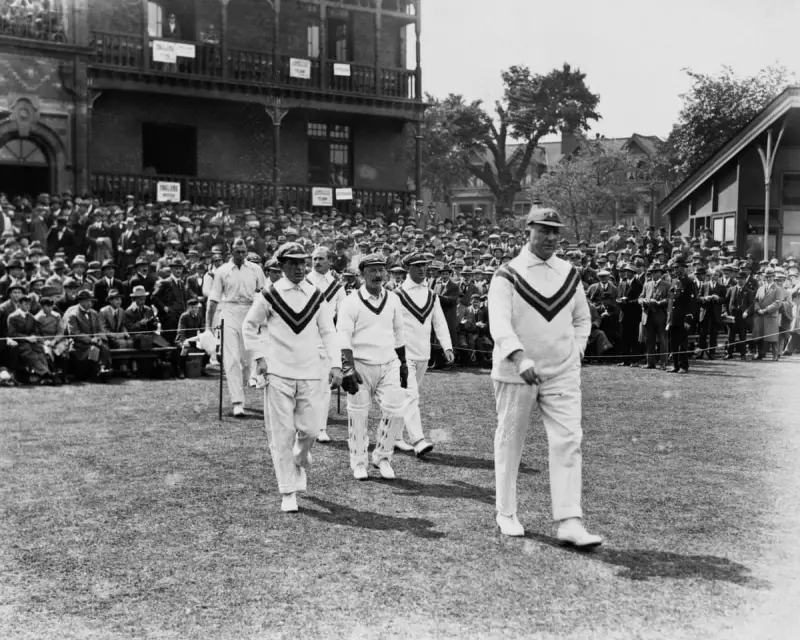
This match stands apart as the only two-day Ashes Test of the 20th century until very recently. At Trent Bridge, Australian captain Warwick Armstrong unveiled a revolutionary tactic: the fast-bowling opening pair. Jack Gregory and Ted McDonald shared the new ball and bowled almost unchanged throughout the match. Their relentless pace and bounce proved devastating on an English side still recovering from the First World War. Gregory took six wickets in the first innings, McDonald five in the second, and the game was over in two days, proving the concept of the specialist pace attack.
Contextualising the Modern Two-Day Test
The historical two-day Tests largely fall into distinct categories: the primitive pitches of the 1800s, matches against developing nations, or those played in extreme modern conditions like the pink-ball Test in Ahmedabad. The recent Ashes pitches, by contrast, have been among the better surfaces for these abbreviated matches. The recurrence of such short contests between two well-matched sides highlights how a combination of bold bowling, aggressive batting, and perhaps heightened pressure can compress a Test match's narrative into a dramatically short timeframe. The tales from 1882 to 1921 show that while the game's tempo has changed, its capacity for rapid, history-altering drama has not.