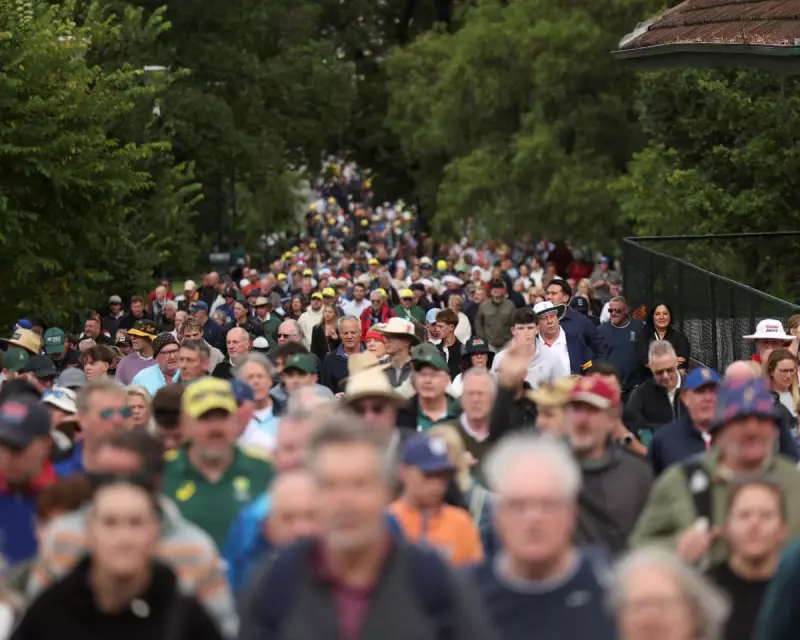
The hallowed turf of the Melbourne Cricket Ground (MCG) witnessed more than just a sporting contest on December 26th, 2025. It became the epicentre of a national celebration as a record-breaking crowd of 85,000 spectators poured through the gates for the opening day of the iconic Boxing Day Test. This staggering attendance has powerfully reinforced the event's evolution from a mere cricket match into a full-blown, must-attend summer festival.
A Colosseum of Cricket and Culture
The atmosphere transcended the typical boundaries of international sport. While the on-field battle between bat and ball provided the narrative core, the day was defined by the vibrant, diverse tapestry of the crowd itself. Families, draped in national colours and festive gear, created a sea of enthusiasm that rippled around the vast stadium. The air was thick with the scent of sunscreen and classic stadium fare, mingling with the collective roar that greeted every boundary and wicket. This wasn't passive viewership; it was a participatory cultural event where the crowd was as integral to the spectacle as the athletes.
Organisers and cricket authorities pointed to the perfect alignment of the calendar—with December 26th falling on a Friday—as a key factor in the unprecedented turnout. This scheduling gift provided a long weekend, making the pilgrimage to the MCG an easier and more attractive proposition for fans travelling from across Victoria and beyond. The result was a tangible, electrifying energy that has set a new benchmark for what a day of Test cricket can represent.

Economic and Social Ripples of a Sporting Giant
The impact of the colossal crowd extended far beyond the boundary rope. Melbourne's city centre, its restaurants, bars, and public transport networks, all felt the surge of an estimated 85,000-strong influx of visitors. Local businesses, particularly in the precincts surrounding the MCG, reported one of their busiest trading days of the year, a vital boost during the festive season. The event served as a powerful engine for the local economy, demonstrating the immense commercial power of a well-supported traditional sporting fixture.
Socially, the day functioned as a grand, communal gathering place. In an age of fragmented entertainment and digital isolation, the Boxing Day Test offered a rare, shared physical experience. Generations of families attended together, creating new memories against a backdrop of sporting history. For many, the ritual of attending the Test is as much a part of the Christmas holiday period as gift-giving or festive meals, a tradition passed down and now flourishing more than ever.
The Future of a Festival Institution
The resounding success of the 2025 event poses both an opportunity and a challenge for custodians of the game. It conclusively proves that Test cricket, in its traditional long form, can thrive as a major spectacle when presented as a central pillar of a wider cultural event. The focus now shifts to sustaining this momentum. Cricket Australia and the MCG will be tasked with ensuring that the festival atmosphere is nurtured, potentially through enhanced fan zones, family-friendly activities, and seamless event management, to guarantee the Boxing Day Test remains the unmissable highlight of the Australian sporting summer.
Ultimately, the record books will note the scorecard and the match result. But the true story of this Boxing Day was written in the stands. The sea of faces, the unified cheers, and the vibrant celebration of sport and community have indelibly cemented the MCG Boxing Day Test as far more than a game. It is now firmly established as Australia's premier sporting festival, a tradition that strengthens with each passing year and each record-breaking crowd.