ICE Agents Expected at Super Bowl in California Amid Immigration Enforcement Plans
Local officials in California have confirmed that US Customs and Immigration Enforcement (ICE) agents are expected to conduct immigration enforcement operations during next month's Super Bowl game in Santa Clara. The announcement has sparked significant concern within the community, particularly among vulnerable families who fear increased tensions during the major sporting event.
Security Operations at Levi's Stadium
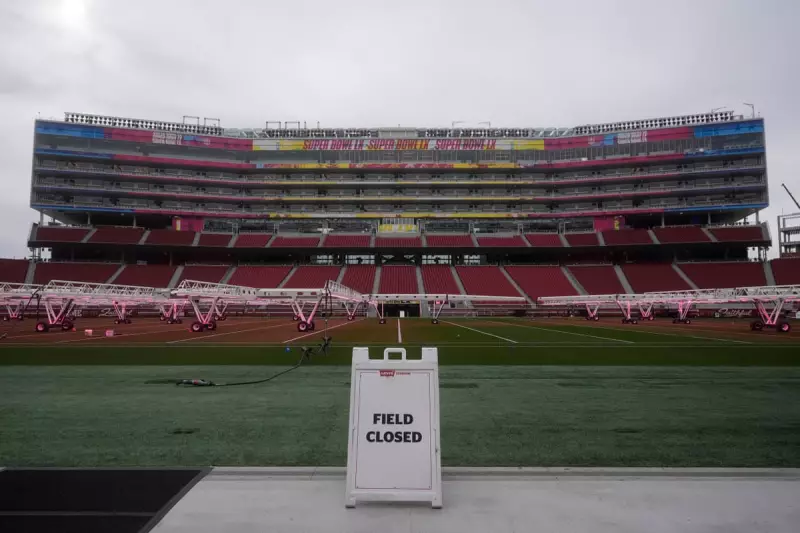
The Super Bowl LX is scheduled to take place at Levi's Stadium in Santa Clara, California on 8 February 2026, featuring a matchup between the Seattle Seahawks and the New England Patriots. While ICE's homeland security investigations team has historically worked the Super Bowl and other major sporting events with a focus on preventing human trafficking and counterfeit goods sales, the confirmation of immigration operations represents an unusual development for such events.
Matt Mahan, the San Jose mayor, told local media: "We have heard from the administration that they intend to have ICE at the Super Bowl. I don't know how much of that is rhetoric." His comments reflect the uncertainty surrounding the scope and nature of the planned operations.

Department of Homeland Security Statement
The US Department of Homeland Security has declined to confirm specific reports about operations around Levi's Stadium, stating in an official release that the agency does "not disclose future operations or discuss personnel." However, DHS assistant secretary Tricia McLaughlin emphasised the department's commitment to event security.
"DHS is committed to working with our local and federal partners to ensure the Super Bowl is safe for everyone involved, as we do with every major sporting event, including the World Cup," McLaughlin stated. She added that security preparations would include a response "conducted in-line with the US constitution" and reassured that "those who are here legally and are not breaking other laws have nothing to fear."
Community Concerns and Political Context
The planned deployment comes as the administration faces mounting criticism over its immigration enforcement operations in Minnesota and recent incidents involving federal agents. Community leaders have expressed deep concern about the impact on local residents.
Peter Ortiz of the San Jose city council told local media: "It's going to increase the level of tension and fear in our area. We're already seeing that they are scared to go out to eat, scared to go to the local corner store, scared to send their kids to school."
Corey Lewandowski, an adviser to DHS secretary Kristi Noem, announced last autumn that agents would conduct operations during the Super Bowl, stating on a popular podcast: "There is nowhere that you can provide safe haven to people who are in this country illegally, not the Super Bowl, and nowhere else. We will find you, we will apprehend you, we will put you in a detention facility and we will deport you."
Secretary Noem herself confirmed ICE operations at the game during an interview, stating: "We'll be all over that place. We're gonna enforce the law so I think people should not be coming to the Super Bowl unless they are law-abiding Americans who love this country."
Historical Collaboration and Current Tensions
According to a DHS statement, the agency has collaborated with the NFL for two decades, sending nearly 700 employees to New Orleans last year to aid in security and intellectual property enforcement. However, current political tensions have created a complex backdrop for this year's event.
Trump administration officials have recently criticised the NFL as "woke" and expressed disapproval of the decision to have Puerto Rican artist Bad Bunny perform at this year's half-time show alongside Green Day. The performer opted not to include US stops on his latest tour over concerns his fans could face ICE raids.
Former president Donald Trump described the half-time show entertainment as a "terrible choice" and confirmed he will not attend the game, adding another layer of political significance to the security preparations.

The convergence of major sporting events and immigration enforcement policies continues to generate debate about the appropriate role of federal agencies at public gatherings, with the Super Bowl deployment serving as a prominent example of these ongoing tensions.