Manchester United's Stadium Vision Set for Major Financial Boost
Manchester United's ambitious plans for a new stadium could receive a substantial financial injection, with exclusive research indicating the club might secure up to £200 million through naming rights for the proposed venue.
New Trafford: A Premium Commercial Opportunity
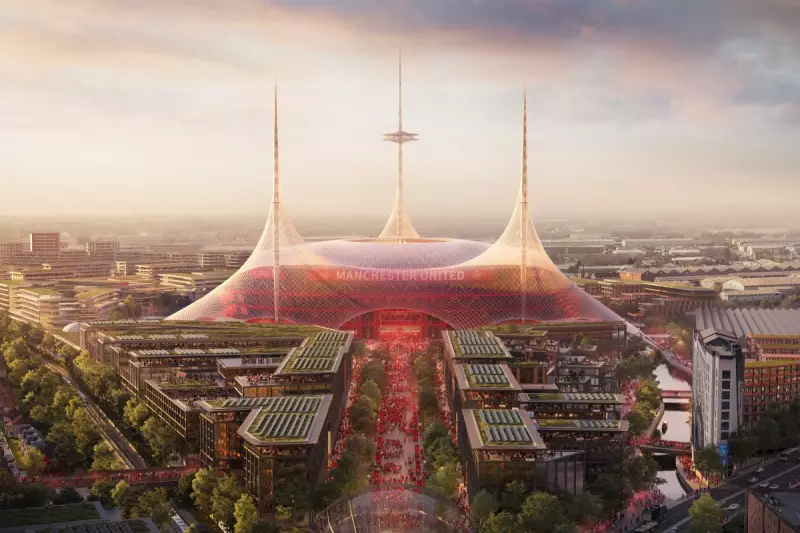
According to an exclusive report from industry publication The Sponsor, shared with City AM, Manchester United's vision for a 100,000-seater stadium – temporarily dubbed New Trafford – represents one of the most valuable commercial opportunities in British sport. The project, which would be situated adjacent to the historic but aging Old Trafford, aims to create the largest stadium in Britain.
Sean Connell of The Sponsor explained the valuation: "Manchester United's current sponsorship value is underpinned by an exceptional global fanbase and one of the strongest reputations in world sport, but it is constrained by ageing infrastructure and inconsistent on-pitch performance. A completed New Trafford would change that equation."

The research estimates that naming rights for the new stadium could generate approximately £200 million over a ten-year period. This valuation assumes the project proceeds as planned, with co-owner Sir Jim Ratcliffe seeking to finance the development through a combination of private investment and public funding.
Transforming Manchester United's Commercial Landscape
Connell emphasised the transformative potential of the project: "At the proposed scale, it would be one of Europe's largest sporting venues and, if delivered with modern, environmentally responsible infrastructure, a cultural landmark for the north of England."
The stadium's design as a multi-use entertainment venue significantly enhances its commercial appeal. Beyond hosting elite football matches, the facility would accommodate major live music events and cultural performances, thereby expanding the potential audience for any naming rights partner.
Comparative Analysis of Premier League Stadium Deals
Several Premier League clubs have successfully secured lucrative naming rights agreements:
- Manchester City's Etihad Stadium (sponsored by Etihad Airways)
- Arsenal's Emirates Stadium (sponsored by Emirates airline)
- Everton's new ground (sponsored by law firm Hill Dickinson)
- Brighton's American Express Stadium
- Bournemouth's Vitality Stadium
However, other top-flight clubs have encountered challenges in attracting stadium sponsors. West Ham United's London Stadium and Tottenham Hotspur's stadium have both struggled to secure naming rights partners despite their modern facilities.
Financial Projections and Competitive Context
The Sponsor's analysis suggests Manchester United could reasonably expect to generate between £15 million and £20 million annually from stadium naming rights. The lower figure represents a baseline regardless of sporting performance, while the higher estimate depends on improved on-field results and regular qualification for European competitions.
"If the club can fix the football and return to regular European competition, the naming rights value of a 'New Trafford' could be even higher," Connell noted.
This development comes as The Sponsor's fair market valuation index for European stadiums places LaLiga giants Real Madrid and Barcelona at the summit, followed by Bayern Munich and Arsenal. Interestingly, Real Madrid's Bernabeu stadium – valued at £18.4 million per season – currently operates without a naming rights partner, while Barcelona, Bayern Munich, and Arsenal have secured agreements with Spotify, Allianz, and Emirates respectively.
Important Considerations for Potential Partners
Prospective naming rights partners should note that such agreements don't guarantee brand representation across all competitions. In UEFA Champions League matches – where Manchester United aspires to compete next season – stadium names typically revert to their original designations. For instance, Manchester City's Etihad Stadium becomes the City of Manchester Stadium, while Arsenal's Emirates is referred to as Arsenal Stadium during European fixtures.

This nuanced aspect of stadium sponsorship highlights the complex commercial landscape surrounding modern football venues, where global branding must navigate the specific regulations of different competitions and governing bodies.