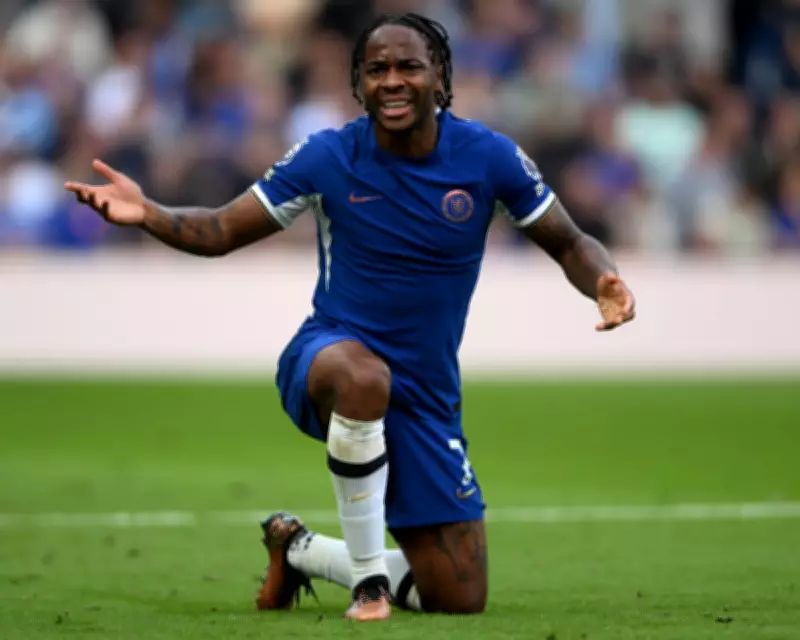
Raheem Sterling's Chelsea Departure Marks a Pivotal Moment
The professional journey of Raheem Sterling at Chelsea has concluded with his exit by mutual consent, a move that underscores a significant downturn in his once-flourishing career. Sterling, who joined the club in the summer of 2022 as a high-profile signing under the new ownership of Todd Boehly and Clearlake Capital, struggled to cement a regular starting position, making only 81 appearances during his tenure.
A Promising Start That Quickly Faded
Initially hailed as a marquee acquisition, Sterling brought with him a pedigree of four Premier League titles from his time at Manchester City. Manager Thomas Tuchel saw value in his attacking prowess, and the transfer fee of £47.5 million signalled Chelsea's ambitions. However, the optimism surrounding his return to London was short-lived. Tuchel's dismissal early in the 2022-23 season disrupted plans, and subsequent managerial changes, including Graham Potter's brief stint and Mauricio Pochettino's appointment, failed to provide the stability Sterling needed.
His role became increasingly uncertain, with experiments like playing as a wing-back under Potter highlighting the club's tactical confusion. Chelsea's overall performance suffered, finishing 12th in the league, and whispers emerged about the club's willingness to offload Sterling due to his hefty £325,000-a-week wages.
Challenges on and off the Pitch
Sterling managed to score 19 goals for Chelsea, a respectable tally, but his influence waned as he battled fitness issues and a perceived loss of pace. A loan spell at Arsenal last season did little to rejuvenate his form, casting doubt on his ability to compete at the highest level. Upon returning to Chelsea, he found himself isolated, training alone under Enzo Maresca, who made it clear Sterling was not part of future plans.
This period of exclusion was described as lonely and undignified for a player of his stature, who has been a vocal advocate against racism and was awarded an MBE in 2021. His international career with England, which included key roles in the 2018 World Cup semi-finals and Euro 2020 final, has also stalled, with no caps since the 2022 World Cup quarter-final.
Financial and Personal Considerations
Chelsea's decision to terminate his contract early represents a substantial financial saving, as it was not paid in full despite having 18 months remaining. Sterling's high wage demands and reluctance to leave London for family reasons complicated potential transfers, with interest from clubs like Fulham and West Ham failing to materialise into offers. Napoli's sporting director, Giovanni Manna, cited Sterling's financial expectations and lack of recent playtime as barriers.
Personal challenges, including two burglaries at his home since joining Chelsea, have added to the strain. With his son Thiago in Arsenal's academy, family stability remains a priority as Sterling considers his next move, potentially abroad.
Looking Ahead: A Chance for Redemption
At 31, Sterling is too young to retire and still possesses the potential for a career revival. While he may be past his peak, managers who believe in his abilities could offer him a platform to regain form. His departure from Chelsea closes a chapter without clear winners—the club's investment did not yield expected returns, and Sterling's time on the sidelines has been costly in professional terms.
Now a free agent, Sterling faces the challenge of making up for lost time and proving that his best days are not behind him. The football world will be watching to see if he can find a suitable environment to reignite his career and contribute meaningfully once again.