Goalkeeper's Dramatic Header Secures Benfica's Champions League Fate
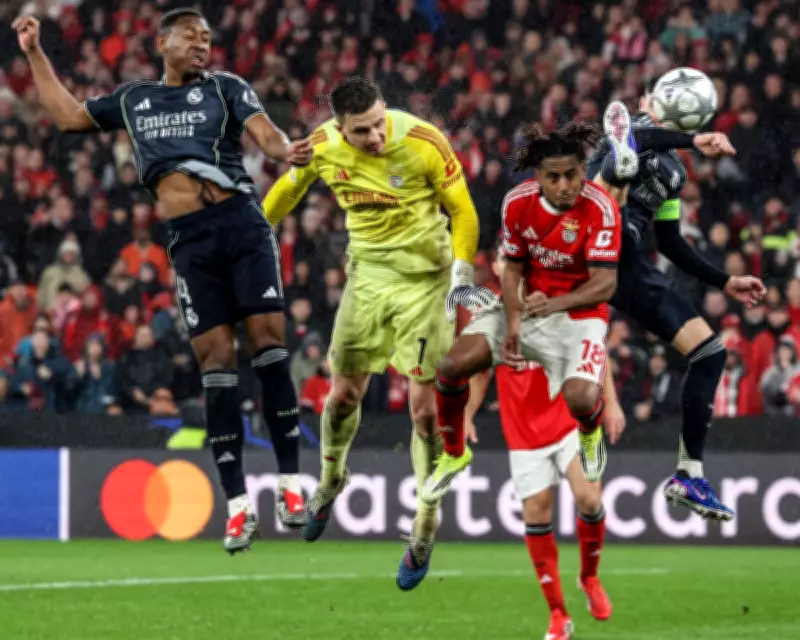
In a moment of pure footballing theatre, Benfica's Ukrainian goalkeeper Anatoliy Trubin became an unlikely hero by scoring a crucial stoppage-time header against Real Madrid. This dramatic goal not only secured a vital victory but also guaranteed his team's progression to the Champions League playoffs, capping off an evening of intense European football action.
The Overwhelming Nature of Modern Football Consumption
The final match day of the Champions League group stage presented viewers with an unprecedented challenge: eighteen simultaneous matches across multiple platforms. This deluge of football created what many are calling "content overload" - a phenomenon where the sheer volume of games makes it difficult to process individual moments properly.
As goals flew in across Europe, the "as-it-stands" tables fluctuated wildly. Chelsea's position shifted multiple times within minutes as results from Naples and other venues came through. While broadcasters naturally emphasised the excitement of such volatility, many fans found themselves struggling to keep pace with the constant changes.
Trubin's Moment of Magic
Amidst this footballing frenzy, Trubin's remarkable intervention stood out as particularly special. The goalkeeper's flying header in the eighth minute of added time against nine-man Real Madrid represents what many consider football's purest joy: the completely unexpected.
There's something uniquely compelling about goalkeepers venturing forward for set pieces. Their ungainly movement and unfamiliar positioning in opposition penalty areas create chaos that defences struggle to handle. As José Mourinho noted afterwards, "We knew the big guy was capable of this", highlighting how Trubin's aerial threat had been part of Benfica's tactical planning.
The Ukrainian commentary captured the moment perfectly with an emotional, cracking-voiced "TRUBIIIIIIIIIIIN" that has since gone viral across social media platforms.
A Night of Contrasting Football Experiences
While the Champions League provided non-stop action, the experience highlighted fundamental questions about modern football consumption. The evening began controversially with Paris Saint-Germain benefiting from a contentious handball decision that many felt exemplified football's ongoing rule interpretation problems.
Throughout the night, significant moments came thick and fast:
- Viktor Gyökeres scoring for Sporting
- Copenhagen taking a surprise lead in Barcelona
- Bodø/Glimt's impressive victory at the Wanda Metropolitano
- Marcus Rashford's free-kick for Barcelona
Yet this constant stream of action created what some commentators have called "superficial viewing" - watching everything while properly absorbing nothing.
The Philosophical Debate About Football's Evolution
This Champions League night has sparked important conversations about football's direction. As Nicky Bandini noted on Guardian Football Weekly, perspective matters enormously. For Premier League fans, the stakes might feel different than for supporters of clubs like Sporting, Benfica, or Bodø/Glimt.
The contrast with traditional football consumption couldn't be clearer. During COVID restrictions, staggered Premier League fixtures allowed fans to watch every minute of multiple games. Now, we're experiencing the opposite: football as relentless content, with matches designed to be consumed in rapid succession rather than savoured individually.
Perhaps, as some suggest, this could become an annual footballing event - a one-off celebration of the game's abundance rather than a template for regular viewing. The alternative, as demonstrated by lower-league fixtures like Cambridge United versus Shrewsbury, offers a slower, more focused experience that some fans find more satisfying despite fewer dramatic moments.
As football continues to evolve, finding the right balance between quantity and quality of consumption remains one of the sport's most pressing challenges for broadcasters and fans alike.