Haiti's Winter Olympics Kit Redesigned at Last Minute to Fit IOC Guidelines
The designer behind the Haitian team's uniform for the 2026 Winter Olympics has revealed she was forced to redesign their ski suits for the opening ceremony after being informed they did not comply with the International Olympic Committee's strict guidelines on athlete expression.
Initial Design Featured Revolutionary Leader
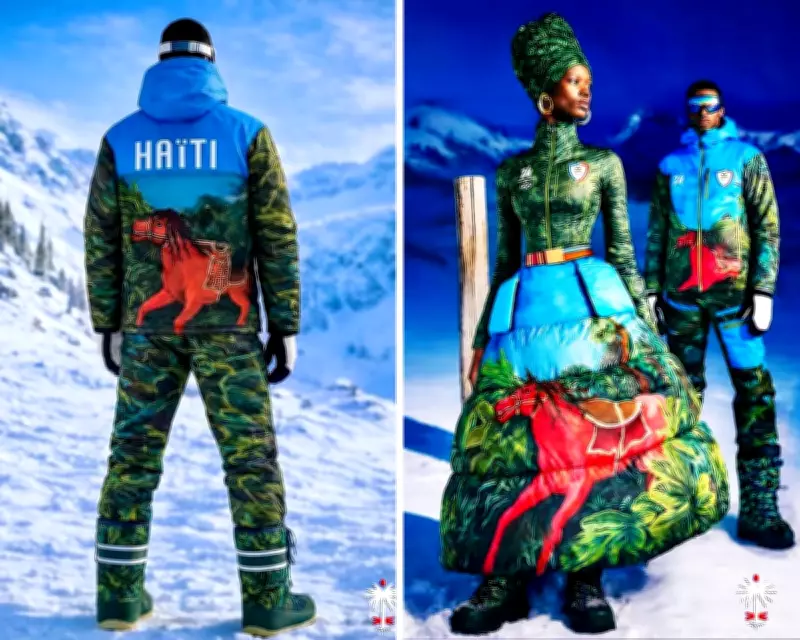
The original uniforms, created by Haitian-Italian designer Stella Jean, were based on a 2006 painting by Haitian artist Edouard Duval-Carrié depicting the formerly enslaved revolutionary Toussaint Louverture riding a horse. Louverture, who led the successful revolt that established the world's first Black republic in 1804, had been central to Jean's initial design concept.
The IOC guidelines clearly state: "No kind of demonstration or political, religious, or racial propaganda is permitted in any Olympic sites, venues or other areas." This ruling follows the recent case of skeleton racer Vladyslav Heraskevych being barred from the games because of his "helmet of memory" honoring Ukraine's war dead.

Last-Minute Redesign Process
The two-man Haitian delegation only received their uniforms the night before the opening ceremony, having arrived directly from a workshop where Italian artisans had been working around the clock to hand-paint the intricate design onto technical sports fabric.
"The uniforms are not just an exercise of style but an exercise of responsibility," Jean explained. "We had to concentrate positive messages about Haiti, our art, culture and history, within a few metres of fabric."
Rather than abandoning the concept entirely, Jean and her team returned the uniforms to the workshop and quickly repainted the garments to reference the original painting—minus Louverture's figure. The IOC approved the revised design just in time, featuring a riderless horse against a bright blue sky.
Symbolism and Cultural References
Other distinctive features of the kit's design include:
- The tignon, a women's headwrap originating in West Africa that references how enslaved women were forced by colonizers to cover their hair
- Jewelry based on Creole earrings, which were among the few personal items enslaved people were permitted to carry from Africa
- Large pockets that nod to the merchant culture of Haiti, where markets form the backbone of the economy
The uniforms are believed to be the only fully hand-painted ensemble at this year's games. With rain forecast on the night of the ceremony, there were genuine concerns about how the paint would hold up.
Designer's Perspective on the Controversy
"For 24 hours, I was in total despair—we had no budget, no time and this was our only chance to show Haiti in a positive light," Jean admitted. "His absence spoke louder than his presence."
Rather than being discouraged by the IOC's decision, Jean maintains a positive outlook. "The IOC did not lower the bar, it raised it and changed everything," she says. "If it wasn't for the rules, we would not have applied a higher degree of creativity or resilience."
Broader Significance for Haiti
"When we talk about Haiti, it's immediately poverty," Jean noted. "We want to tell the world that we still exist, behind the earthquake, behind the disaster and the crisis that we are living in. We are so much more than this."
She added with satisfaction: "If you search Haiti on the internet, the first images are our athletes and art, not the violent images that we usually find."
Cross-country skier Stevenson Savart expressed his pride in wearing the uniform: "I felt so proud that it is difficult to describe. Walking in these clothes in front of the world and representing my small country was so amazing."
For Jean, the symbolism of their presence outweighed any competitive results. "In the Olympic arena, we were all equal," she reflected. "Haiti was no longer the poorest nation. That night, we stood with our heads held high, side by side with the giants of the world."