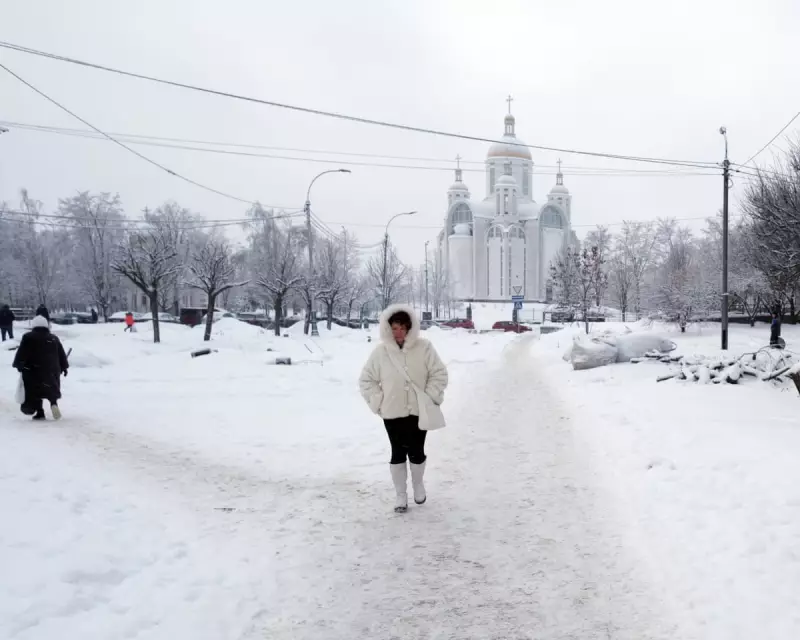
As a bitter cold snap grips Ukraine, the city of Bucha is confronting a profound energy emergency following a wave of targeted Russian strikes on the nation's power infrastructure. With temperatures plunging to nearly -20C, residents are navigating a daily struggle for heat and light, a stark reminder of a war now weaponising the harsh winter.
Daily Life in the Dark and Cold
The reality of the crisis is visible on every frozen street. Traffic lights are dark, and residential blocks stand unlit during rolling blackouts. In the Battkava cafe, owner Oleksandr Bartkov, 28, waits for a generator to warm up before he can serve coffee. "Recently, in the eight or nine hours we are usually open, we have three to four hours of electricity," he explains. The situation deteriorated sharply after the major Russian attack on 9 January, which left the city without power for a full day. Bartkov notes that many small businesses have already closed, with more feared to follow.
At the city's main water pumping station, engineers bundled in parkas battle the elements to keep an emergency generator running. Mayor Anatolii Fedoruk watches on, his own office generator frozen solid. He admits the city cannot keep to the official rationing schedule of three hours of power followed by six off, but believes Bucha's distributed Soviet-era power system offers slightly more resilience than some areas of Kyiv.

A Deliberate Strategy to 'Break People'
Experts describe the coordinated timing of the infrastructure attacks as a deliberate act of coercion. Oleksandr Kharchenko, director of the Energy Industry Research Center in Kyiv, labelled it "an attempt to break people," accusing Moscow of aiming to turn a "man-made disaster into an absolute crisis." Ukraine's SBU state security service has called the sustained assaults on power and heating plants "crimes against humanity."
The human cost is felt acutely in temporary housing for displaced families. In one prefabricated building, manager Vitalina Tsisar, 31, described the panic when a Russian air raid cut power at 1 a.m. on 13 January. "Within two hours it was freezing cold in here. It got down to 6C," she said. Residents, including children in hats and coats, huddled together as a single generator struggled to heat one room.
Political Tensions and Unwavering Defiance
The depth of the crisis has sparked internal criticism. President Volodymyr Zelenskyy declared a national state of emergency but publicly faulted Kyiv's civic administration, led by his rival Vitali Klitschko, for inadequate preparations. Meanwhile, the Ukrainian government has warned it has just 20 days of energy reserves left, urgently seeking more imports.
Despite the freezing hardship, the spirit in Bucha, a city synonymous with Russian atrocities early in the war, remains defiant. Mayor Fedoruk draws strength from past resilience: "Four years ago, Russia said it would take Kyiv in three days and failed. That's when they realised the war would continue for a long time as they prepared to exhaust us. But we're standing. We are still defending."