

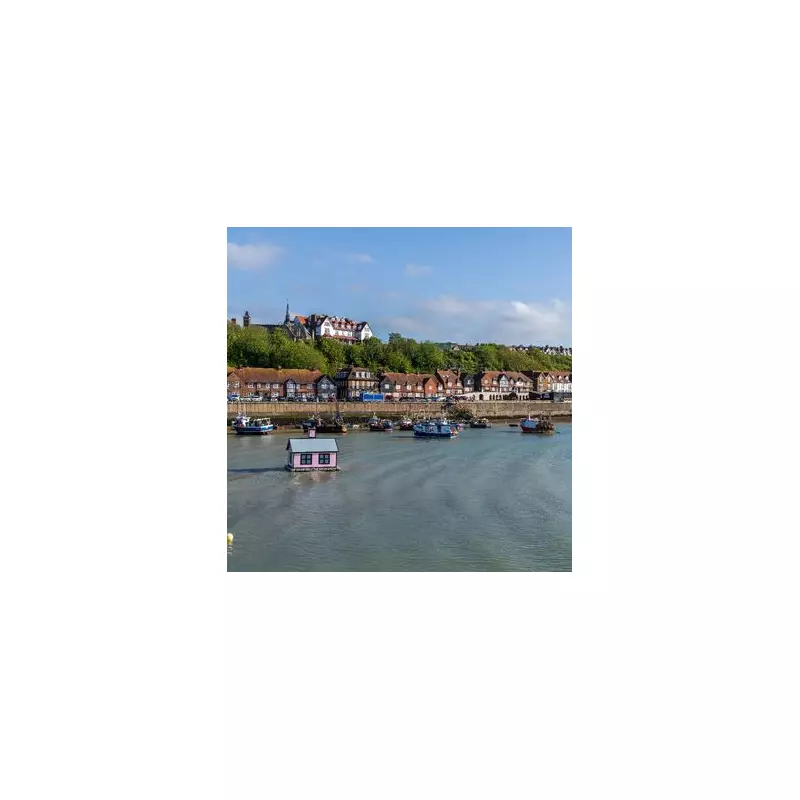
A Kent seaside town once written off as a post-industrial casualty is experiencing a remarkable renaissance, fuelled by a single benefactor's deep pockets and deeper emotional ties. Folkestone, just 45 minutes from London by high-speed rail, is shedding its image as a neglected resort and emerging as a vibrant, creative hub attracting new residents and visitors alike.
The £100 Million Vision of a Local Son
This dramatic transformation is largely the work of Sir Roger De Haan, the 75-year-old business magnate who sold his parents' holiday firm Saga and decided to plough a staggering £100 million into rejuvenating his hometown. Having grown up in Folkestone, Sir Roger witnessed its painful decline after the glory days of the Edwardian era, a downturn accelerated when the ferry port closed in the early 2000s.
"When I grew up in Folkestone as a teenager, there was nothing to do. It was incredibly grim," Sir Roger told the Express. "Now, there's an awful lot for kids to do, for families to do." His mission began with purchasing around 90 dilapidated "slum buildings" in the old town, which he leased to an arts charity for a nominal 'peppercorn rent' for 125 years, creating the foundation for the now-bustling Creative Quarter.

A Town Transformed, But Not Without Tensions
The results are visible. The Creative Quarter now hosts over 80 independent traders, drawing visitors from London and even East Asia. Significant investment has also flowed into education, like the Folkestone Academy designed by Norman Foster, and the award-winning F51 Sports Centre. House prices reflect the change, with the Folkestone average now at £320,757, significantly above the UK average.
However, the regeneration has sparked debate among locals. The next contentious phase—redeveloping the harbour with futuristic tower blocks containing 1,000 homes—has been approved. Some residents, like shop owner Mike O'Donoughue, 67, express concern about becoming "another Brighton" and note that some feel "slightly ousted" by rising costs. Parking reductions and ongoing roadworks also draw criticism.
Addressing the Critics and Looking Ahead
Sir Roger robustly defends his vision. Dismissing the "feudal baron" label from some quarters, he states his goal was never to replicate another town. "Folkestone has its own personality that's unique," he said, highlighting its white cliffs and views of France. He acknowledges regeneration pushes prices up but argues the housing stock needed investment.
While some, like local Brian Frost, 64, note the shift from traditional seaside attractions to "cafés, nail bars, hairdressers and betting shops", others point to persistent inequality. Steve Smith, 69, from nearby Smeeth, observes, "There's money, and there's the millionaire's flats along the front. But... there's still huge poverty as well."
Looking forward, Sir Roger, though admitting he's "knackered", is confident. He predicts more Londoners will relocate as train services improve and forecasts a hotel investment boom following the British rediscovery of domestic holidays. His final advice for other struggling seaside towns? He believes long-term, coordinated funding from bodies like the Heritage Lottery Fund and Arts Council—not necessarily a lone philanthropist—can spark similar revivals in places like Blackpool and Great Yarmouth.






