

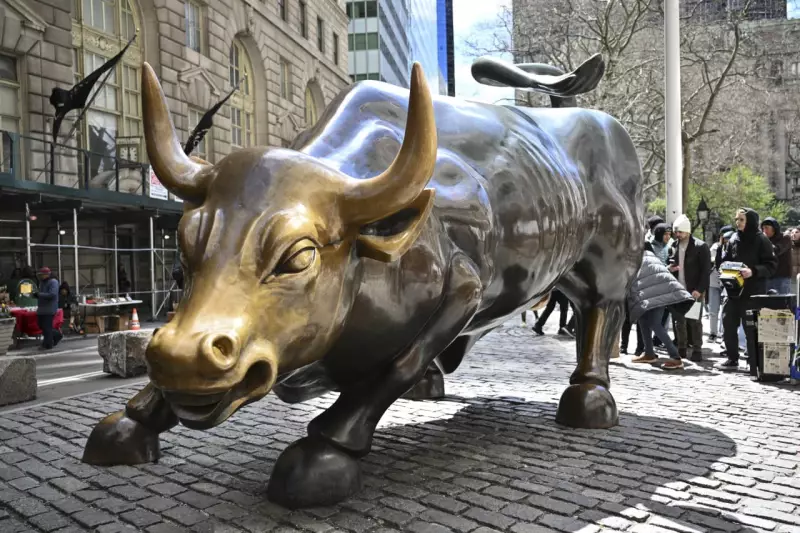
In a year defined by financial turbulence, elite traders on Wall Street have orchestrated a monumental financial harvest. The world's leading investment banks have reported a combined $134 billion in revenue from their trading divisions for the first half of 2024, putting them on track for one of their most profitable years in recent history.
A Perfect Storm for Trading Desks
The remarkable windfall is a direct result of heightened market chaos. Clients, ranging from hedge funds to large asset managers, have been actively repositioning their portfolios in response to seismic shifts in interest rate expectations and swirling geopolitical uncertainty. This frantic activity has generated a torrent of commissions and trading profits for the banks that facilitate these moves.
Leading the charge is Goldman Sachs, whose traders alone generated over $14 billion in revenue. This performance underscores a dramatic turnaround for the firm's trading unit, which had previously faced scrutiny. Other major institutions, including JPMorgan Chase, Morgan Stanley, and Bank of America, have also posted exceptionally strong numbers, with fixed-income and commodities trading being particularly lucrative areas.

The Fuel Behind the $134bn Haul
Analysts point to several key drivers behind this revenue surge. Firstly, persistent inflation data and the Federal Reserve's response have created wild swings in bond markets, prompting massive client trading. Secondly, ongoing conflicts and political instability around the globe have spurred volatility in commodities like oil and gas, as well as in currencies. This environment is ideal for trading desks, which profit from the spread between buying and selling prices, especially when markets are moving rapidly.
"It's a classic case of volatility being the lifeblood of trading," commented one market strategist. "When investors are uncertain and markets are gyrating, they turn to the large banks to execute their orders, providing a huge revenue stream." The figures represent a significant rebound from quieter periods and highlight how investment banking fortunes remain tightly wedded to market turbulence.
Contrast with Sluggish Deal-Making
This trading bonanza stands in stark contrast to other areas of Wall Street. Mergers and acquisitions (M&A) and initial public offerings (IPO) have remained relatively subdued, with companies hesitant to pursue major deals in the unstable climate. Consequently, the trading desks have become the undisputed profit engines for their parent banks in 2024, offsetting weakness elsewhere.
The sheer scale of the revenue—$134 billion in just six months—raises questions about sustainability and future performance. While traders have expertly navigated the current chaos, a prolonged period of market calm could see these revenues diminish. For now, however, Wall Street's trading elite are riding high, having turned global economic uncertainty into a record-breaking payday.






