

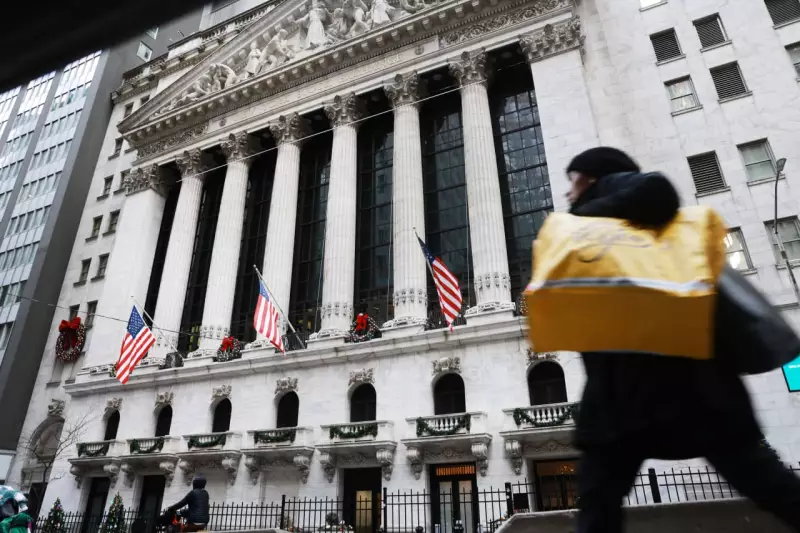
Wall Street's extraordinary run in trading revenues appears to have reached its zenith, with analysts warning that the boom times for investment bank dealing desks are likely over. After a blockbuster first quarter that saw the top five US banks collectively rake in over $20 billion from their trading operations, the outlook has turned decidedly cooler.
A Stellar Quarter Masks Emerging Headwinds
The first three months of the year delivered a final hurrah for the trading boom that began in 2020. Goldman Sachs led the pack with a stunning $7.58 billion in trading revenue, while Morgan Stanley and Bank of America also posted figures north of $4 billion each. This surge was largely fuelled by intense activity in fixed income, currencies, and commodities (FICC), where markets were rocked by shifting expectations around interest rates and persistent geopolitical tensions.
However, beneath these impressive headline numbers, bank executives and industry analysts are sounding a note of caution. The very factors that drove this windfall – namely heightened market volatility and client repositioning – are now fading. As the economic picture evolves, the conditions that created a trader's paradise are dissipating.

The Double-Edged Sword of Interest Rates
The primary engine for the trading surge has been the global recalibration of interest rate expectations. For years, banks struggled with low volatility and stagnant rates, but the post-pandemic inflation surge and subsequent aggressive central bank action changed everything. This created a golden period for FICC desks.
"We've had a phenomenal run, but the easy money has been made," explained a senior trader at a European bank with large US operations. "Clients have now largely adjusted their portfolios to the 'higher-for-longer' rate narrative. The frantic hedging and repositioning that drove volumes is settling down." This sentiment was echoed by banking analysts, who predict a sequential decline in trading revenues for the second quarter.
Investment Banking's Uneven Recovery
While trading desks enjoyed their moment in the sun, the traditional investment banking side of the business – encompassing mergers & acquisitions (M&A) and equity capital markets (ECM) – tells a different story. Here, the recovery is nascent and fragile.
Goldman Sachs reported a 32% year-on-year increase in investment banking fees, a clear positive sign. Similarly, Morgan Stanley saw a 16% rise. This uptick is linked to a resurgence in large-scale M&A deals and a cautiously reopening market for initial public offerings (IPOs). However, executives remain measured in their optimism, noting that the pipeline, while improved, is not yet back to pre-2022 levels. The recovery in this segment is welcomed but is not yet robust enough to offset an anticipated decline in trading.
The divergent performance creates a strategic challenge for bank leaders. The recent boom allowed trading to subsidise weaker advisory work. Now, as trading normalises, pressure mounts on the investment banking division to deliver sustained growth, a task complicated by a still-uncertain economic climate.
What Lies Ahead for the Trading Titans?
The consensus among City of London and Wall Street observers is that the trading revenue cycle has turned. The forecast is for a moderation, not a collapse. Volatility may return in spikes – perhaps around upcoming elections or unforeseen economic shocks – but the persistent, elevated levels seen in recent years are unlikely to be sustained.
This shift places a renewed focus on cost management and operational efficiency. Banks that rode the wave must now prove they can deliver consistent returns in a more challenging environment. The record-breaking first quarter of 2024 may well be remembered as the peak of a remarkable, pandemic-fuelled super-cycle for Wall Street trading.
For investors and market watchers, the key question is no longer how high trading revenues can climb, but how steep the subsequent decline will be, and whether the nascent recovery in investment banking can gather enough momentum to fill the gap.






