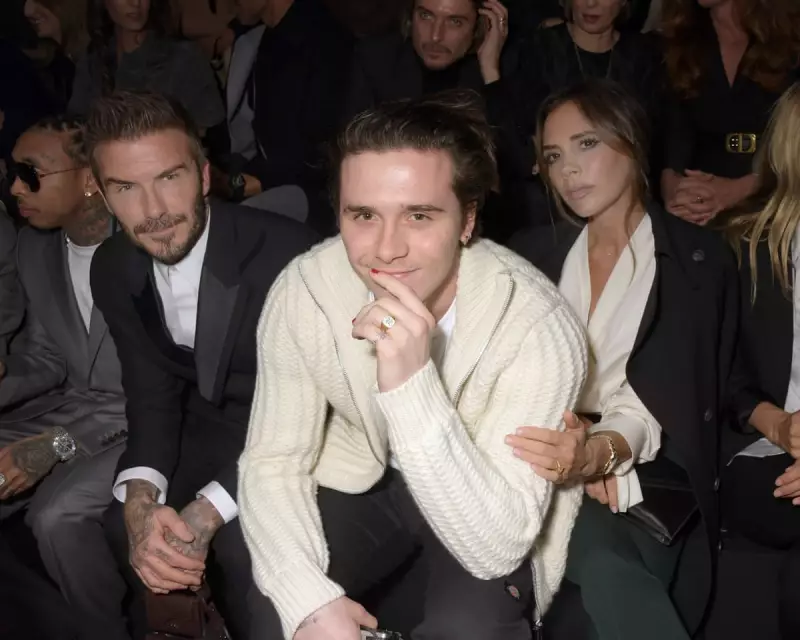
In a stunning public rebuke, Brooklyn Peltz Beckham has launched what can only be described as a 'nuclear' attack on his famous parents, David and Victoria Beckham. The eldest son of the globally recognised brand took to Instagram to accuse them of treating him as a commercial prop and prioritising public promotion over genuine family bonds.
The Instagram Missile: A Son's Accusations
The explosive social media post, which rapidly became one of the most-read stories online, did not mince words. Brooklyn, 24, alleged that "Brand Beckham comes first" and that family affection is measured by social media posts and photo opportunities. He wrote: "My family values public promotion and endorsements above all else... Family 'love' is decided by how much you post on social media, or how quickly you drop everything to show up and pose for a family photo opp."
This public airing of a private grievance throws a harsh spotlight on the carefully curated world of Beckham Inc. The rift, which has reportedly been festering for over a year, was conspicuously absent from Victoria Beckham's recent Netflix documentary. The series, much like David's before it, served as a self-commissioned advertorial, expertly avoiding the elephant in the room.

A Life For Sale: The Commodification of a Childhood
Brooklyn's outburst did not emerge from a vacuum. He has been a commercial entity since before he was born, with the story of Victoria's pregnancy sold to the highest bidder. His first baby pictures were a lucrative deal. The family's wedding was meticulously planned with OK! magazine, staying up until 3am to select images. For years, the Beckhams' most intimate moments were plotted with media proprietor Richard Desmond at Victoria's parents' house, each feature accompanied by a substantial cheque.
As their fame evolved, so did their strategy. With sophisticated advisers, David and Victoria built a diversified empire, mastering the art of turning family life into branded content. The advent of social media provided the perfect pipeline. Expressions of parental love were not just private moments but public performances—photographed, tagged, and monetised.
This lifestyle, while generating an estimated family wealth of around £500 million, appears to have exacted a heavy toll. Observers suggest the Beckhams may have long lost the ability to see how corrosive this commercialised version of family life could be, with everything becoming "all normal," as in a cinematic mafia family.
The Fallout and a Wider Cultural Reckoning
The immediate aftermath sees the Beckhams likely locked in crisis talks. David was pictured at the World Economic Forum in Davos, while the family is expected to issue a statement reaffirming their love for Brooklyn. Yet, the damage is done, revealing the dangerous slippage in our culture from private life to public trade.
This incident transcends celebrity gossip. It speaks to a societal epidemic where privacy is devalued and individuals become the product. From fourth-tier influencers to ordinary people oversharing online, the Beckhams represent the vanguard of a dysfunctional age they helped create. The case raises urgent questions about children's consent, both in celebrity families and for every child whose image is plastered online by parents from birth.
As Sir Keir Starmer considers banning social media for under-16s, perhaps legislation should also consider protecting children from being monetised by their own families. For Brooklyn Beckham, the bill for a lifetime as a brand asset has finally arrived, and the payment is public, painful, and profoundly revealing.