Alex Frayne's Photographic Exploration of America's Fractured Psyche
Presented as part of the Adelaide Festival 2026 program, South Australian artist Alex Frayne embarks on a profound photographic journey into the heart of modern America. His exhibition, Manifest Destiny, runs from 28 February to 15 March at ILA (Immersive Light and Art), showcasing works shot almost entirely on analogue film over three years across nine states. Frayne's lens meticulously focuses on the fringes of the West, Deep South, and Bible Belt, capturing the nation's complex and often contradictory soul.
Religious Landscapes and Daily Life
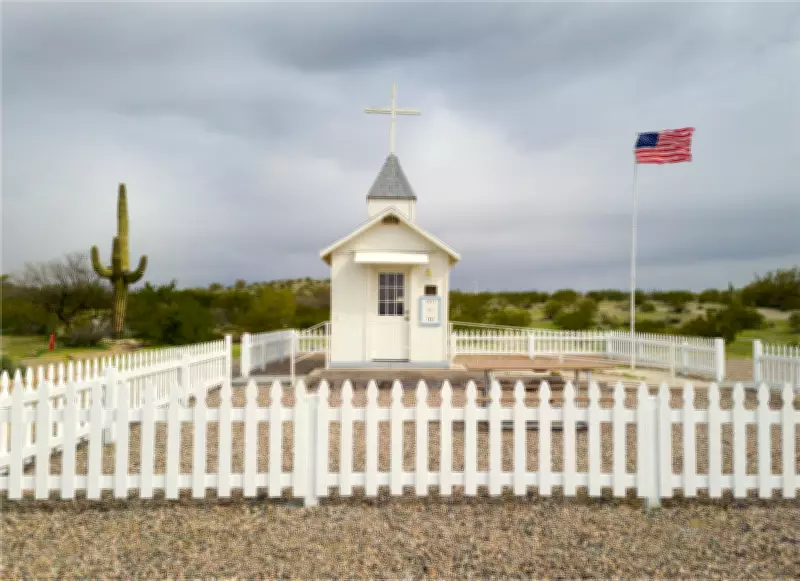
Scattered across the sunbelt, Frayne discovered places of worship that invite passersby to pause and reflect on the proximity of religion to daily life in the land of the free. In Northern Arizona, signs reading Pray, Vote, then Pray again dot the landscape. Twice, locals approached Frayne, offering blessings for his safety and success, highlighting the pervasive and earnest nature of faith in these regions.
Eerie Highways and Unexpected Encounters
On Nevada's Highway 375, known as the Extra-Terrestrial freeway, Frayne experienced an eerily quiet road. Suddenly, a thunderous clap heralded what seemed like a UFO but was actually an F18 Super-Hornet from Nellis airbase. This moment underscores the blend of myth and military might that defines parts of America.

Cultural Contrasts and Irony
Driving through New Mexico, Frayne captured a scene with everything a trucker en route to devoutly religious Utah might want, yet noted the absence of irony. In Arkansas, behind a church, he reflected on differences between American and Australian attitudes toward the sacred, where in America, religion is all-encompassing and not to be mocked.
Urban Dreams and Realities
In Venice Beach, California, Frayne subverted first impressions of a city of dreamers and drifters. San Francisco's Haight-Ashbury, sought for its 1967 spirit, revealed itself as a movie set for an indie film, with actors working for points rather than wages. Los Angeles showcased stark contrasts between old buildings near Skid Row and those afflicted by disease and opioid use, forming a tragic chorus in a real-life drama.
Ghost Towns and Historical Echoes
Paying a Las Vegas taxi driver $500, Frayne visited Nelson, Nevada, a ghost town that serves as a museum for Hollywood tropes. In Toyah, Texas, an abandoned high school stands forlorn, with history marked by racial violence and Amelia Earhart's unscheduled stop. These sites echo America's past struggles and myths.
Oil, Food, and Economic Symbols
In Texas, oil pumps are prayed for and treated like family, moving with a balletic grace. Frayne also explored fast food culture, noting its general use for unhealthy yet sometimes delicious cuisine. Gas stations in Oklahoma are depicted as small shrines to the 20th century, resonating with rusty elegance.
Desolation and Hidden Lives
Along the Mississippi, Frayne found desolate towns with nobody about, prompting questions about where residents were hiding. This contrasted with his experiences in South Australia, highlighting unique American solitude. An abandoned drive-in in Nevada was licensed for Sam Shepard's book reprint, fitting tales of the lonely West.
Artistic Reflections and Legacy
Frayne's work, such as the image of a saguaro cactus in Arizona on Maricopa ancestral land, forced him to unlearn simplistic film tropes and see landscapes authentically. His photographs, like Elegy for Ghosts of Fast Food and The Poor, Quiet South, capture the beauty and sadness of regions still recovering from historical wounds, with music like jazz and gospel as cultural exports.
Through Manifest Destiny, Alex Frayne offers a raw and insightful portrait of America, blending personal anecdotes with broader cultural commentary, inviting viewers to reconsider the nation's psyche through the art of photography.