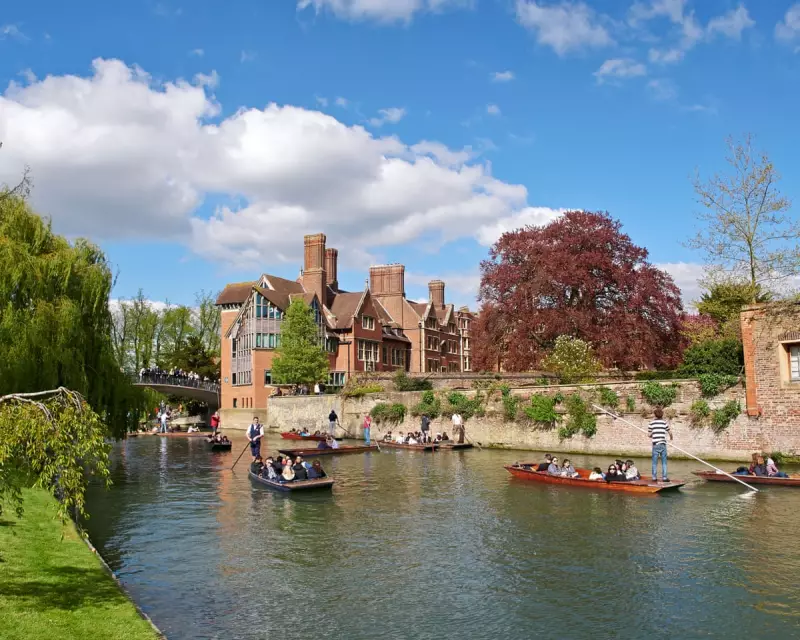
A Cambridge college is facing intense pressure to abandon a controversial new policy that seeks to actively recruit students from the UK's most elite private schools.
Alumni and Charities Condemn 'Damaging' Policy
Trinity Hall, one of the constituent colleges of the University of Cambridge, has been urged by its own graduates and leading social mobility organisations to scrap the initiative. They have described the policy as damaging, offensive and a significant step backwards for equality in higher education.
The internal move came to light after a memo was revealed, stating the college's purpose was to not 'ignore or marginalise' privately educated students. This justification has been met with shock and disappointment from those campaigning for greater state school representation at top universities.

A 'Total Departure from Reality'
Prominent critic Alastair Campbell, the former Downing Street communications director under Tony Blair, told the Guardian the college's reasoning suggested a 'total departure from reality'.
'Being four or more times better represented in such elite institutions like Cambridge University suggests anything but marginalisation,' Campbell stated. 'It suggests the college wants to reverse the painfully secured advances in social mobility.'
Campbell, a supporter of the 93% Club – a network for state-educated students – warned the policy could set a dangerous precedent for other institutions to follow.
The club's chief executive, Sophie Pender, said its Trinity Hall members would withdraw alumni funding donations until the policy was reversed, labelling the decision 'immoral and dangerous'.
Targeting Wealthy Schools for 'Quality'
Adopted at the end of last year, the policy involves Trinity Hall approaching a select group of independent schools to encourage applications for subjects including languages, music, art history, classics and theology. The stated aim is to improve the 'quality' of recruits.
Most of the targeted schools are in the south of England and charge annual fees exceeding £25,000.
The Sutton Trust, a charity focused on improving social mobility through education, has called for an immediate reversal. Its chief executive, Nick Harrison, highlighted that private school pupils, who represent just 7% of the population, are already overrepresented on a wide range of university courses.
'This already limits opportunities for those with similar abilities from state schools,' Harrison said.
College Defends Stance Amid Funding Threats
In response to the outcry, Mary Hockaday, the Master of Trinity Hall, emailed alumni on Thursday evening claiming media coverage had been 'very misleading'.
Hockaday insisted there had been 'no change to our admissions policy or our commitment to widening participation'. She described the activity as adding some schools to existing recruitment lists to 'ensure we receive applications from talented students from all backgrounds'.
However, this defence has done little to assuage critics. Experts have questioned the need for such targeted outreach. Jess Staufenberg, co-founder of the Private Education Policy Forum, pointed out there is no evidence private schools need encouragement to apply to Cambridge, as many have dedicated staff teams for Oxbridge admissions.
'Trinity Hall should present its evidence for why these private schools – rather than state schools in forgotten regions of the north-east, for instance – need a specific recruitment policy,' Staufenberg said.
The controversy underscores the ongoing tension within elite universities between maintaining academic traditions and fulfilling their role in promoting fair access and social mobility across the UK.