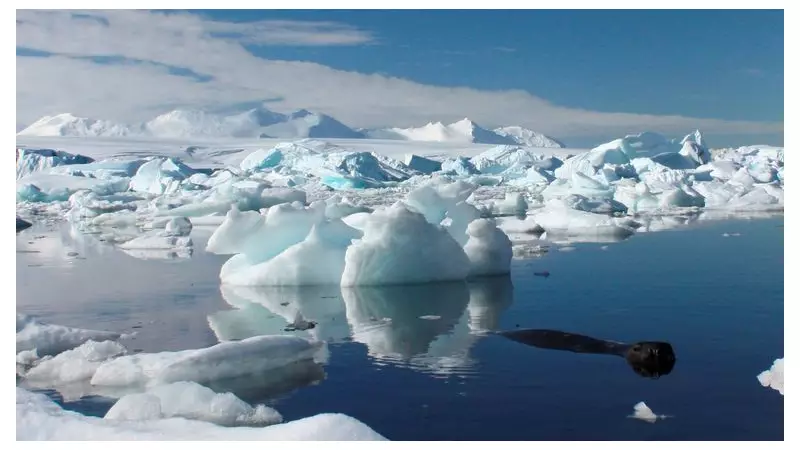
In the high summer of Antarctica, the waters surrounding the British Antarctic Survey's Rothera research station are a frigid -1°C. Despite the cold, this murky, plankton-rich soup is one of the planet's most productive oceans, and a site of urgent scientific investigation into the impacts of climate change.
The Delicate Balance of a Frozen World
For divers like marine biologists Pati Glaz and Matt Bell, plunging into these depths reveals a unique ecosystem. They encounter extraordinary creatures, from starfish with forty arms to examples of polar gigantism, where species grow to enormous sizes due to the cold water's high oxygen content.
"Because it's cold, the biology is very different," explains Professor Lloyd Peck, who leads marine biology research at BAS. He notes that Antarctic animals live exceptionally long lives, growing and reproducing slowly. An Antarctic starfish may take hundreds of days to reproduce, compared to weeks for its UK relatives.

This slow pace of life is now a vulnerability. Warming the water by just a degree or so can cause larvae to hatch earlier, in the dark Antarctic winter when there is no food. "We're really worried that many species could fail because the timing of their cycles is changed in a very detrimental way, by just a small amount of warmth," Prof Peck warns.
Urgent Research in a Warming Climate
The BAS dive team's long-term data is crucial. They have been surveying the same seabed sites for nearly 30 years, providing a rare baseline to judge the winners and losers in an ecosystem that is already, on average, close to a degree warmer than when their research began.
The work is perilous, requiring spotters to watch for predatory leopard seals and killer whales. Following a fatal encounter in 2003, dives are aborted if these animals are spotted nearby.
The warming trend lends urgency to their mission, which now extends beyond monitoring to pioneering new science. Researchers are exploring the fundamentals of sub-zero biology, a field science knows little about. "If you take the cells of animals that live at warmer temperatures and you cool them down to zero degrees, they don't work," said Prof Peck.
A key mystery is how Antarctic life avoids a fatal problem: proteins sticking together in the cold. Understanding this could shed light on human diseases like Alzheimer's and CJD, which involve abnormal protein aggregation. The slow, oxygen-rich growth of polar animals may also offer insights into the molecular basis of human ageing.
Signs of Change and Cautious Hope
Back on the surface, change is visible. Whales, once rare at Rothera, are now abundant. The team recently counted a record 30 to 40 humpback whales in the bay, a recovery since the whaling ban 40 years ago and aided by receding sea ice.
Historically, Southern Ocean ecosystems have absorbed vast amounts of carbon, helping to trigger ice ages after warmer geological periods. Fossilised palm trees on the continent testify to a much warmer Antarctic past.
However, the current pace of warming is unprecedented. Antarctica is heating far faster than in the ancient past, a speed that its uniquely slow, cold-adapted biology may not survive. The research at Rothera is a race to understand these changes before they tip the balance at the bottom of the world.