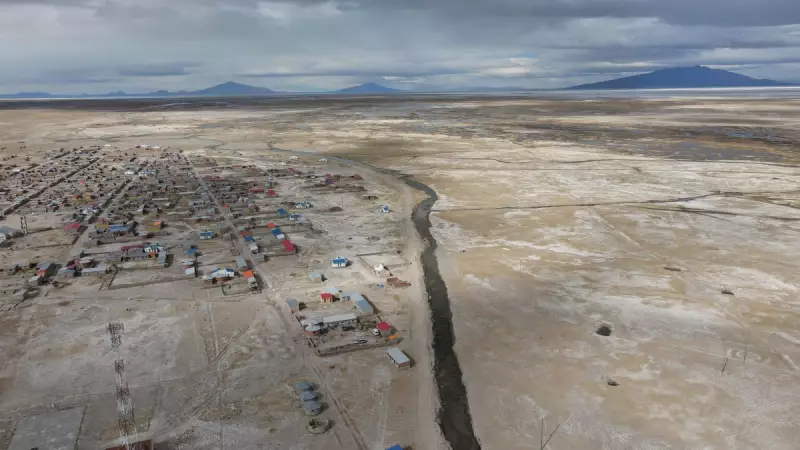
On the vast, windswept Altiplano of Bolivia, a 4,000-year-old civilisation is fighting for its survival. The Uru Chipaya people, often called the 'people of water', are confronting a devastating combination of climate change-induced drought, rising soil salinity, and a mass exodus of their population to Chile.
A Landscape Turning to Salt
The central town of Chipaya, located just 35 miles from the Chilean border, presents a scene of desolation. Sandy streets are mostly empty, and many homes stand padlocked and abandoned. The relentless wind forces eyes shut, and the ground itself glows with a white, salty crust—a stark symbol of the environmental crisis.
"We are the first inhabitants of South America," states Flora Mamani Felipe, Chipaya's first female mayor, whose traditional title is Langsni Pagh Mä Eph. "We are an ancient culture, and we're now in danger of extinction." She points to a lack of jobs and relentless migration as primary threats, with an estimated 60% of Chipaya's residents now holding Chilean nationality.

The climate crisis has ravaged their ancestral way of life. Lake Poopó, once Bolivia's second-largest lake and a vital resource, has completely vanished. Crops fail, and animals die as drought, floods, and frost are compounded by ever-increasing salt levels in the soil and water.
The Human Cost of a Changing Climate
For residents like Severo Paredes Condori, 63, the daily struggle is tangible. Each year, his community washes the soil to reduce salinity for quinoa cultivation, but the fix lasts only twelve months. "Too much salt destroys the grass for the animals," he explains, noting his sheep are suffering. He lives in a traditional round clay house but fears for the future, as most of his family has already left for Chile.
The health impacts are severe. Juan Condori, a local health worker for 15 years, reports a significant rise in cases of diarrhoea and coughs. Environmental researcher Mohammed Mofizur Rahman warns that consuming saline water leads to more than just gastrointestinal issues, with global evidence linking high salinity to hypertension and increased cardiovascular risk.
Cultural erosion marches hand-in-hand with environmental decline. Mayor Mamani Felipe laments that children who migrate often stop speaking the Uru Chipaya language and abandon traditional practices. "My daughter also speaks very little now," she says. "The history of Uru Chipaya is sad."
A Race to Preserve a 4,000-Year Legacy
Anthropologist Gabriel Moreno of Bolivia's Technical University of Oruro emphasises the profound loss at stake. He notes the Uru Chipaya are part of a project to be declared the oldest living culture in the world, with a submission planned for UNESCO in 2026. "They have climate resilience," he says, referencing their ancestral engineering skills in water management. "It is not for nothing they were called the men of water."
Yet, this ancient knowledge is struggling against modern climatic shifts. Sebastián Quispe Lázaro, 67, who manages tourism, observes that the weather has become wildly unpredictable. "When I was a child, the sky was always blue this time of the year. Now we have all four seasons in one day."
Poverty exacerbates the crisis, with the latest 2024 census showing 67.12% of Chipaya's population living in poverty. Moreno argues that local schools are now the last bastion preventing total cultural collapse, keeping children and teenagers in the territory.
For elders like Severo Paredes Condori, leaving is not an option. He intends to stay on his ancestral land until he dies, even if it means his family in Chile will one day witness his funeral via a WhatsApp video call. His story encapsulates the desperate plight of a people watching their world, and their millennia-old identity, slowly turn to dust and salt.