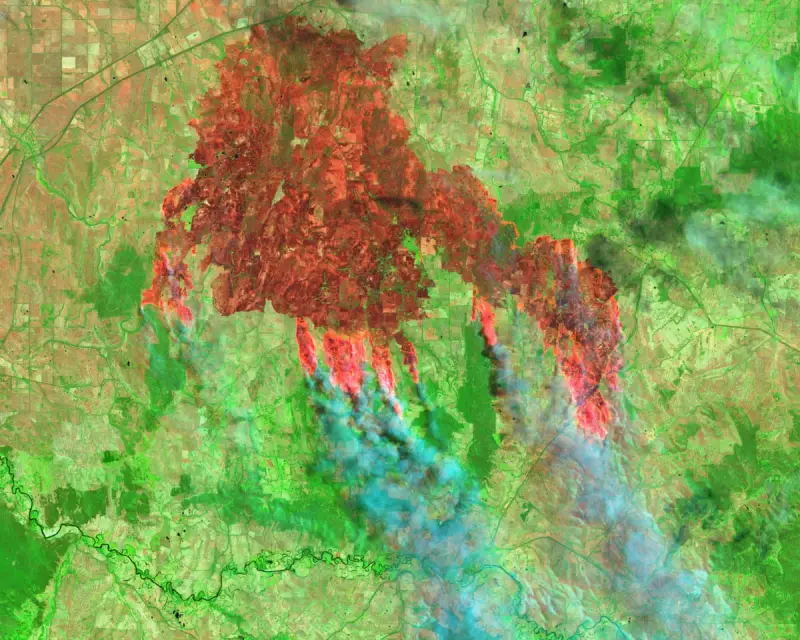
The state of Victoria has been left reeling from a series of devastating bushfires in January 2026, which authorities and firefighters have described as unprecedented in their speed, scale, and destructive power. Striking much earlier than the traditional peak of the fire season, the blazes have torn through approximately 400,000 hectares of land, claimed the life of cattle farmer Maxwell Hobson, and resulted in the loss of almost 900 buildings, including more than 250 homes. The toll on livestock has been catastrophic, with over 15,000 animals killed, alongside countless native wildlife.
A Perfect Storm of Conditions
The fires were fuelled by a dangerous confluence of climatic factors. Following a year of exceptionally dry conditions with "very much below average" rainfall across much of southern Australia, heavy November rains triggered what Country Fire Authority chief Jason Heffernan called "prolific grass growth." This new growth, combined with a prolonged period of intense heat, rapidly dried out, creating vast swathes of landscape primed to ignite.
Emergency warnings began on 6 January, with officials predicting a severe heatwave not seen since 2019. By 7 January, Melbourne's temperature soared to 41.1°C, and multiple fires ignited. The most significant early blaze was the Walwa fire at Mt Lawson state park, which burned through 1,000 hectares on its first day. Authorities declared a catastrophic fire danger rating for 9 January—the first such declaration since 2019—as temperatures were forecast to reach 45-46°C.

Three Major Infernos: Longwood, Harcourt, and Walwa
On 9 January, strong winds and extreme heat supercharged the existing fires into uncontrollable infernos. The Longwood fire in central Victoria became incredibly dynamic, spreading rapidly in multiple directions. It decimated the town of Ruffy and forced evacuations in dozens of communities, including the popular holiday spot of Eildon. By 15 January, this single blaze had burned 137,000 hectares, destroyed 173 homes, and claimed the life of farmer Maxwell Hobson, whose remains were found near his vehicle.
North of the apple-growing region of Harcourt, the Harcourt fire ignited on the afternoon of 9 January. It tore through the township of Ravenswood with such intensity that veteran fire captain Andrew Wilson described it as running harder than the Black Saturday fires of 2009. The blaze jumped the Calder Freeway, damaged the Bendigo rail line, and destroyed at least 54 homes and key local infrastructure like the Harcourt Cooperative Cool Store.
The Walwa fire, among the first to start, grew so fierce it generated its own weather system, including a pyrocumulonimbus cloud with lightning. By 15 January, it had consumed over 102,000 hectares, destroyed nine structures, and wiped out about 10,000 hectares of vital pine plantation.
Widespread Devastation and a Warning for the Future
Other significant fires broke out across the state as a cool change moved through on the evening of 9 January. Grassfires near Streatham and Skipton destroyed 59 structures, while the Grass Flat blaze in Natimuk claimed at least 17 homes. As of 15 January, nine fires continued to burn, though no emergency warnings were active.
The scale of loss is immense, impacting agriculture, infrastructure, and countless communities. Chief Officer Jason Heffernan expressed surprise that the devastation was not even greater, noting that fire behaviour in some areas exceeded thresholds seen on Black Saturday. However, he issued a stern warning to Victorians, stressing that the traditional peak fire danger period in February was still to come. "Please don't think that this event is it," he said, highlighting the potential for very hot conditions and strong winds to return in the coming weeks, threatening more communities. The fight for Victoria is far from over.