

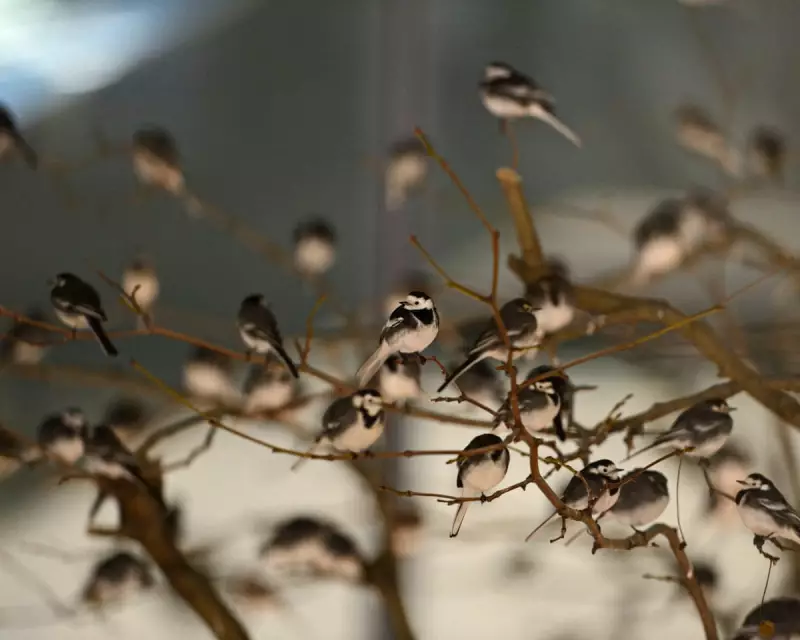
In the heart of a bustling Hampshire shopping centre, an extraordinary natural event unfolds each winter evening. Hundreds of pied wagtails descend upon a mundane courtyard, transforming it into a vital sanctuary against the cold.
A Winter Gathering in an Urban Oasis
At the Whiteley shopping centre, a courtyard nestled between shops and restaurants becomes the unlikely stage for a dramatic wildlife spectacle. As dusk falls, the air fills with the distinctive, high-pitched "chizzick" calls of arriving birds. Their flickering tails move like metronomes against the glow of storefronts, reflecting off the pale trunks of ornamental silver birch trees.
Most shoppers hurry past, oblivious to the avian commotion overhead. For an observer with time to linger, the scene is mesmerising. For around ten minutes, the flock remains restless. Birds jostle for position on branches, displace one another, and then lift in a brief, swirling cloud before settling in a neighbouring tree, only to rise again moments later.

The Critical Search for Warmth and Shelter
This choice of roost is no accident. On harsh winter nights, survival for small birds like pied wagtails is precarious. They lose body heat rapidly, making food, shelter, and warmth absolutely critical. The urban environment of the shopping centre provides all three.
The floodlights attract a bounty of insects, including winter gnats and moths. The surrounding buildings act as giant radiators, storing the sun's warmth and providing a formidable barrier against the biting wind. Additional heat spills out each time a shop door opens. Elevated in the trees, the birds find safety from ground predators like cats and urban foxes.
The Subtle Negotiations of a Communal Roost
Establishing the roost involves constant competition and subtle social negotiation. Each bird seeks the prime position for maximum warmth and security. However, roosting together offers advantages beyond mere shelter.
By congregating, the wagtails can observe the condition and foraging success of their neighbours. This information becomes invaluable at dawn when the flock disperses, guiding individuals to productive feeding grounds. In winter, their usually solitary feeding habits shift. Females and juveniles are tolerated as subordinate satellites to territorial males, forming temporary alliances for survival.
As darkness deepens, the chattering calls fade to a whisper. The flock, now several hundred strong, settles across two adjacent trees in companionable silence. They become silhouettes along the branches, conserving precious warmth through the long winter night, a testament to nature's resilience in the most human of habitats.






