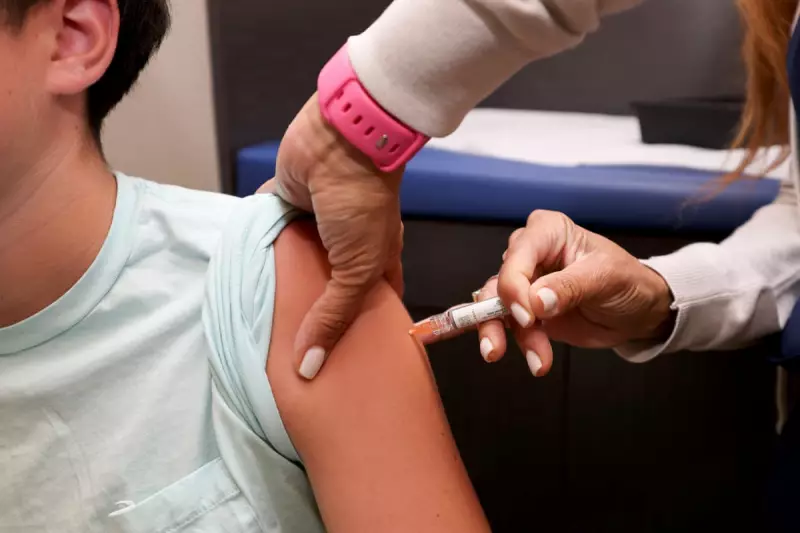
In a sweeping change to American public health policy, the Trump administration has announced a major reduction in the number of routinely recommended childhood vaccines. The decision, which experts warn will allow infectious diseases to spread, represents the most significant shift in US immunisation policy to date.
Major Reduction in Recommended Jabs
The new policy, announced on Monday afternoon and effective immediately, slashes the number of standard childhood immunisations from 17 to just 11 jabs. The overhaul falls under the purview of longtime vaccine critic Robert F Kennedy Jr. Prominent health figures have reacted with alarm, stating the changes will reduce access to vaccines and critically undermine public trust.
"The goal of this administration is to basically make vaccines optional," said Paul Offit, a former member of the advisory committee on vaccines for the US Food and Drug Administration (FDA). "And we’re paying the price."

New "High-Risk" and "Shared Decision" Categories
Under the revised schedule, several previously standard vaccines will no longer be fully recommended for all children. Vaccines to prevent influenza, rotavirus, and respiratory syncytial virus (RSV) are among those affected. Some will now only be available for individuals deemed "high-risk," while others are relegated to a "shared clinical decision-making" category, typically requiring a specific doctor's recommendation to administer.
The new US childhood vaccine schedule will now look similar to that used in Denmark. This shift comes at a precarious time for American public health. The nation is on the cusp of losing its hard-won measles elimination status amid the largest outbreak in three decades.
Public Health Consequences and Existing Outbreaks
Health officials point to recent disease trends as a stark warning. The past year has seen more tetanus cases than in a decade and a higher number of pertussis (whooping cough) deaths than the US has experienced in years. These outbreaks provide a troubling backdrop to the policy change, with experts fearing the reduction in vaccine recommendations will exacerbate such dangerous trends.
The move is set to reshape the landscape of preventive healthcare for American children, with profound implications for disease control and herd immunity across the population.