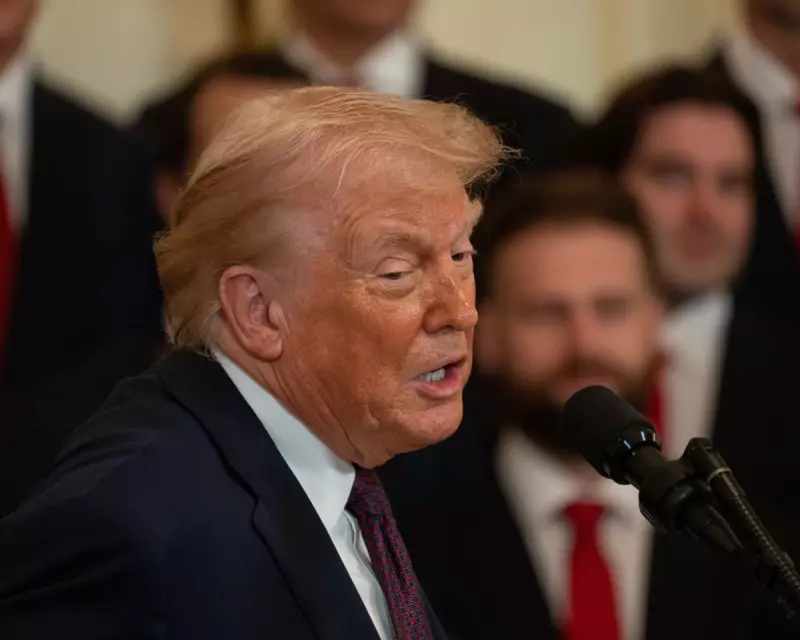
President Donald Trump has stepped back from the precipice of a direct military confrontation with Iran, following two weeks of escalating threats and global anxiety over a potential US strike. The dramatic shift came after a flurry of diplomatic interventions from regional allies and private assurances about the status of Iran's internal protests.
A Last-Minute Retreat from the Brink
On Tuesday, the situation appeared to be moving rapidly towards conflict. Trump was scheduled for a Pentagon briefing on military options and had taken to his Truth Social platform, urging Iranian protesters to seize government institutions and promising that "help is on its way". This followed his red line declaration on 2 January, warning Tehran that the US would intervene if it "violently kills peaceful protesters".
By Wednesday, however, the president's tone changed. He announced he had received assurances from "very important sources" that Iran had halted the killing of demonstrators and was not proceeding with executions. This pullback is widely attributed to a concerted effort by US allies in the Middle East, including Saudi Arabia, Qatar, Oman, and Turkey. These nations, while often at odds with Iran's Shia-led government, warned that airstrikes could trigger a wider regional war, retaliatory attacks, refugee crises, and even state collapse.

The Chaotic Calculus of Trump's Foreign Policy
This episode underscores the chaotic and often contradictory nature of Trump's approach to international affairs, particularly regarding Iran. His actions are frequently driven by a desire to project strength and avoid any perception of weakness, a trait highlighted by his criticism of predecessor Barack Obama's handling of Syria's chemical weapons in 2013. Trump admires strongmen and is loath to appear weak, even if military action risks closing the vital Strait of Hormuz or destabilising global oil markets.
This mindset was recently emboldened by what he perceives as a successful military intervention in Venezuela. On 3 January, US special forces abducted President Nicolás Maduro, bringing him to New York to stand trial. Trump has since suggested the US could oversee Venezuela and its oil resources for years, using the shock of that operation to issue fresh threats against Cuba, Colombia, and Mexico.
A Dealmaker's Unfulfilled Ambition
Trump's relationship with Iran has been marked by a cycle of aggression and failed diplomacy. In 2018, during his first term, he unilaterally withdrew the US from the landmark 2015 Iran nuclear deal, calling it a "horrible one-sided" agreement. He insisted he could negotiate a better one, viewing the destruction of an Obama-era achievement as a victory.
Upon returning to power last year, he was eager to secure that elusive deal. In March, he sent a letter to Iran's Supreme Leader, Ayatollah Ali Khamenei, proposing direct talks, while simultaneously threatening "bombing the likes of which they have never seen before" if diplomacy failed. Indirect talks mediated by Oman began, with some Iranian officials even appealing to Trump's desire to be a peacemaker.
These negotiations were ultimately derailed in mid-June by a surprise Israeli attack that killed Iranian military officials and scientists. Trump briefly joined this conflict, ordering airstrikes on three Iranian nuclear facilities, which he later claimed destroyed "all nuclear facilities and capability"—a assertion disputed by intelligence assessments.
For now, the immediate threat of a US attack on Iran has subsided. The regime in Tehran has brutally suppressed the protests, killing thousands and cutting off internet access to isolate its people. Yet, the underlying tensions remain. Trump has demonstrated his willingness to use military force to back his threats, but he also faces a war-weary American public. Recent polls show 70% of Americans oppose military action in Iran, a significant constraint on a president who relishes keeping the world's attention fixed on his power to unleash the US military at will.