

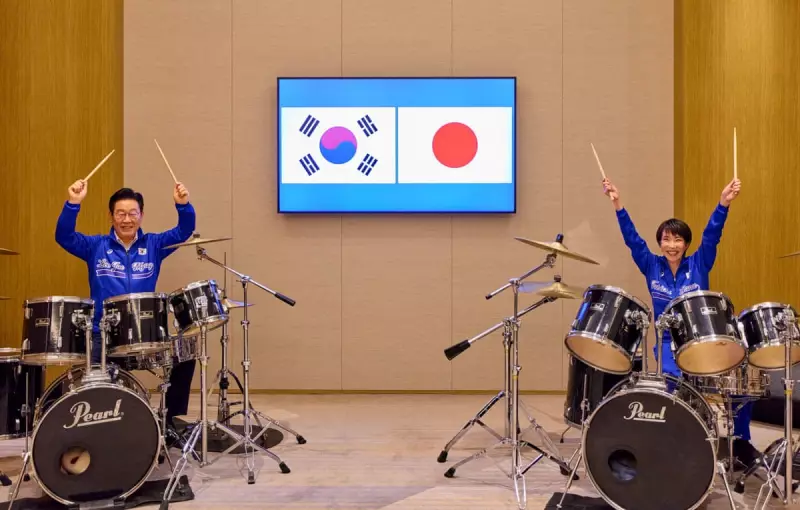
In an unexpected finale to a significant bilateral summit, the leaders of Japan and South Korea swapped formal handshakes for drumsticks, performing a duet of popular K-pop hits. The scene, which unfolded in Nara, western Japan, saw Japanese Prime Minister Sanae Takaichi and South Korean President Lee Jae Myung seated behind matching drum kits, attempting to find a shared rhythm both musically and diplomatically.
The Summit's Surprise Finale
The two-day summit, held in Prime Minister Takaichi's home prefecture of Nara, concluded on Tuesday with this highly symbolic act. The leaders, dressed in matching blue uniforms, played along to 'Golden' from the Netflix series K-Pop Demon Hunters and the global BTS hit 'Dynamite'. The performance was a personal touch orchestrated by Takaichi, who recalled President Lee's offhand comment during their first meeting in Gyeongju that playing the drums was a lifelong ambition.
Takaichi, a former heavy metal drummer from her university days, was able to guide her counterpart. "The president learned to play the drums in just five, 10 minutes," she remarked in a video posted by her office. Lee demonstrated humility about the skill gap, posting on social media the following morning: "Although our tempos were a bit different, we both tried to match the rhythm together - we will create a future-oriented relationship with one heart." The session ended with the leaders signing and exchanging their drumsticks as a memento.

Personal Gestures and Strategic Context
The drumming spectacle was part of a series of carefully considered personal gestures. Upon Lee's arrival at his accommodation before the summit, Takaichi made an unscheduled appearance to greet him, offering a deep 90-degree bow—a mark of profound respect that garnered significant media attention in South Korea. She also complimented Lee's wife, Kim Hea Kyung, on her beauty.
This outreach is notable given Takaichi's reputation as a hardline conservative and security hawk. She has actively used her genuine appreciation for South Korean culture—from roasted seaweed and cosmetics to K-dramas—as a diplomatic tool. The summit's warm tone carried significant geopolitical weight, coming just a week after Lee's visit to Beijing, where Chinese President Xi Jinping urged him to stand on "the right side of history," a phrase widely seen as referencing regional tensions involving Japan and the United States.
Substance Behind the Symbolism
Beyond the cultural theatre, the leaders addressed substantive issues. Key outcomes from their talks included agreements on conducting DNA testing for victims of the 1942 Chosei coalmine disaster, enhanced cooperation on scam crime, the launch of formal economic security dialogues, and discussions on the threat posed by North Korea. On Wednesday, they visited the ancient Horyu-ji temple together, further emphasising shared cultural heritage.
However, some of the most historically thorny issues between the two nations, such as the long-standing disputes over "comfort women" and territorial claims, were conspicuously absent from the public agenda. The focus remained firmly on building forward momentum and identifying areas of practical cooperation.
Finding a Common Beat
The image of the two leaders attempting to synchronise their drumming serves as a potent metaphor for the current state of Japan-South Korea relations. While historical discord and differing political tempos persist, both sides appear committed to finding a harmonious rhythm for future collaboration. The Nara summit, with its blend of personal diplomacy and concrete agreements, suggests a conscious effort to move beyond entrenched disputes and build a more pragmatic, forward-looking partnership. For now, at least, Lee Jae Myung and Sanae Takaichi have managed to strike a chord of unity.






