

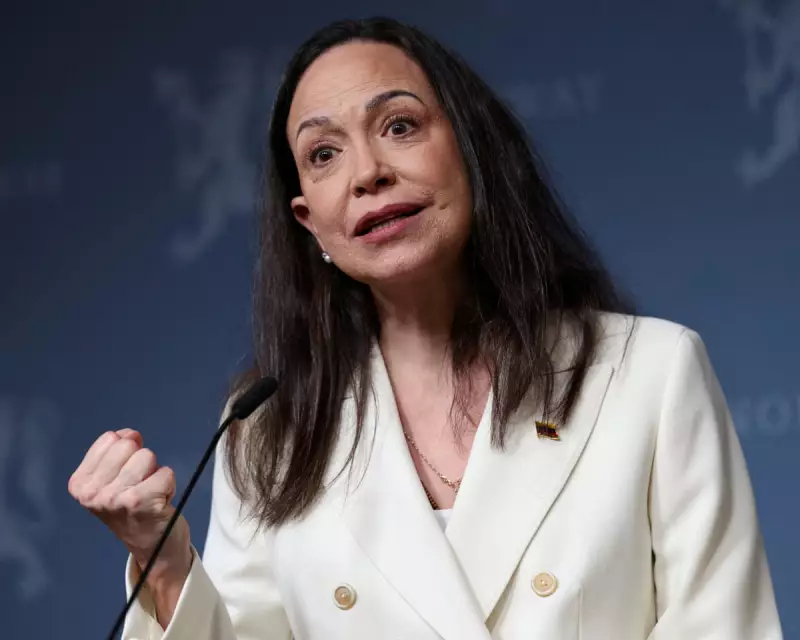
In a significant diplomatic move, former US President Donald Trump is set to host Venezuelan opposition figure and Nobel Peace Prize laureate, María Corina Machado, at the White House this Thursday. The high-stakes meeting will focus on the political future of the oil-rich South American nation, following the dramatic US-led capture of its former leader, Nicolás Maduro.
A Fractured Path to Power
The invitation comes after a period where Machado found herself sidelined by the Trump administration, despite widespread expectation she would lead Venezuela's transition. Instead, Washington formally recognised Maduro's former vice-president, Delcy Rodríguez, as the country's interim leader. Trump has concurrently insisted the United States will "run" Venezuela's affairs in the interim.
This complex power dynamic is further highlighted by a parallel official visit. Venezuela's ambassador to the United Kingdom, Félix Plasencia, a close Rodríguez ally, was also due in Washington on Thursday to meet Trump officials. This visit, the first of its kind in years, is reportedly intended to facilitate the reopening of the Venezuelan embassy, signalling a dramatic rapprochement since Maduro's downfall.

Machado, a 58-year-old former legislator, won an opposition primary to challenge Maduro in the 2024 presidential election but was barred from standing by his government. Her replacement, retired diplomat Edmundo González Urrutia, was later recognised by Washington as the legitimate election winner after the opposition presented compelling evidence of Maduro's decisive defeat.
The Nobel Prize Gambit and Shifting Alliances
Trump's stance on Machado's role has been ambiguous. Publicly, he has questioned her domestic support, remarking on the day of Maduro's capture that while she was a "nice woman," she lacked the necessary "respect" to govern. Machado's recent strategy to win favour involved a bold, albeit unsuccessful, symbolic gesture.
In a Fox News interview last week, she expressed a desire to "share" her 2025 Nobel Peace Prize with Trump, an offer swiftly rebuffed by the Nobel Institute which stated the award was non-transferable. Nevertheless, Trump told reporters it would be a "great honour" to accept. Sources suggest this episode actually damaged Machado's standing, with one White House insider telling the Washington Post that had she declined the prize in Trump's favour, "she'd be the president of Venezuela today."
Conversely, Trump has actively cultivated a working relationship with acting president Delcy Rodríguez. Last week, he announced a deal with Venezuela's interim leadership to supply up to 50 million barrels of crude oil to the US and signed an executive order to safeguard Venezuelan oil revenues in US-controlled accounts.
Contrasting Visions for Venezuela's Future
Rodríguez, who initially condemned the raid that captured Maduro—an operation Venezuelan officials say killed at least 100 people—has pivoted to cooperate closely with Washington. She has begun releasing political prisoners, including several US citizens, describing it as an "opening up to a new political moment." However, NGOs note the process is slow, with an estimated 1,000 detainees still held.
Following their first phone call, which Trump hailed on Truth Social as "tremendous" and Rodríguez called "courteous," Trump praised the interim leader as a "terrific person." Machado, meanwhile, has consistently praised Trump as a "champion of freedom" and thanked him for toppling Maduro. Yet, in a CBS interview, she pointed out that Rodríguez remains under US sanctions and is in a "very critical position because nobody trusts her."
When directly asked if she should lead Venezuela, Machado's response was unequivocal: "Absolutely, yes." She added, "We are ready and willing to serve our people." Thursday's meeting at the White House will test whether her vision, and her diplomatic overtures, can alter the current political calculus shaped by Maduro's capture and Washington's pragmatic new alliances.






