

The precarious truce in Gaza enters a new, complex stage as former US President Donald Trump issues a forceful public demand for the complete disarmament of Hamas. This comes as the second phase of a US-brokered ceasefire begins, even while key humanitarian provisions from the initial agreement remain unfulfilled.
Trump's Stark Ultimatum to Hamas
In a late-night social media post on Thursday, Trump vowed to push for what he termed the "comprehensive" demilitarisation of Hamas. He coupled this with a demand for the return of the remains of the final Israeli captive believed held by the group. "Hamas must IMMEDIATELY honor its commitments, including the return of the final body to Israel, and proceed without delay to full Demilitarisation," Trump wrote on Truth Social. "As I have said before, they can do this the easy way, or the hard way."
So far, Hamas has refused to give up its arms, making this one of the most contentious points in the ongoing negotiations. Trump has suggested a plan involving regional powers Egypt, Turkey, and Qatar to strip Hamas of its weapons and dismantle its tunnel network. Part of the proposed mechanism is a US-led "buy-back" program for smaller arms, where owners would hand over guns, rifles, and pistols in exchange for money.

A Shift to Governance and a 'Board of Peace'
The focus of this second phase has dramatically shifted from merely halting hostilities to establishing transitional governance, demilitarisation, and overseeing the monumental task of reconstruction. Trump announced he will chair a so-called "board of peace" to govern Gaza during this period.
This board, reportedly set to include former UK Prime Minister Tony Blair and Trump's advisers Jared Kushner and Steve Witkoff, will supervise reconstruction and economic recovery. It will oversee a 15-member Palestinian committee, the National Committee for the Administration of Gaza (NCAG), led by former Palestinian Authority deputy minister Ali Shaath. This committee is intended to be an apolitical, technocratic body managing Gaza's civil administration.
Overwhelming Destruction and a Continuing Humanitarian Crisis
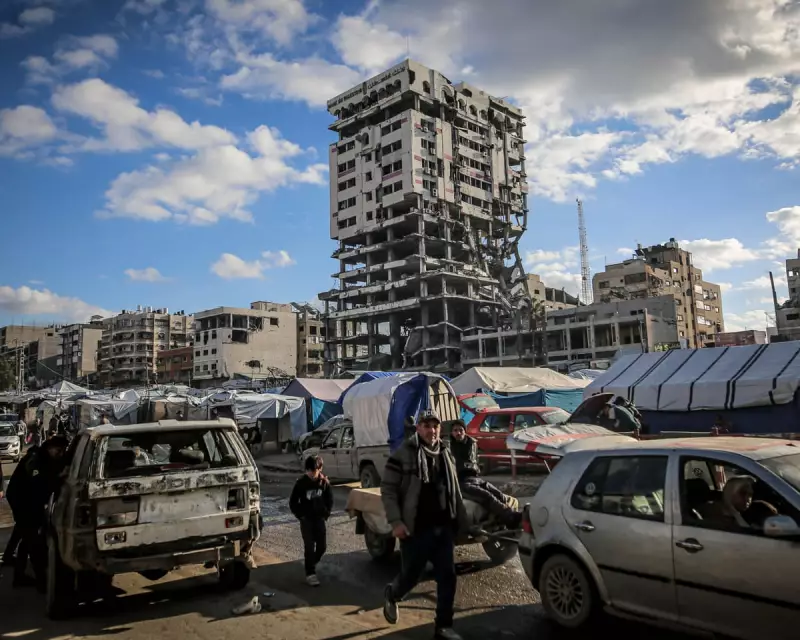
The scale of the challenge is staggering. A senior UN official visiting Gaza described an "overwhelming" level of destruction, with homes, schools, and infrastructure levelled. The United Nations estimates reconstruction will cost more than $70bn (£53bn) over decades and noted Gaza now contains over 60 million tonnes of rubble—roughly 30 tonnes for every person in the territory.
Despite the ceasefire, violence has not ceased entirely. Medical sources reported that six Palestinians were killed in Israeli airstrikes on Thursday. Furthermore, life for civilians remains extremely hazardous. Recent winter storms have compounded the misery, causing deaths from collapsing structures in overcrowded displacement camps. Unicef reported that 100 children have been killed since the ceasefire began in October, including six who died from hypothermia.
The path forward remains fraught. While the diplomatic ambition has escalated to address long-term governance, the immediate realities on the ground—ongoing strikes, a shattered landscape, and a desperate humanitarian situation—pose severe challenges to any lasting peace and recovery.






