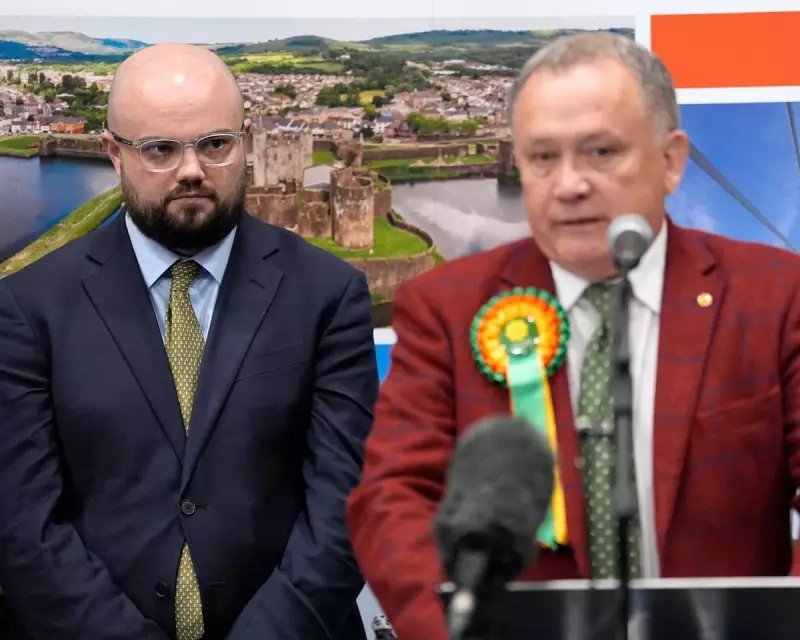
In a result that defied national expectations, the Welsh nationalist party Plaid Cymru successfully defended its Senedd seat in Caerphilly, halting the advance of Nigel Farage's Reform UK. The 24 October byelection became a flashpoint, not just for Welsh politics, but for a community's response to what residents described as an "imported" campaign of division.
A Community Pushes Back Against 'Imported' Scripts
Reform UK entered the contest with considerable confidence, anticipating capitalising on Labour's declining fortunes in Wales. However, the party's strategy, which focused heavily on immigration and the Welsh Government's 'nation of sanctuary' scheme, sparked a determined backlash.
Yuliia Bond, a Ukrainian refugee who has settled in south Wales, became an emblem of this resistance. Juggling two jobs, university studies, and raising two children, she felt compelled to speak out. "We challenged the disinformation because we didn't want our neighbours to be misled into resenting us," she stated.

Bond characterised Reform's literature as a generic far-right playbook. "The messages they used in Caerphilly didn't feel local. They felt imported – like someone copied a script from another country and dropped it through our doors," she explained. The claim that asylum seekers were receiving 'preferential treatment' was particularly galling, given that over 80% of the relevant sanctuary fund has supported Ukrainians fleeing war.
Positive Campaigning Versus 'Lies and Hate'
The victorious Plaid Cymru candidate, Lindsay Whittle, believes his party's positive, community-focused approach was key to their success. "Don't attack anyone personally because people don't like that. Keep the message positive. Try and unite people," he said, echoing Michelle Obama's famous adage.
He argued that Reform fundamentally misread the constituency. "People in Caerphilly have friends of different nationalities and they don't like people threatening their friends," Whittle noted, adding that voters understood the crucial role migrants play in sectors like the NHS and social care.
Behind the scenes, a relentless grassroots effort secured the win. Plaid Cymru county councillor Judith Pritchard, who acted as a ward captain, described it as "the most important byelection we've ever fought." She attributed the victory to "conviction versus cash," highlighting the passion of members who see it as a fight for Wales's future.
The Turning Point and Looming Senedd Battle
Local editor Richard Gurner of the Caerphilly Observer was struck by the campaign's divisiveness, noting communities turning on each other and sharp online debates. He identified a pivotal moment in a BBC debate, where an audience member confronted Reform candidate Llŷr Powell. "That was someone from our community who had a mixed race family explicitly stating the impact all this rhetoric had," Gurner said. "That was the line in the sand."
Politics lecturer Jac Larner, a Caerphilly native, offered a unique analysis. He praised Plaid's framing of the contest as a two-horse race with Reform but warned replicating this will be harder under the new proportional system for May's full Senedd elections. Larner also criticised external commentary on the area, stating: "Caerphilly isn't some post-industrial wasteland... it has its own political traditions and... can't simply be read through the lens of what is happening in England."
For Yuliia Bond, the experience was a stark lesson in the dangers of disinformation. "The war in Ukraine did not start with weapons. It started with disinformation, propaganda and lies," she warned. Her message for campaigners across the UK facing similar tactics in future elections is clear: "Disinformation must be challenged early, strongly and clearly, because hate spreads faster than facts." The Caerphilly result proves that challenge can be met.