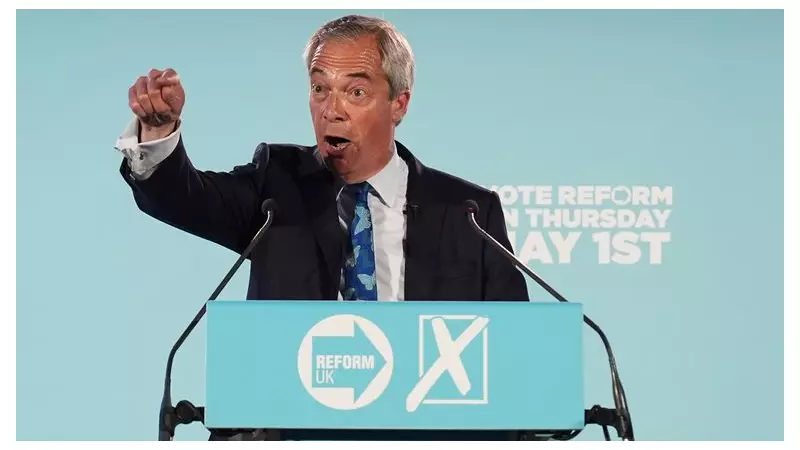
Reform UK leader Nigel Farage has declared a high-stakes, "double or quits" gamble on the upcoming local elections, committing a £5 million spending blitz in a bid to translate the party's poll numbers into tangible victories.
The High-Stakes Gamble
Mr Farage has framed the local elections on Thursday 7 May 2026 as the pivotal political event of the decade. He described them as "the single most important event between now and the general election," which is anticipated in 2029. The Reform leader conceded that his own position could be questioned if the party's strong polling fails to materialise in council chambers across England.
"If we bombed people would ask questions," Farage stated, adding that his "entire focus and energy" is on the campaign. The initial internal target was to win 1,000 of the 5,036 council seats up for grabs across 136 English local authorities, though this goal may be complicated by potential delays in 63 areas due to local government reorganisation.

The £5m War Chest and Campaign Strategy
The massive £5m campaign budget, to be spent over the next four months on direct mail and social media, has been enabled by one of the largest political donations in UK history. Former Conservative donor Christopher Harborne gave Reform UK £9 million, providing the financial firepower for this pre-election push.
Farage outlined that the campaign will heavily target non-voters from the 2024 general election, aiming to motivate them to register and support his party's call for fundamental change. The broad slogan will be "Britain is broken, Britain needs Reform," with key themes focusing on law and order, the cost of living, and migration. The law and order message will be particularly emphasised in outer London, where Farage claims it is the "dominant issue."
Pressure on All Party Leaders
The outcome of May's vote is seen as potentially decisive for the futures of Prime Minister Sir Keir Starmer and Conservative leader Kemi Badenoch. Sir Keir is under significant pressure given Labour's poor poll standing, with speculation about potential leadership challenges. He is expected to be publicly active in the coming week to explain government action on the cost of living and public services.
Meanwhile, Ms Badenoch must demonstrate to her party that she is beginning to reverse their fortunes after the 2024 general election defeat. She used her New Year's message to urge voters: "Things can change, but you also need to vote for the change you want to see in 2026." Failure could trigger further defections to Reform UK and a potential leadership challenge.
Farage also briefly addressed renewed allegations, which he denies, about using antisemitic language while at school. He claimed the reports in the "mainstream media" were having "zero effect" and might even be "solidifying our core support."
With elections also scheduled for the Scottish Parliament and the Senedd in Wales, the political stakes for every major party leader could not be higher as the UK approaches this critical mid-term test.