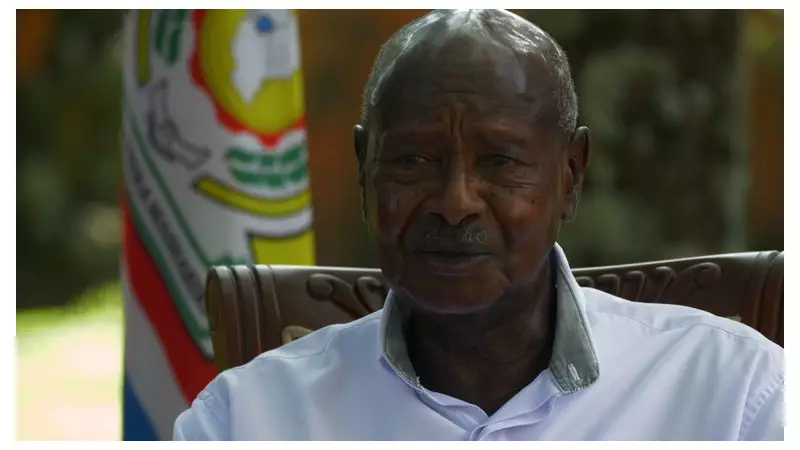
In an exclusive interview with Sky News, Uganda's long-serving President Yoweri Museveni has defended his government's decision to impose a nationwide internet shutdown on election day, comparing the controversial move to a simple road closure.
'We built the internet': Museveni's justification for digital blackout
The 81-year-old leader, speaking from the manicured gardens of the State Lodge in Kampala, argued the temporary measure was necessary to deal with criminals seeking to destabilise the nation. "We are the ones who built the internet. The shutting down is about dealing with criminals who want to use that infrastructure to destabilise our country," President Museveni stated.
When challenged on whether building the infrastructure gave him the right to shut it down, he offered a stark analogy: "No, it's like a road closure." The digital silence descended as Ugandans cast ballots in what is President Museveni's seventh successive election, with the leader seeking to add another five years to his four-decade rule.

The election period has been marked by a crackdown on dissent, including the suspension of nine local human rights organisations and mass arrests of activists. The capital, Kampala, was rendered a muted city by the internet blackout, with the State House compound standing as an isolated oasis above the quieted traffic.
Forty years in power and the question of change
This month marks forty years since Yoweri Museveni secured victory in the Bush War as a rebel leader in January 1986. His rise to power followed a five-year battle launched in protest of an allegedly rigged election. Constitutional amendments in 2005 and 2018 removed term and age limits, clearing his path to stand again at 81.
Addressing why the nation should retain him, President Museveni posed a rhetorical question: "If I am available - not dead, not senile but I am still around - and I have some knowledge. If you are really serious about your country why would you not want to take advantage of me if I am still able?"
He dismissed the idea that his younger self would connect with calls for change from Uganda's youth, who overwhelmingly back his main opponent, Bobi Wine. "I was actually dying to work with old people because we needed them," he said, citing collaborations with older statesmen like Julius Nyerere and Nelson Mandela.
This stance faces a demographic challenge: more than 70% of Ugandans are under 30, with a median age of just 17. Most were not alive to witness the Bush War that brought Museveni to power.
Targeting Bobi Wine and defending the 'gains'
The president was unequivocal in his reasoning for the government's aggressive targeting of 43-year-old opposition leader and former musician, Bobi Wine. "Bobi Wine breaks the law, that is why. There are other people in opposition - you don't find us having problems with them," he claimed.
Bobi Wine's party asserts that 300 of their supporters and officials were arrested in the lead-up to the ballot, following a violent 2021 election cycle that saw scores of his supporters killed. Museveni's traditional opponent, his former military doctor Kizza Besigye, is currently imprisoned on treason charges.
President Museveni pointed to economic growth as the primary gain of his long tenure, a key part of his "protecting the gains" campaign slogan. "The economy [the GDP] is almost at $70 billion. When we started it was at $3.9 billion," he noted, though youth unemployment remains critically high.
In a lengthy rant, he also criticised Western nations, stating he hadn't spoken to Donald Trump but appreciated that the former US president "unlike Biden" didn't "force homosexuals on Uganda." He denounced LGBTQI+ rights as "deviance."
When confronted with his own decades-old writings, which argued Africa's problems stemmed from leaders overstaying in power, Museveni remained defiant. He insisted power had been given to the people, who continued to elect him. "They have been in charge all of this time and I am here because they say 'you stay'," he concluded, dismissing allegations of election rigging and a monopoly on power as irrelevant to the nation's progress.