

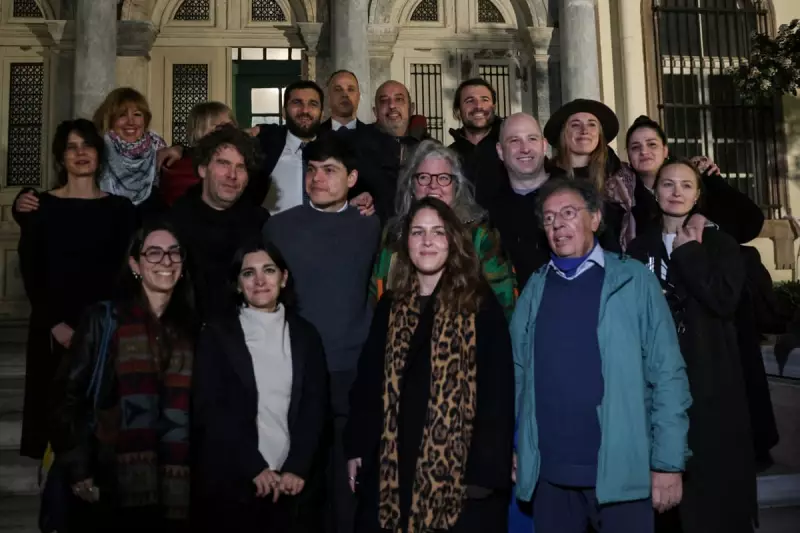
A Greek court has delivered a landmark verdict, acquitting two dozen humanitarian aid workers of people smuggling charges after a gruelling seven-year legal battle that drew international condemnation.
Cheers and Tears as Seven-Year Ordeal Ends
The courtroom in Mytilene on the island of Lesbos erupted in cheers and tears of jubilation on Thursday night as the presiding judge cleared all 24 defendants. The aid workers, who had faced potential prison sentences of up to 20 years, were involved in search-and-rescue operations on Lesbos at the height of the European refugee crisis.
The verdict brought to a close a 2,897-day legal nightmare for the humanitarians. Their lawyer, Zacharias Kesses, who represented six of the defendants, praised the court's "courageous judgment," stating it had finally delivered the obvious conclusion.

A Test Case for Criminalising Solidarity in Europe
The case had been described by the European Parliament as "the largest case of the criminalisation of solidarity in Europe." Rights organisations framed the trial as a critical test for the treatment of humanitarian workers across a continent where tolerance for aid has waned as migration policies have hardened.
The defendants included high-profile figures such as Sarah Mardini, the Syrian refugee whose story was told in the Netflix film The Swimmers, and Sean Binder, a German-born Irishman. Both spent 100 days in pre-trial detention following their arrest in 2018. The group ranged in age from people in their 20s to some in their early 70s, all bonded by a desire to help as Greece struggled with an influx of people fleeing conflict.
They had volunteered with the now-dissolved search-and-rescue organisation ERCI. Greek police had accused them of facilitating illegal entry by monitoring radio channels and using encrypted apps to locate migrant boats from Turkey. Among other charges, which included espionage before it was dismissed in 2023, was the farcical accusation that buying washing machines for a refugee camp constituted money laundering.
A Bittersweet Victory for Lifesaving Work
While celebrating the acquittal, human rights groups stressed the profound damage caused by the prolonged prosecution. Eva Cosse of Human Rights Watch called the verdict "bittersweet," noting that such abusive prosecutions have "virtually shut down lifesaving work even as people continue to drown in the Aegean."
Reacting to the judgment, Sean Binder, now 31 and a trainee barrister who was first detained at age 24, expressed relief but also deep concern. "It is a huge relief that I will not spend the next 20 years in a prison cell, but at the same time it is troubling that this should ever have been a possibility," he said. He emphasised that the court had confirmed humanitarian assistance is an obligation, not a crime.
Amnesty International, which monitored the trial, stated it hopes the decision sends a "strong signal" to Greece and other European nations that defending human rights should be protected, not punished. The case has cast a long shadow over Greece's frontier policies, with the country repeatedly accused of illegal pushbacks of migrants at its sea borders, allegations the government denies.






